Preventing Conflict Is The Best Form Of Self-Defense
If you want to stay safe it really is simple, do not put yourself in danger in the first place. Obvious I know, but many martial arts instructors fail to emphasize that preventing conflict is the best form of self-defense. Preventing conflict is the best thing you can do to keep yourself safe. I’ve been practising martial arts for over ten years, and I’ve tried many different styles, and I have a black singlet in Muay Thai and a purple belt in Brazilian Jiu Jitsu.
I’ve done a lot of training and I’ve thought about it a lot, and I believe that conflict is simply not worth it, and preventing conflict from occurring in the first place is the best philosophy to have. However below I will go through some ideas on what martial arts classes you can use as the best form of self-defense too.
Preventing Conflict
Taken to the extreme, when I say I love preventing conflict, people assume that I am advising them to stay indoors for eternity. To wrap themselves in cotton wool and remain hidden under the protection of their beds. Far from it.
People want to live a fulfilling life. As such, being stuck at home, fearful of the outside world is no way to live. What’s the point? However at the same time, there is no point putting yourself in the way of danger either.
But what constitutes danger?
Danger is a relative term. After all, an active warzone is a greater health risk then a back alley at 2am in the ‘bad part of town’. So I prefer to look at the factors that increase or decrease personal risk in a given situation.
For example, imagine a young lady walking to a taxi bay from a nightclub at 1:30 am. Given the following limited information, who is in more danger?
Jane – is slightly tipsy. She is wearing flat shoes. Whilst walking her hands are free with her phone in her pocket and bag on her back. She is walking with three other female friends whose eyes are up, scanning and alert.
Or
Chloe – is fairly drunk. She is wearing high heels. She has earphones in with music playing loud enough for others to hear. She is walking alone, with her phone out and texting.
As awareness and mobility decrease, danger increases.
Clearly Chloe is in more danger. Why? Primarily because she is unaware of her surroundings and has limited perception and movement capabilities. Her two main senses – vision and hearing are almost useless (with headphones blocking out sound and the phone limiting her night vision and focus).
The levels of alcohol in her system, combined with the high heels make movement (read escape) severely more challenging.
Now I must be perfectly clear. Nobody deserves to be sexually assaulted, stolen from, beaten up or victimised in any way.
Nevertheless, how people hold themselves, the places they frequent, the drugs they take, the clothes they wear, the people they associate with and the activities they partake in all impact the level of danger they face at any particular time.
Every choice you make alters your level of safety, so choose wisely. Preventing conflict is the best way to go, the altercation you didn’t have will be the safest.
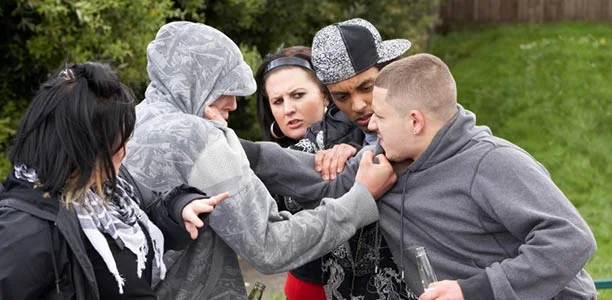
Personally I find that some of the most common and dangerous places are where large groups of young men congregate to drink.
Alcohol is a major disinhibitor, causing peaceful people to become violent and aggressive over the slightest provocations. We have all seen this happen.
Before you label me a prude, know that I still go out and drink. I just make sure to do so with people I trust and in the locations that I am comfortable in. Thus mitigating potential danger.
Don’t be paranoid, just vigilant. Also, be prepared to de-escalate a situation if one arises.
If you are unsure of what factors will raise or lower the level of potential danger you face, there are many resources available to you. News reports, online CCTV footage and interviews with police or victims of crime are all useful places to start.
Look for commonalities between events, for example: key times, locations or activities that seem to have larger than average amounts of violence.
Ask yourself, what would I have done differently in that situation? What could have prevented the conflict? What were the warning signs that the individuals should have seen and acted upon?
Remember, your safety is your responsibility and yours alone.
But What Classes Are The Best Form Of Self-Defense?

The best self-defense is of course preventing conflict whenever possible, but if you want to develop the skills to protect yourself in case a situation escalates, training in a martial art can be a great option.
Different martial arts offer various approaches to self-defense, and your best bet is to try a few martial arts schools and find one that suits you.
Brazilian Jiu Jitsu focuses on ground fighting, control, and submissions, making it effective for defending against larger opponents, and is my personal favourite. Muay Thai is a striking art that teaches powerful kicks, punches, elbows, and knees, helping you stay on your feet in a confrontation. Krav Maga is a self-defense system designed for real-world situations, emphasizing quick and efficient ways to neutralize a threat.
Boxing helps develop strong footwork, head movement, and powerful strikes to defend yourself standing up. Judo focuses on throws and takedowns, allowing you to control an attacker without excessive force.
Choosing the right martial art depends on your personal preferences, fitness level, and the type of self-defense skills you want to develop. Regardless of which one you pick, training in martial arts builds confidence, awareness, and the ability to stay calm under pressure which are all crucial aspects of self-defense.
Ironically, once you’ve trained in martial arts, even for just a few months, and in any of the styles, you start to carry yourself differently. You develop better posture, greater confidence, and a calmer mindset, which naturally makes you less of a target. Many conflicts arise from insecurity or posturing which are traits that martial arts training helps eliminate. When you know you can handle yourself, you’re less likely to feel the need to prove it, and others are less likely to challenge you.
There’s a couple of great resources I’ve read on this topic that I’d like to recommend to you. The first a book called The SAS Self-Defense Handbook: A Complete Guide to Unarmed Combat Techniques, which is a straightforward, practical guide designed for beginners who want to develop both the mindset and skills necessary for self-protection. Drawing on techniques used by the elite British Special Air Service (SAS), the book covers essential principles of situational awareness, defensive positioning, and effective unarmed combat moves. It’s not about aggression, it’s about preparedness, confidence, and staying safe in real-world situations. Yes it’s a little ironic learning this stuff from a book (you’re much better off learning them in person at a class), however, it’s a great introduction and will get you started down this path.
The second resource is McDojoLife, which is a website and social media project dedicated to exposing fraudulent martial arts schools, questionable self-defense practices, and so-called “masters” who mislead students with ineffective or dangerous techniques. With a mix of humor and critical analysis, McDojoLife raises awareness about the importance of legitimate training and highlights the need for accountability in the martial arts world. The site has become a popular resource for martial artists and curious observers alike, offering videos, commentary, and discussions that challenge the credibility of questionable instructors and promote authentic, effective self-defense education.
While martial arts can be an effective way to defend yourself, it’s also a powerful tool for preventing conflict in the first place. Start by having a read of the above resources, then, if you’re considering training, visit a few schools, try a class, and see what feels right for you. The best form of self-defense isn’t just about techniques, it’s about being prepared, aware, and confident in your ability to handle, and prevent, challenging situations.