- A chapter from How To Write Evocative Poetry -
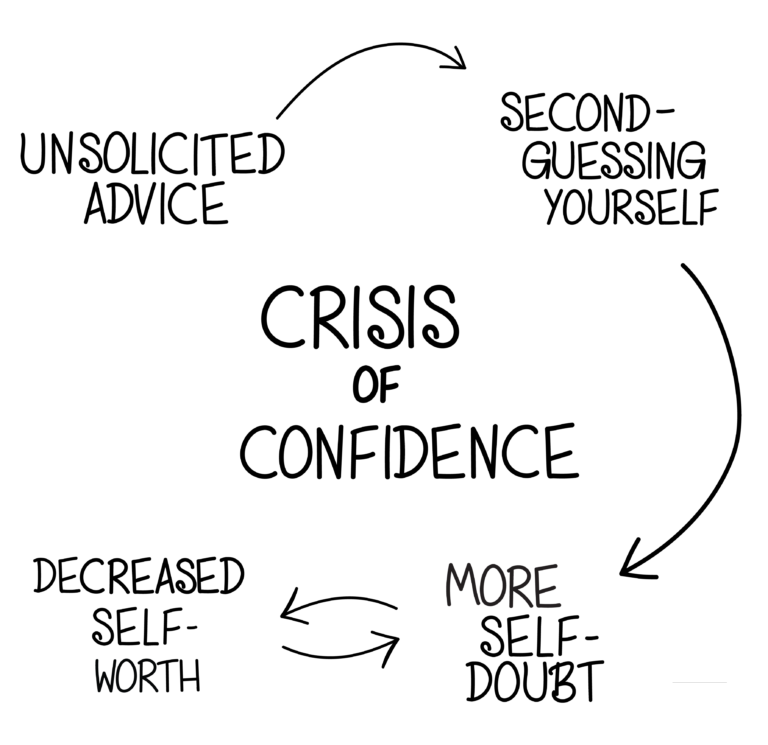
I write for myself and while I care what my readers think of my work and want them all to love it, I have learnt to ignore all feedback that I didn’t ask for directly. This is an act of self-preservation. In the past, I have completely altered projects, or worse still, discontinued or destroyed them, based on unasked for feedback. Most of the time it was unintentional - they just wanted to help, believing that their insights will provide me with a valuable insight into how my writing is being perceived. The thing is, they may even be right in their perceptions, and it probably would benefit me to hear it. But unfortunately, I have somewhat of a fragile ego, and until complete, my artwork is like a delicate flower struggling to survive – if it is exposed to the elements too soon, it will fail to thrive, but if it is allowed the time and space to grow roots, it may very well thrive.
Don’t get me wrong, ‘Editor-Zac’ loves it, but ‘Writer-Zac’ is crippled by it. Even the good feedback corrupts the purity of my process, because it makes me want to do more of what is loved, not necessarily more of what I want to be writing. The resulting work is never as good as the original and is always discarded. Time wasted. Lesson learnt.
Feedback comes in many forms. Take the poems Life To Avoid and Spider, the first received 25 times more likes, comments, direct messages, and shares, than the latter. These numbers suggest that I should write and share more of the first and less of the second. The problem is that I simply could not do so without coming across as forced. Also, I don’t actually know what it was about the first poem that was so significantly more appreciated than the second. Was it the topic? The structure? The themes? Was it the time of day that I posted it? The accompanying picture? Perhaps it was none of these things, and I was just blessed by the algorithm Gods that day. Point is, I would be hard pressed to both know and then use that information to my advantage. I got something from writing and sharing both of those poems and wouldn’t want to block off more like Spider in my attempts at writing another Life To Avoid – Besides, next time, the numbers may be reversed.
Life To Avoid
Coffee to wake
Instagram to connect
Porn to cum
Alcohol to relax
Weed to create
Coke to play
MDMA to love
News to inform
Sugar to distract
Mushrooms to pray
Valium to calm
Melatonin to sleepLife to avoid
spider
i killed
instinctively
moving before thought
its body crushed under my heel
only in death
did I see
the beauty
of its life
A few years ago I was writing a fantasy novel. I was 20,000 words deep and they just kept coming – a writer’s dream. Then, foolishly, I showed my progress to a friend who promptly offered me ‘helpful’ advice; namely that there wasn’t enough inner conflict in the main character to sustain the momentum of the plot. My friend was right in their feedback, the characterisation was weak. Unfortunately, their feedback shone a massive spotlight on the problem and all progress came to a grinding halt. Editor Zac was put squarely in the director seat and Writer Zac was kicked to curb and rendered effectively homeless. This resulted in me attempting to fix the problems before they were fully formed. I went back over the completed chapters, twisting and tweaking them, hoping to add that all too desirable ‘inner conflict’. Suffice to say, I failed, and that book still sits in my drawer at 20,000 words, waiting for Writer Zac to return to it to have another crack.
I share this story with you to provide a solid example of when and where to ask for and hear feedback. I take full responsibility for this; my friend was just being kind. That said, if I had my time over, I would never have shown my friend the unfinished book, and if I did, I would have stopped them the moment they started giving advice. That advice, whilst correct, was given way too early in the creative process, and thus, rather than invigorating my work, it effectively killed it. Kind of like giving fertiliser to a plant. Too much given too soon and your tomato plant will die off – but if you wait until the appropriate time, you will find yourself with an abundance of Earth’s bounty. This is as true for poetry as it is for fiction.
My practice now is to wait until I am ready, and then to ask a few trusted people for their honest opinions and then actively listen and dig deep into their responses. I want to know why they feel the way they feel – both good and bad. It’s not enough to know that they are moved, I want to know why. I do my best to ignore any unasked-for advice. Once I share my completed work with the world, I do love receiving feedback. I read all the comments, responses, and the reviews. But I let ‘Editor-Zac’ do that job, because hopefully ‘Writer-Zac’ is too lost in the next creative process to hear what is being said about his work. And if he does, I recall the following saying, repeating it as a mantra, until the words flow once more:
You are neither as good nor as bad as they say you are.
You may well be different to me. You may vibe off feedback like its oxygen to the fire of your creative furnace. If so, ignore all of that and do what works for you. But, if you feel like you need some space between the creative process and the response to your work, make sure you have systems in place to get it.
Finally, I want to suggest that sometimes your poems will land with some audiences and completely miss with others. Take The Heart as an example, on the one hand, it is silly to compare the strengths of two physical organs, but when we step into the realm of metaphor, suddenly it’s not. This poem plays upon the constant interplay we all face between the mind and the heart – often two opposing forces. I wanted to leave the audience with a sense of internal passion winning out over cold logic – and for those who took the piece that way, it worked. Others however were not impressed and voiced said displeasure to me. The thing is, both opinions (and all those unexpressed) are valid. It is my job to craft the poems as best I see fit, then to share them with the world, doing my best not to take what comes back personally.
The Heart
The heart beats
Of its own accord.Yet the mind
Can, for a moment at least,
Be pinned down in thought.How then
Can we not say
That the heart
Is stronger than the mind?
Summary
Only take on feedback from people you trust, and only when you have asked them to give it.
This chapter is from the book How To Write Evocative Poetry