Storytelling Through Poetry
- A chapter from How To Write Evocative Poetry -
Your poetry can be anything you like. Yes there are technical ways to write traditional poetry, but ultimately the most evocative poetry comes from pure expression. You can use the poetic space to express a thought, a feeling, or a confusing complex bundle of emotions. You could also use it to tell a story. In addition to poetry, I also enjoy writing fiction. Sometimes I have an idea that I think would make a great short story, but I simply cannot make it happen. All my attempts feel forced, and the result isn’t appealing to me or my readers. Often when this occurs, it is because I have chosen the wrong medium to express the idea. That idea may be better suited for a novel, a blog post, podcast episode, or poem.
There is no reason why you cannot tell a compelling ‘short story’ in the format of a poem, just make sure to include the appropriate component parts; setting, plot, character, dialogue, description, scene, etc. I tell a story with God Asked and Back To Scrolling. In these instances, telling a story helped me to express myself better than writing a poem in a different format, and the result hits harder. The reader is taken on a journey and comes out the other end changed as a result.
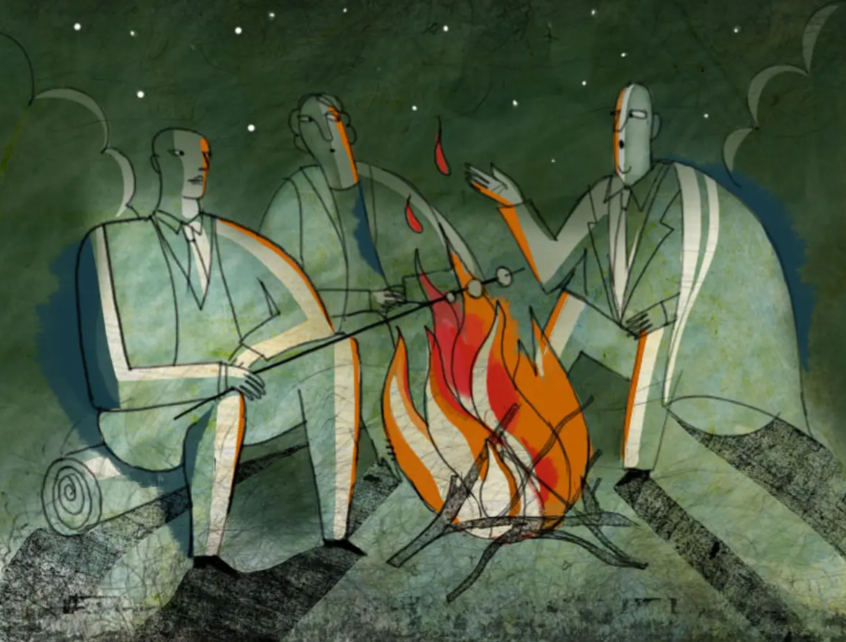
God Asked
God asked the man,
Why did you choose to die?
I saw no point in existence,
I couldn’t fathom a reason why.I couldn’t stay focused,
I couldn’t hold down work.
I’d just wait for the day to end,
to sleep away the murk.Every day was the same,
I’d already lived it through.
What was the point of repeating
when there wasn’t anything new?What about the small changes,
the gems of love and life?
What about the lessons learnt
from surviving hardships and strife?True, I did feel most alive
when things were at their worst.
But how is that a reason to live,
just hoping to be cursed?I could handle the drama
but not the monotony,
nor the vagueness of existence,
nor humanity’s cacophony.I would sit alone,
I would sit in the dark,
I would sit and listen and
my mind would remark.Highlighting my failures,
reminding me of lost dreams.
Showing me bad outcomes
and my own devilish schemes.Where were you God,
when I needed you the most?
Why’d you only start talking
now that I am a ghost?I was talking the whole time.
I was in the warmth of the sun,
I was in your kid’s smiles,
their laughter and fun.I was the crash of the waves,
the vision of the moon,
the spring flower’s scent,
the young lover’s boon.I was the quenching of thirst,
the purr of a kitten,
the pillow at night,
the book well written.I could go on
but I think you now know,
I was with you always,
even when you were low.Ah God, you don’t get it,
your words were too easy to miss.
What with all the noise,
with our collective descent into the abyss.How could I just stop and look?
How could I listen to the bird’s song?
How could I take a breath,
When everything was going wrong?It isn’t my place to save you,
nor can I fix your life.
I can only remind you,
that there is something beyond the strife.That even in the midst of suffering
there are small joys to behold.
But you are right my child,
perhaps I should have been more bold.No God, I was also wrong.
You know this was my last thought,
I could fix every problem but this one.
Oh how my family will be distraught.God thought for a moment,
then asked the man,
If I sent you back to Earth
would you change your plan?I will do my best,
but I make no guarantee.
I will attempt to listen,
I will attempt to see.
If God Asked had been a short story, I would have had to spend far more time setting up the scene, crafting a way for the man and God to be talking. If the reader didn’t buy the set up, they may never read long enough to get the pay off. Also the piece has a sing song feel that can only come from an ABAB rhyme structure, one that simply wouldn’t work in short fiction. Finally, I make use of italics to represent the different speakers, rather than adding dialog tags (the man said, God whispered etc), which if added may have detracted from the piece.
If Back To Scrolling was written as a short story, its strength may have been lost. True, I could have told a compelling narrative about a person who has lost everything to their internet addiction, but such a story would be far longer and by necessity included far more than the visceral experience of the poem as it is presented. The first-person narrative, combined with the quick formed thoughts into actions, both serve to replicate a readers real, lived, experience.
Back To Scrolling
Mindless scrolling
Looking for validation online
Filling the time
Filling the voidSomeone just liked my post
Fleeting happinessBack to scrolling
Change apps
Scrolling again
Change apps backAnother like, but not from someone I like
I’m offended
Comment
I’m offended
ShareI wonder what she’s doing?
Damn, she’s still happy with himFood as art
Bodies as art
Life as art
How unattainable
I’m jealousYou have memories from seven years ago
Cringe10 things you won’t believe
10 times they got it wrong
10 posts to distract you from your own existenceScreen time report
Usage up from last weekPorn
Porn
Porn
Shame
Close all open tabs
Delete the latest hourHalf formed thought
Tweet
OMG, a retweet!
Just a botBad news
More bad news
Memes about the news
Memes about memes
Sharing memesI should work
Scroll
I should clean
Scroll
I should exercise
Scroll
I need to sleep
ScrollCheck one app
Check another
Check a third app
Recheck the firstBack to scrolling
What Someone Will Value tells the story of someone reclaiming their worth after a breakup via a collection of statements directed at that person. You learn a lot about the narrator, particularly their evolving views of themselves and of their ex-partner. Once again, the same ‘story’ could be written as short fiction, a novella, or as a subplot within a larger work. All of those variations are valid and would likely work well. That said, since we are writing a ‘story’ in the medium of poetry, we need to strip away all the superfluous parts without stripping away the core thrust of the piece.
What Someone Will Value
Don’t cry for me
Now that you know
Exactly what you’ve lostYou chose
To leaveYou chose
To burn the bridgeYou chose
To turn your eyes elsewhereYour tears
They tell me
That you failed
To find
Who you were looking forThat she
Wasn’t all
She pretended to beI
Will not
Be a mere
Consolation prizeI am
What someone
Will value
Summary
Good art moves people emotionally – that is why we consume it; we want to be changed in some way. The specific mechanisms of doing so differ depending on the medium. If you are going to use your poetry to tell a story, carefully consider the aspects specific to story: plot, characters, setting and so on. Take the reader on a journey, allow them to learn and grow along with the characters.
This chapter is from the book How To Write Evocative Poetry