- A chapter from How To Write Evocative Poetry -
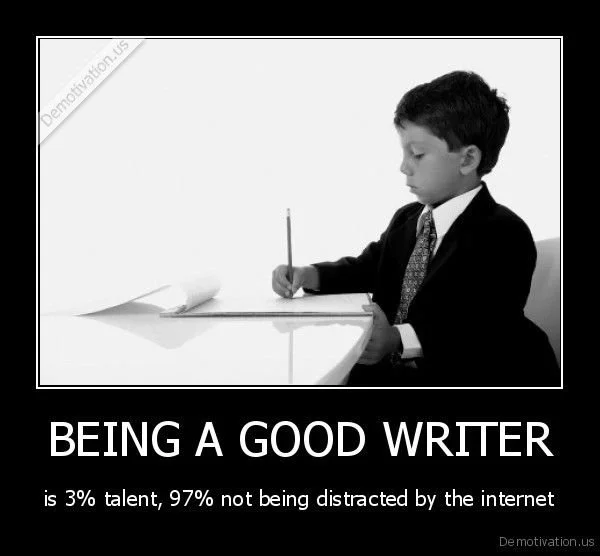
Finding the time to write can be hard and staying focused during that time can be harder still. Whether or not you are like me and want to make money off your art (gasp!), or just write for the sheer pleasure or catharsis of it, you will want to make the most of the limited time you get with the page. Above and elsewhere in this book, I talk about ‘being open’ to poetry coming, but here I want to talk about optimising the use of time you have carved out of an otherwise full schedule. The crux of my suggestion is to treat the creative part of yourself as an employee of sorts. Put yourself on the clock and ensure that you are working towards a goal that matters – not wasting time on social media or doing other busy work that isn’t taking you closer towards your creative goals.
The first step is to prioritise what you want to accomplish before sitting down to a session. Yes, there are hundreds of things you could be doing, but which single one would be the best use of your time? For me, right now, its writing this book. I feel like it will be the most impactful for the world and my career at this moment. Yes, I could write more poetry, or work on a podcast, or share a social media post, or do my taxes, or whatever, but none of those things will move the needle of success as far as finishing this book will. Besides, once I have finished writing, I will pass it onto my editors (hello and thank you!) and during that time, I will work on other things.
It takes practice to determine the lead domino. You first must know what you want to accomplish in the long term and what steps it would take to get there, and then you must have the dedication and discipline to put everything else aside and work. Don’t fall into the trap of ‘just doing a little’ of other tasks – before you know it, your time will be gone, and you won’t have much to show for your efforts beyond some relatively pointless tasks being crossed off the to do list. Those will wait. Your muse won’t.
The second step is to set yourself a strong intention prior to starting. Tell yourself what you are going to do and why it matters. I use The Writers Creed for this purpose; something I wrote for myself, then printed off and placed prominently upon my wall. I read it daily before I begin a session, and if it resonates, I encourage you to do the same, or even better write your own.
The Writer’s Creed
I am a writer.
I have given myself this time to write.
This time is sacred.
I will not waste it.
I will not worry about the quality, worth, or potential audience.
I will just write.
I will get the words on the page, as they come, without judgement, without filter.
I will write because I love it, because I have something to say, and because writing heals me.
And when the time is up, I will let it go, until I sit down to write again.
Finally, if all else fails, consider ‘hiring yourself’ … let me explain. Despite everything I’ve mentioned in this section, I used to have a tendency to waste a significant proportion of my available writing time, primarily because I wasn’t taking it seriously. There was no boss hanging over my shoulder implicitly pushing me to work, and I was under the (false) illusion that all creativity was magic and had to always be a product of inspired spontaneity - there certainly is an aspect of magic, but that magic can be conjured as I expand upon elsewhere. This attitude was given a stark contrast to my attitude when working for others. If I am on the clock, I am working, and desperately want to ensure that I am accomplishing what is required, so that both the boss and the customer are happy. In a way, the fact that it isn’t my business conversely made me care about it more, likely because of the implicit social pressures and societal conditioning combining with my social anxiety. This tendency of mine isn’t a bad thing – it ensures that I can maintain employment and work to standard. But the discovery of the contrast was revolutionary. It made me ask myself ‘Why don’t I treat my own work just as, if not more seriously?’
Why Don’t You?
For me it was a fear of failure, a perfectionist complex, and a lack of faith that anything I was doing was ‘worth it’ beyond more than just a casual hobby on the side; self-worth issues are rife!
So now, I hire myself. ‘Employer Zac’ is a bit of a hard arse. He expects results, expects me to turn up on time, and expects me to get the work done. He watches over me and knows when I am slacking versus when I am thinking or resting. He creates a work environment, conditions, and schedules that will optimise my output and then ensures that I stick to them. He analyses what makes a day a success or a failure and makes the appropriate changes. He determines the priorities I will work on each day, but also is aware of my mental state and capabilities on a given day and adjusts his demands as such. Then, once the day’s work is done, he thanks me for my time, and I am free to pursue other aspects of my life.
This reframing of my time has done wonders for my productivity and creativity. I am getting more accomplished and of a higher standard. Importantly, my creativity hasn’t been killed in the process, primarily because ‘Employer Zac’ knows about the information within this book and encourages me to employ it if I face a block. Simply put, I want to be writing as much as I possibly can each day, but the world is loud and distracting, and sometimes my mental state isn’t (initially) as focused as it could be.
This approach is ostensibly just a mental game I am playing with myself – but it is akin to ‘being your own parent’ and looking after your health by making adult choices around diet, alcohol, and exercise. It isn’t fun to do, but doing so allows you to live your best life. Hopefully this approach will allow you to live your best writer’s life - if you find yourself at the end of your allocated writing time, upset with how little you accomplished, or annoyed that you didn’t work on the right tasks, or that you were distracted on social media or other trivial matters, consider this approach. What you need from your ‘employer’ will vary from me but having a serious person, even if it is you, looking over your shoulder from time to time will help you to stay on track – how can it not?
If you felt a bit of a pull back at the idea of hiring yourself, or establishing times in which you will be creative, or feel like you cannot train yourself to be creative, you may need to reframe exactly what you feel art and creativity in general is, and where it comes from.
There is a reason you are reading this book; it is because part of you at least believes that it is possible to get better at writing poetry. That is, you can do certain things and your creativity will begin to unlock. In my experience and that of my students, to write good poetry you just need the willingness to be open to it coming and the perpetration to catch it when it does.
The following things tend to help:
- Extended silence
- Time without distraction
- Focused attention
- A dedicated intention to be creative
- A lack of attachment to the outcome
Discovering and implementing what works for you, when combined with the practicing of various techniques and approaches to creative writing, will result in your ability to write evocative poetry improving. Yes, some people will be more naturally gifted, but over time and with the right choices, you will be able to vastly supersede both their quality and quantity. It will feel like you are on some kind of performance enhancing drug for creativity, speaking of, what is the relationship between creativity and drugs?
This chapter is from the book How To Write Evocative Poetry