Do I Need Therapy? Yes, Everyone Needs Therapy… Even You!
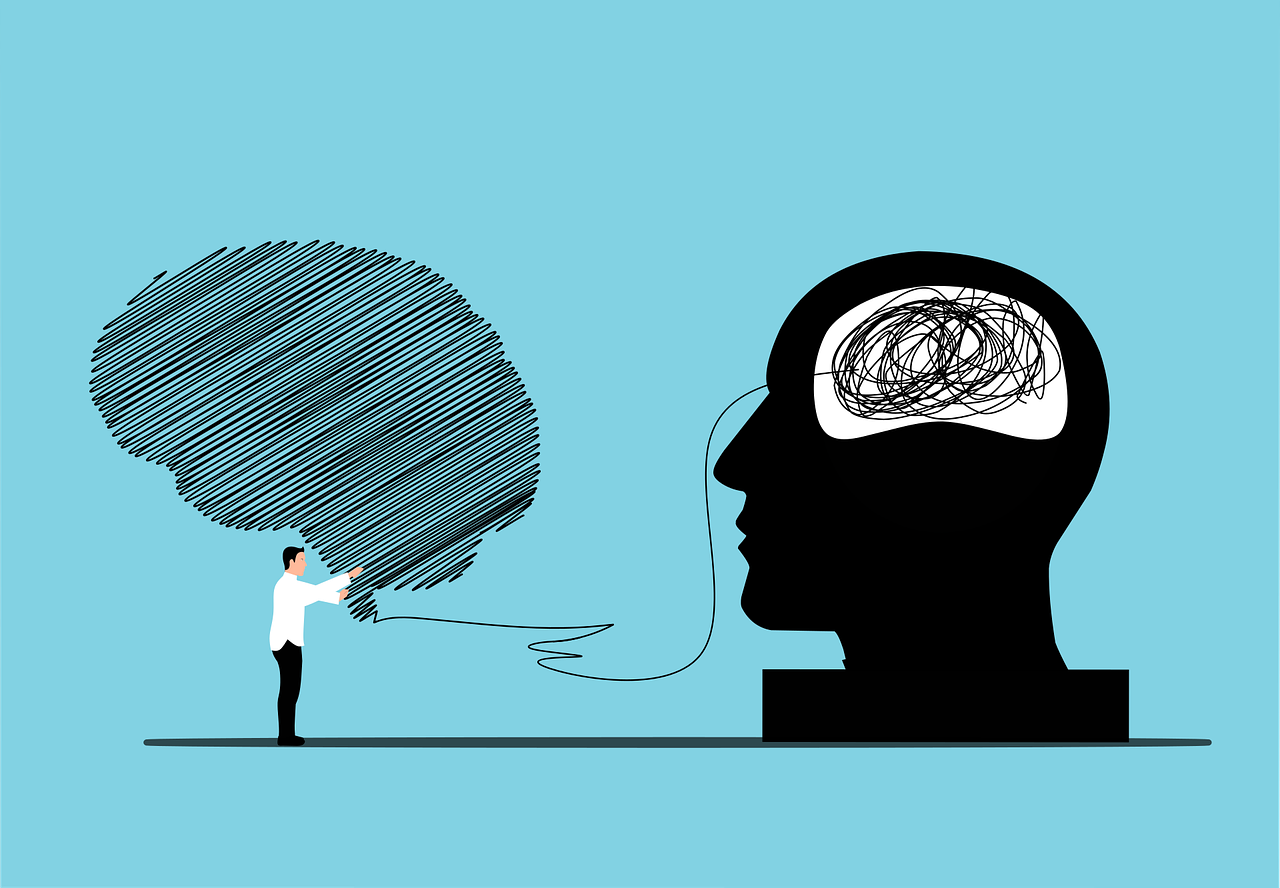
The simple answer is yes, you need therapy. But so do I, as well as everyone else. Everyone needs therapy. Asking yourself the question, ‘Do I need therapy?’ is one of the first steps towards a life of peace, purpose, and meaning. It is also one of the first steps towards acknowledging and accepting how fucked up the world is and in turn how such a world is impacting us.
Let’s unpack this a little bit in this post. As a psycotherapist myself, and someone who has been to therapy, for many years, I know what it’s like. Below I will go through how there is no such thing as normal, how everyone needs therapy, what is therapy and what to do if you’re asking yourself, do I need therapy?
Everyone Needs Therapy. Yes, Even You.
Controversial opinion: everyone needs therapy. Yes. Even you.
Now, for the nuance.
Life is hard, the world is heavy. And no matter how privileged, protected, or successful you are, suffering is there. Sickness comes. Injury comes. Death comes. First for others. Then, for us. These things are not optional. They are built-in features of the human experience. No one escapes unscathed, therefore, everyone needs therapy.
And yet, most of us are walking around pretending we’re fine. Acting like these things don’t affect us. Minimizing, suppressing, distracting, numbing. We keep moving, we carry on. We tell ourselves that we’re resilient. That it wasn’t that bad. That someone else had it worse.
But unprocessed grief and trauma doesn’t disappear. It waits. It festers. It shows up later, often in ways that make no sense at first: anger issues, chronic fatigue, shallow relationships, reactivity, dissociation, depression, anxiety, control issues, addictions, existential dread. You might not even realize the connection until someone helps you trace the thread.
Unless we have the space to talk through and process the things life throws at us, we carry it all silently. And eventually, the weight of that silence becomes unbearable. Therapy gives us that space. Everyone needs therapy.
But it’s not just about trauma. It’s not just about cleaning up messes or surviving breakdowns. It’s about having a space, regularly, to meet ourselves. To explore who we are, what we want, what we fear, what we love. To speak the truth that doesn’t always fit into polite conversation. To be witnessed.
Our culture doesn’t really allow for this. We’re expected to self-regulate, self-optimize, self-heal, self-contain. There’s an obsession with individualism, everyone’s trying to "figure it out" on their own. But the truth is, we are social, tribal creatures living in a world we weren’t designed for.
We evolved in small communities, face to face, attuned to one another. Now we live in mega-societies, mediated through screens, overwhelmed by information, overstimulated and under-supported. Add to that the generational trauma we carry born of war, colonisation, displacement, slavery, famine, and fractured families. That doesn’t just vanish, it’s inherited. It’s passed down in behaviours, fears, patterns, and beliefs.
We have unlimited wants, but finite needs. It is possible to see and want more, but have no idea how to get it, nor how to process the lack of ability to get. Add to this, our inability to make sense of the complex questions. We all need to understand, unpack, discuss, express, and understand, ourselves, the world, and our place within it. We need to be able to express the contrast between our joy and our love, with our fear and hate and overwhelm. Everyone needs therapy.
Even if you didn’t personally experience the trauma, it’s likely living in your nervous system. It’s in the way you relate to money, safety, love, worth, success and many other things. It’s in the way your body flinches or shuts down. It’s in the stories you tell yourself when things go wrong. And it’s in the gap between what you want and what you think you deserve.
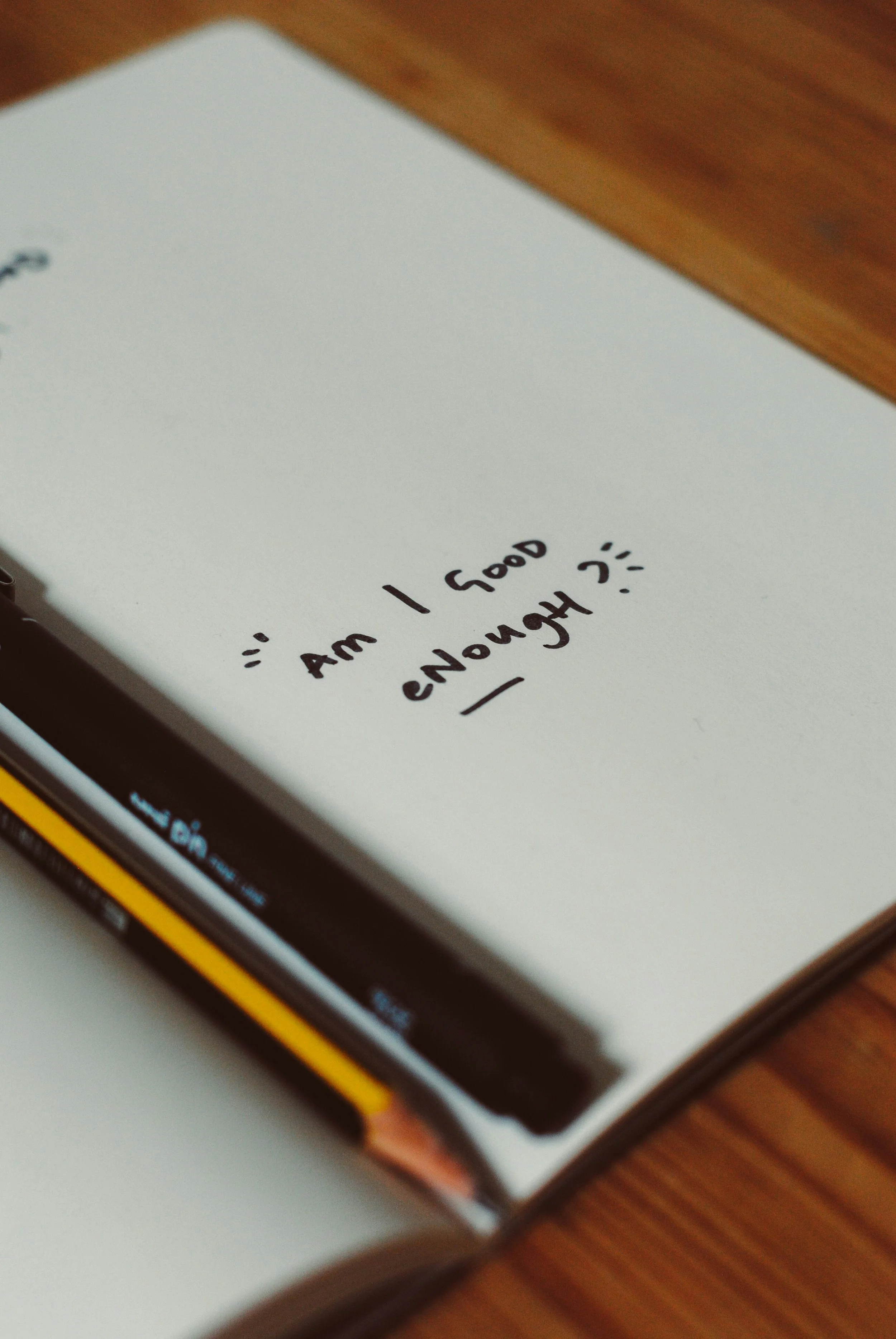
We live in a world that constantly shows us what’s possible but rarely shows us how to get there. We’re bombarded with messages about who we should be, how we should feel, what we should look like, what we should have achieved by now. And we internalize that. We get caught in loops of shame, self-doubt, comparison, and confusion.
Therapy helps us slow down and ask:
What is actually mine?
What do I truly value?
What am I carrying that I no longer need to?
What parts of me are asking to be seen, heard, or held?
This isn’t just about mental illness. It’s about mental hygiene and emotional literacy. Nervous system regulation and soul work. Everyone needs therapy like everyone needs emotional health and regulation.
It’s about understanding the contrast that lives in all of us, the joy and the rage, the peace and the grief, the light and the shadow. It’s about being allowed to bring the full spectrum of who you are into a room and not be judged for it. To be met with presence and compassion, even when you’re unsure, unfiltered, or unwell.
We need a place where we can look honestly at our shadow. Where we can heal our inner child. Where we can explore our relationship with the divine, or with meaning itself. We need space to ask the big, unanswerable questions. Why am I here? What matters to me? How do I make peace with this life, this past, this future?
We need someone to meet us there, not to fix us, not to offer platitudes, but to walk beside us as we find our own way through. Simply put, we need someone to accept us in our reality, with unconditional positive regard, as we practice radical self-acceptance.
Everyone needs therapy, and therapy can be that place. A place of presence. Reflection. Challenge. Witnessing. A place of unconditional positive regard. Because when someone sees you in your wholeness, the good, the bad, the unknown, and doesn’t flinch, something shifts. You begin to see yourself through their eyes. You begin to accept what is. And only then can you begin to imagine what could be.
That’s radical self-acceptance. And it’s a game changer.
I’m a counselor and coach. I work with entrepreneurs, spiritualists, and survivors, people who are asking the deeper questions and doing the deeper work. If you want to explore this kind of space, check out how we can work together.
But whether it’s with me or someone else, just start. Just try.
Because yes, everyone needs therapy.
Even you.
There Is No Such Thing As Normal
The term normal suggests ‘what is expected’ or ‘average’ and while these terms are true as a measure of a group, they are never true for an individual (you, me, or anyone). There is no such thing as normal. Nobody is average across the board in all categories. Dig deep enough and you will discover deviation from the typical, standard, and expected.
This is true within as well as across culture, countries, races, religions, and times. And although you can get a broad understanding of what a certain group of people generally think or feel, you cannot decern the same for the individuals within those groups. So there is no such thing as normal.
Humans are endlessly diverse and everything is a spectrum.
Adding to the false concept of normality is the nature of modern existence. Humans are basically smart monkeys with thumbs. We evolved to survive in small nomadic hunter-gatherer groups. Modern life is totally alien by contrast. Now we have billion strong mega societies, 24/7 access to connection, news, entertainment, and porn, as well as almost unlimited cheap and accessible calories and substances. We carry devices in our pockets that greatly expand our memories, reach, and ability to perform complex tasks.
These devices also target us with advertisements and click bait designed to keep us coming back for more. We live in constructed houses with running water and a plethora of other amenities. And we have the ability to destroy ourselves by splitting the atom, a concept our forefathers hand no inkling of. I could go on: medicine, transportation, agriculture, total and complete ability to never experience a moment of silence…
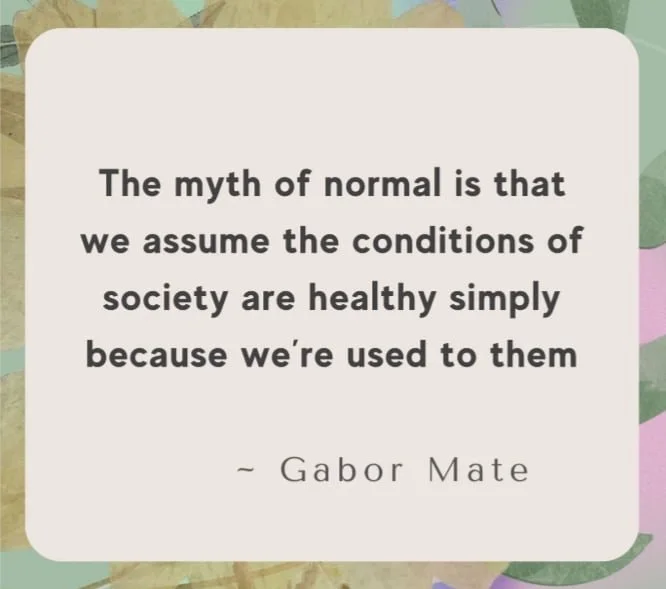
I recently read a book about this called The Myth of Normal: Trauma, Illness and Healing in a Toxic Culture by Dr. Gabor Maté, in which he challenges our modern understanding of health and wellness. Drawing on decades of clinical experience, Maté explores how trauma, stress, and societal norms deeply influence our physical and mental health. He argues that what we consider “normal” in today’s culture is often anything but, pointing to disconnection, overwork, and emotional suppression as root causes of illness. The book invites readers to rethink the systems we live within and encourages a more compassionate, holistic approach to healing and self-understanding.
Which brings me to the point: our environment is not normal and as such, neither are we. There is no such thing as normal. Which leads me back to the larger point that we all need therapy. How can we not when we live in such a world?
Do I Need Therapy?
Do I need therapy? This question can be haunting, particularly for those of us who grew up with attachment issues. The sons and daughters of neglectful, addicted, or abusive parents. Those of us who have worked our entire lives towards healing, self-improvement and breaking the cycle, yet nonetheless are still struggling with issues of self-worth, functionality (seriously how can we make the bed, do the dishes, exercise, get enough sleep, turn up to work and still have a social life?) or other symptoms of a troubled past.
I work with entrepreneurs, spiritualists, and survivors, so many of my clients can relate to some or all of the above. They are driven to grow, heal, and perhaps make something of themselves or this life, but still struggle for some reason. Which leads them to the question, do I need therapy?
There is an inner block that is holding them back: attachment issues clouding relationships, poverty mindsets resulting in a lack of confidence or optimism, or simple (yet never actually simple) symptoms of anxiety or depression or PTSD. Simply put, if you have a troubled, traumatic, or alternative past, you need therapy.
Not because you are fundamentally broken, but because you have been impacted by your past and are desiring to be free (or at least able to adapt to it).
But it’s not just for those that identify as survivors, it is for anyone, just to be able to talk to someone, to have a support network. To deal with life’s stress. This doesn’t mean you’re in therapy forever, but you can use it as a debrief, as a positive part of dealing with stress. When something comes up that feels heavy, you don’t have to carry it alone. Book a session and talk it over, and make life a little easier for yourself.
What Is Therapy And How Can It Help Me?
Therapy is a wide ranging collection of interventions, theories and approaches, that often have alternative and potentially conflicting assumptions about the fundamental nature of existence and how to help people through it. But collectively I like to summarize the approach as ‘you talk, I listen, and together we identify and release the limiting beliefs that no longer serve.’
I primarily operate from a person centered therapy approach, first created by Carl Rodgers. This approach is complex and deep (as they all are), but basically it assumes that the clients are the experts of their life, and with support and unconditional positive regard from the therapist they will come to settle into an understanding of their selves and thus find a way to navigate through their unique issues.
Simply put, I don’t know what you need, but in session we will form a relationship in which I will hold space for you to discover all the different aspects of yourself and thus be best able to choose how to act in the world and to also understand and accept yourself.
Interested? Click here to book a session.