How To Love Yourself Whilst Fixing Yourself
Personal growth is a journey, not a destination. But too often, we believe we can only love ourselves once we’ve "fixed" everything. The truth is, self-love and self-improvement can and should go hand in hand, and you can learn how to love yourself whilst fixing yourself.
Through my experiences in mental health advocacy, coaching, and counseling, I’ve seen how powerful it is to embrace both acceptance and change at the same time. In this post, we’ll explore how you can cultivate self-compassion; how to love yourself while accepting yourself, allowing yourself to heal, grow, and thrive, and fixing yourself without waiting for perfection.
At the heart of true transformation lies the delicate balance between self-acceptance and the drive for growth. Embracing who you are in this moment, with all your flaws and strengths, is the foundation of inner peace.
You need to learn how to love yourself to acknowledge your worth. Yet, acknowledging your worth doesn’t mean staying stagnant; it opens the door to steady improvement.
How To Love Yourself By Accepting Yourself
I talk about this concept on the podcast, but simply put, by honoring yourself as you are, you also create space for the evolution of who you can become.
You can learn how to love yourself by first accepting yourself. Self-acceptance is often misunderstood. It’s not about complacency or resigning yourself to a fixed identity. Rather, it’s a deep acknowledgment of your present self, recognizing that who you are today is enough, just as you are. Accepting yourself is the starting point of any meaningful change.
When you accept your full humanity, when you make space for accepting yourself - your imperfections, your mistakes, your successes - you release the pressure of striving for an unattainable ideal. This acceptance offers the freedom to be vulnerable, to learn, and to grow, and to learn how to love yourself.
However, self-acceptance does not mean the absence of ambition or growth. It’s a springboard to personal evolution. The act of honoring yourself where you are, accepting yourself as you are, creates the fertile ground for transformation. When you feel secure in your current state, you no longer fear failure, nor do you hold onto past mistakes. This peace opens up the space to take on challenges and evolve into a better version of yourself.
Growth is not about striving to become someone else but rather allowing the fullest expression of your true self to unfold over time.
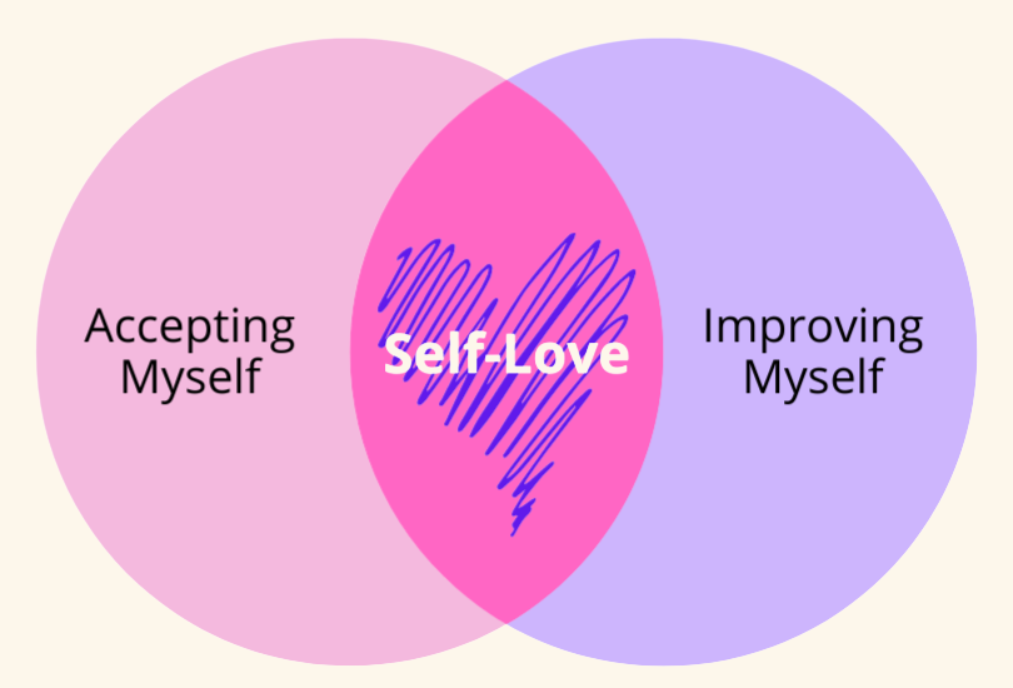
The key to finding this balance is to not view growth as a rejection of where you’ve come from or who you are now, but as an opportunity to embrace the next chapter of your journey. Growth means expanding your understanding of yourself, your capabilities, and your potential. It’s about stepping into new roles, developing new skills, and pursuing new experiences while still remaining grounded in your authentic self. For entrepreneurs, spiritual seekers, and survivors, this balance is crucial.
The journey from surviving to thriving involves learning to integrate self-acceptance with a constant pursuit of growth. Accepting yourself means learning how to love yourself too.
You must honor where you’ve been, embrace who you are today, and be willing to evolve into the person you are meant to become.
This is not a passive process but an active one. It requires intention, discipline, and a willingness to take risks. But through it all, the foundation of peace remains.
So, how do you begin this journey? Start with self-compassion. Acknowledge your achievements and growth thus far. Understand that you don’t need to be perfect, and that imperfection is part of what makes you human. Then, look ahead with curiosity:
What areas of your life are calling for growth?
What new skills or passions could you explore?
What is your distant mountain top and how can you start heading towards it?
As you set your sights on these, remember that self-love and self-acceptance provide the courage to step into the unknown.
By embracing who you are while allowing yourself the freedom to evolve, you create a powerful, dynamic journey - a life where peace and purpose exist in harmony.
You are already enough, and through steady improvement, you will become the best version of yourself, living a life full of meaning and fulfillment.
But What About Fixing Yourself?
The idea of “fixing yourself” often comes from a place of pain, feeling like you’re broken, not good enough, or fundamentally flawed. But the truth is, healing doesn’t mean becoming someone else; it means becoming more fully yourself. It means first learning how to love yourself, then gently leading yourself towards a better life. If you are interested in these things, you may enjoy my free Shadow Work Journal PDF, which you can read in browser or download.
Fixing yourself isn’t about perfection or ticking off a list of self-improvements. It’s about facing what hurts, getting curious about your patterns, and taking small, compassionate steps toward growth. This process can be messy, non-linear, and uncomfortable. But it’s also deeply human. You can hold love for who you are now, try your best to love yourself, even while working towards your goals and who you want to be. Healing happens when we realize that we’re not problems to be solved, we’re people to be understood.
A book that really helped me on this journey is The Gifts of Imperfection by Brene Brown. It is a powerful guide to wholehearted living, which explores how embracing vulnerability, authenticity, and self-compassion can lead to a more meaningful and fulfilling life. Through ten “guideposts,” she encourages readers to let go of perfectionism, comparison, and fear, and instead cultivate courage, connection, and a strong sense of worthiness. Brown draws on her research in shame and resilience to show that living a rich, authentic life doesn't come from having it all together, it comes from owning our imperfections and showing up as we truly are. It is a great read.
Sometimes we have goals or dreams that require us to level up first, to become more emotionally regulated, more self-aware, more disciplined or grounded. Whether it’s being in a healthy relationship, starting a new career, or living with more peace, certain changes require inner work. And that’s okay.
Wanting to become a better version of yourself doesn’t mean rejecting who you are now, or who you were before, it means honouring your potential. The path forward is built on both self-compassion and accountability. You can work on how to love yourself and work on fixing yourself at the same time.
As you grow and change, it’s important to remember that you are still connected to every version of yourself you’ve ever been. The child who was scared, the teenager who made mistakes, the adult who struggled, they all live within you. You don’t have to reject those parts to move forward.
In fact, healing often means returning to them with compassion, recognizing how hard they tried to survive with the tools they had. There’s a thread that runs through your entire life, connecting each phase, each shift, each moment of growth. You are not broken into fragments, you are a whole person with a rich, evolving story. Fixing yourself, then, isn’t about erasing the past, it’s about weaving it into something meaningful.
If this post resonates, I invite you to book a session.