How Social Media Affects Your Brain Without Your Consent
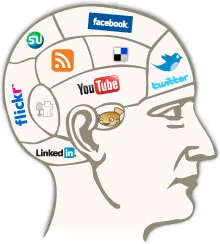
You are what you eat, that’s obvious. But have you wondered how social media affects your brain? You are also what you consume mentally. With every conversation, book, podcast, social media post and interaction you are effectively incorporating somebody else’s thoughts, feelings and emotions into you. You are being changed, ever so slightly. As someone with lived experience in mental health struggles and a deep understanding of online discourse, and in my work as a counselor, I’ve seen first hand how social media can be both a tool for empowerment and a source of harm.
In this post we will go over how social media affects your brain by creating strong influence that changes you a little at a time, then we will talk about some other challenges with social media, like social media distorting reality and finally we will consider how to spend less time on social media.
Social Media Affects Your Brain By Influencing You
So you’re wondering how social media affects your brain? Firstly, unless you completely switch off from all forms of communication, you can’t stop this process. Even if you try to actively not be changed, the content will in fact change you. Thus, the multi billion dollar advertising industry.
Despite our best intentions not to be influenced, advertisements work. We are affected by them, and as such, we change our (purchasing) behaviour.
This is not all bad, in fact it’s the basis of learning. By watching, observing, communicating and interacting, we learn. The best learners purposefully open themselves up for being changed, because with change comes new insight. But to say that this learning doesn’t change you is wrong.
In addition, the change may not necessarily even be a good one.
One way how social media affects your brain is that it is very hard to un-hear something. Once you have been exposed to an idea, it is impossible to remove the stain of that idea out of your consciousness. You can try and counter it, to disprove it, to ignore it or to fill your mind with other thoughts. Regardless, once it is in, it is there forever. Whether or not you asked to have that piece of information is irrelevant.
This is why protesters vividly project their world view. They are hoping that their core message, their ‘truth’ sticks in your mind. They are hoping to plant a seed that will grow and grow in your mind until it can’t be ignored.
Ideas have the ability to spread like a contagion. Just take a look at the impact of ideas throughout history. All major religions, social movements, atrocities, and achievements have been predicated on the basis of a strong idea disseminated throughout a population.
But it is not just the well thought out, reasoned ideas that will impact you. It is everything you mentally consume. Do a quick test, open up your social media and take a scroll through. Observe how social media affects your brain. Observe the emotions, thoughts and feelings that pop up. Look at what is being shown to you and how it makes you feel.
That happens every time you are on there. Watch a TV show or movie, read a blog, web forum or news site. How does the content make you feel? What about the advertisements?
If you focus on this enough, you will be able to observe how you are being changed by it. Once you notice that you are being changed, and how social media is affecting your brain, it is up to you to decide if you want to continue to be changed.
If you don’t like those changes, switch the TV off, shut down your social media and associate with new people. The saying that ‘you are the sum of your five closest friends’ is scarily true. This is true for what messages you are consuming as well.
If you find people that you like, that inspire you and make you want to change, associate with them and you will. This could be in person, through their books, podcasts or movies. The more of a person you expose yourself to, the more of them you take in.
Make sure that you are choosing what you are consuming, because you are really choosing what you will become. Be mindful of what influence you are giving yourself, and you will feel more in control of the person you are becoming.
Social Media Distorting Reality
Social media distorting reality is another thing we must be aware of. We’re exposed to carefully selected snippets of people’s lives, the best angles, happiest moments, and most impressive achievements, while the challenges, mundane routines, and internal struggles are often left out. This creates a false baseline. As we scroll, we begin to subconsciously compare our everyday lives to someone else’s highlight reel, often without realizing it.
What we see online isn’t neutral, social media distorting reality is a real issue as what we see is shaped by algorithms designed to keep us engaged, which means we’re more likely to see content that confirms our insecurities or holds our attention. Over time, this exposure can warp our expectations of ourselves and others. We may feel inadequate, anxious, or as if we’re falling behind, when in truth, the full reality of others’ lives is just as complex and imperfect as our own.
Another way that social media is distorting reality is by creating echo chambers: online environments where we’re mostly exposed to opinions and information that reflect our existing beliefs. And posts are shown to people that are likely to engage with it as well.
This can reinforce biases, deepen divisions, and make it harder to understand or empathize with different perspectives. Over time, we may start to believe that the narrow view we’re shown is representative of the whole world, when in fact it’s just a filtered slice.
Recognizing the way that social media is distorting reality is the first step. Social media isn’t evil, but it’s not real life either. When we treat it as reality, we risk losing touch with what’s genuine in our own lives. We just need to be aware that the distorting is happening, and then we can understand and accommodate for that. Social media is a tool and needs to be used as such.
How Social Media Affects Your Brain In Other Ways
Ok so apart from influencing our opinions and behaviour, and distorting reality, social media affects your brain in other ways too. Social media is changing the way our brains function, shaping everything from attention spans to emotional wellbeing.
One of the most significant effects is its impact on the brain's reward system. Every like, comment, or share triggers a release of dopamine, the neurotransmitter responsible for pleasure and motivation. This creates a cycle of instant gratification, reinforcing the urge to keep scrolling and checking for updates, much like an addictive behavior.
Another concern is the way social media affects attention span. The fast paced, bite size nature of content conditions the brain to process information quickly, making it harder to focus on longer, more demanding tasks. Many people struggle with "continuous partial attention," where they constantly switch between tasks without fully engaging in any of them. Over time, this can weaken the ability to concentrate deeply on one thing at a time.
Mental health is also deeply intertwined with social media use. Constant exposure to curated, idealized versions of other people’s lives can lead to feelings of inadequacy, and anxiety. Comparing oneself to influencers, celebrities, or even friends can create unrealistic expectations and dissatisfaction with real life.
Another aspect of the mental health to do with how social media affects your brain that concerns me is that many people use social media as a form of emotional regulation, whether consciously or unconsciously. It can serve as a way to numb out, avoiding uncomfortable feelings like sadness, loneliness, anxiety, or boredom. The endless scroll offers an easy escape from difficult emotions, much like binge watching TV or emotional eating.
Social media can also become a comfort mechanism, offering a sense of connection and distraction when feelings of stress or overwhelm arise. For example, someone feeling lonely might turn to social media to feel less isolated, even if they aren’t actively engaging with others. The familiarity of scrolling can create a temporary sense of relief, even though it doesn’t truly address the underlying emotions.
Social media also affects your brain by changing the way the brain processes and retains information. With an endless stream of content available at our fingertips, the brain is relying more on external sources for memory, a phenomenon known as "digital amnesia." Instead of remembering facts, people often default to looking things up online, weakening their ability to store and recall information independently.
Finally, the rise of online communication is affecting social skills and empathy in some users. Digital interactions lack the depth of face-to-face conversations, where body language, tone of voice, and eye contact play a crucial role. Over time, excessive screen based communication can make in person interactions feel more difficult, reducing the ability to read emotions and respond with empathy.
As social media continues to evolve, so does how social media affects your brain. Understanding these effects can help us use these platforms more mindfully, finding a balance between digital engagement and real world connection. Using social media a little bit every day is okay, and can be a great tool, but overuse or addiction to social media is not good for you.
How to Spend Less Time on Social Media
Recognizing how social media affects your brain is the first step, but the real challenge is breaking the cycle of overuse. If you have noticed that you are using it too much, let’s talk about how to spend less time on social media. One of the most effective ways to cut down on screen time is by setting clear boundaries. Designate one specific time of the day for checking social media, rather than scrolling mindlessly throughout the day. Turning off notifications can also help reduce the impulse to constantly check for updates.
Another helpful strategy to spend less time on social media is replacing social media with other fulfilling activities. Engaging in hobbies like reading, journaling, exercising, or spending time in nature can provide the same sense of enjoyment and relaxation without the negative effects of excessive screen time. Keeping your phone in another room while working or socializing can also make a big difference in staying present.
Using built-in screen time trackers or apps designed to limit social media use can provide insight into daily habits and help set realistic usage goals. Many smartphones now have features that allow you to monitor and restrict time spent on certain apps, making it easier to stay accountable.
Most importantly, practicing mindfulness around social media use can shift the way you interact with it. Before opening an app, ask yourself why you’re doing it. Are you genuinely looking for information, connection, or inspiration, or is it just out of habit? Being intentional with your usage can lead to a healthier relationship with social media, where it serves you rather than consumes your time.