You Are Allowed to End Toxic Relationships
If you clicked on this article for yourself, then please take this as a sign that you are wanting to leave whatever relationship caused you to click the title. Nothing that I or anyone says can change the intuitive feeling that something is not right. With a background in counseling and a personal journey marked by overcoming trauma, I wanted to write a post addressing the challenging yet essential topic that you are allowed to end toxic relationships. We will delve into leaving one, moving on from toxic relationships and talk about types of toxic relationships.
Drawing from my own experiences and my work with clients, I want to offer insights into recognizing unhealthy dynamics and empower you to prioritize your wellbeing by setting necessary boundaries. Yes it will suck, but you are allowed to end toxic relationships for your own sake. It would suck more to wait another year just to make the same decision that you are contemplating making now. It will be a hard process as the closer you get to pulling the trigger and leaving, the more reasons you will have to stay.
That is fear talking. Fear of change and fear of regret. Trying something new is terrifying, it always feels safer to stay put in a comfortable rut. Please remember, you have made it this far in life, navigating all the hurdles, losses and change that has come your way. When we consider leaving a relationship, we are instantly reminded of all the good things that we will lose and we subsequently forget why we were considering leaving in the first place.
A toxic relationship is a pattern of interaction where one or both people repeatedly create stress, insecurity, or harm, and where connection feels draining, unsafe, or destabilising rather than mutual, supportive, and secure. Basically, in a toxic relationship, you get more bad out of it than good and it brings you down overall.
Typically, we don’t leave until it becomes so bad that the truth of the situation is truly undeniable. However, by then, we have been beaten down and are broken by the relationship’s turn for the worse. Our confidence levels are shattered and we may have the symptoms of a plethora of mental afflictions. We are anxious about the future and depressed about ourselves. Our self-worth drops so low that we feel like staying is the right option because ‘they are the best someone like me could get’ or ‘at least I am lucky enough to have someone’. And you might not even realise that you are allowed to end toxic relationships.
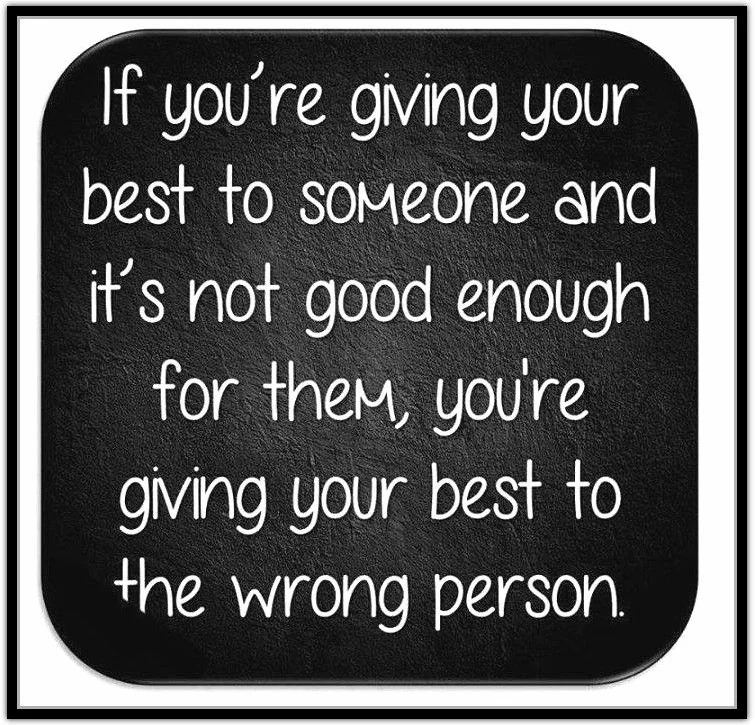
Don’t wait any longer, if you are considering leaving them, do so. Leave while you have some part of your strength left. Leave while you still know who you are and what you stand for. Leave before you are engulfed by their toxicity.
In my opinion, this mindset should be applied to all relationships: romantic, familial, friendship and in the workplace. If it doesn’t feel right, or if I have doubts about it, I am quick to end it. I no longer want to waste my time and mental health on cultivating relationships with people who are no good for me. In the past, these kinds of relationships have cost me far too much and I am not willing to pay that price again.
The problem is that we all seem to have an innate reaction that ending a relationship is a ‘bad thing’. Whenever we hear the news of a couple breaking up, a friendship ending, or somebody leaving a job (whether voluntarily or involuntarily), we are sad for those involved and we want to make it right again. We want the relationship to be rekindled.
But why? Why do we react to that news as a bad thing?
I admit, ending a relationship hurts. The concept of ‘heartbroken’ aptly describes what we are all capable of feeling. But from my experience, that pain is temporary. Over time it dissipates as we forge new relationships and begin to detach from the emotion of the moment. We are capable of healing and as we establish new connections, love returns.
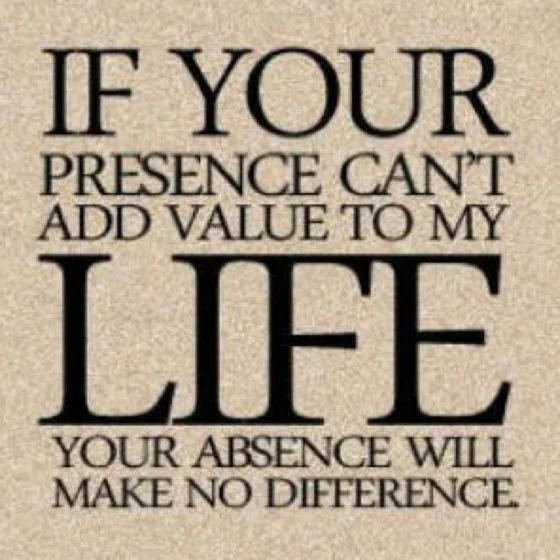
Whilst the suffering is clearly something that we want to see reduced, there is something more that we need to consider. There is a reason that the relationship ended, and continuing on with it could cause a whole other type of suffering, one that is significantly more detrimental to the mental health of those involved.
You are allowed to end toxic relationships. What is worse? The ending of a relationship or of the relationship going on for far too long?
This doesn’t just apply to abusive relationships, but relationships in general. If you are unhappy and you stay with someone beyond a healthy time, there is a very real risk of developing resentment for them. The cute foibles and nuances of their manner become anger inducing annoyances. Their loving concern for your wellbeing becomes overbearing control. Small things become major issues as plans for your shared future starts to feel more and more like plans to imprison you.
The same is true for work. If you are not excited about it, if it does not bring you joy or align with your values, what’s the point? Money can be made in other ways. If you add to that a toxic relationship with your boss or co-workers, you are in line for a midlife crisis, where in twenty years you realize that you need a change, that the promotion no longer matters and that your health and happiness is worth more than an extra zero on your pay check.
A saying that helps me to put all of my relationships into perspective points out that ‘relationships either end in death or break up’. Whilst this realization feels initially depressing, it is actually quite liberating. Every relationship: friends, work and romantic will all end in one of those ways. Either they will be there for the rest of my life, or they won’t.
For those that will stay, I want to cultivate the relationship and ensure that we are good for each other. But for those that will leave on bad terms, they may as well be gone as soon as possible. It is better for all involved that way.
So what’s making you stay?
Moving On From Toxic Relationships
Moving on from toxic relationships is rarely a single decision, but rather a gradual process of emotional, psychological, and sometimes practical disentanglement. Even when a relationship is clearly harmful, the pull of familiarity and shared history can make leaving feel incredibly difficult. Part of moving forward involves grieving what was, what you hoped it could be, and the version of yourself that existed within that dynamic. It also requires learning to trust your own perceptions again, especially if you have been manipulated, dismissed, or gaslit. Over time, moving on becomes less about escaping the other person and more about reclaiming your sense of self, your boundaries, and your right to relationships that feel safe, respectful, and nourishing.
This blog post was inspired by the book: Running On Empty by Jonice Webb. If you are trying to understand why certain relationships feel draining, confusing, or painful, Running on Empty by Jonice Webb is a great resource. Webb explores the concept of emotional neglect in childhood and how, even in the absence of obvious trauma, growing up without adequate emotional attunement can shape the way we relate to ourselves and others. Her work helps readers make sense of patterns such as people-pleasing, difficulty with boundaries, and a persistent sense of emptiness, all of which can keep us trapped in toxic dynamics and I think can help those of us moving on from toxic relationships better understand their own story.
Moving on from toxic relationships is deeply connected to the themes explored in the book, because many toxic dynamics are rooted in unmet emotional needs from earlier in life. If you grew up with emotional neglect, you may have learned to tolerate poor treatment, minimise your feelings, or stay in relationships that drain rather than nurture you. Understanding this pattern can make the process of leaving and moving on feel less like a personal failure and more like a necessary act of healing. As you begin to recognize what was missing in your emotional upbringing, you can approach the end of toxic relationships with greater clarity, compassion for yourself, and a stronger sense of what you actually need and deserve going forward.
This process begins with recognition, actually seeing the relationship for what it is rather than what you hoped it could be. This can be confronting, because it often means grieving not just the person, but the fantasy of them, the future you imagined, and sometimes even parts of yourself that were shaped around keeping the relationship intact. Moving on from toxic relationships often starts internally before it becomes visible externally.
On a practical level, moving on from toxic relationships can look like creating distance, which might mean setting boundaries, reducing contact, or in some cases cutting contact altogether. It can involve untangling shared logistics, such as friendships, finances, or routines, which can feel overwhelming but is an important step in reclaiming your own space and autonomy. It can also mean deliberately building a life that is not organized around that person anymore, reconnecting with other friends, rediscovering interests, and slowly reorienting yourself back toward your own needs and values rather than theirs.
It is important to get very good at learning to say no in a healthy way, have strong but respectful boundaries, and learn to prioritize looking after yourself, and being honest about what you want and what you do not want.
Emotionally, moving on from toxic relationships involves processing what happened rather than simply trying to forget it. This might include therapy, journaling, talking with trusted people, or engaging in somatic or trauma informed practices that help your nervous system recalibrate after being in a prolonged state of stress. You may cycle through anger, sadness, relief, guilt, and even longing, and all of this is a normal part of the process. Healing is not linear, and there may be moments where you question your decision or feel tempted to go back.
What moving on from toxic relationships looks like over time is a gradual softening of the hold that the relationship has over you. You may notice that you think about the person less, that your body feels safer, or that your self esteem begins to rebuild. You start to recognise red flags more clearly, not from a place of fear, but from a place of self respect. You may also begin to feel more at home in yourself, more certain of your boundaries, and more capable of choosing relationships that are genuinely reciprocal and supportive.
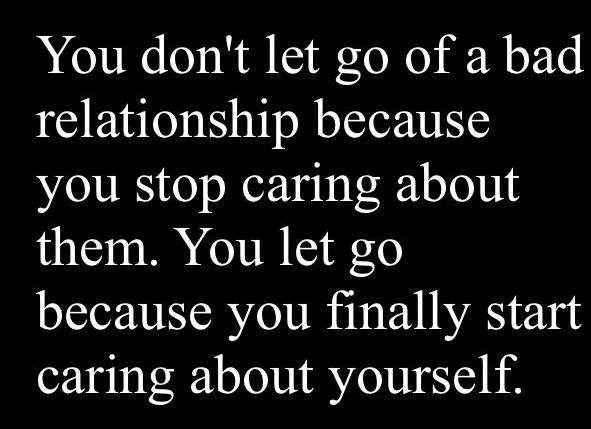
Ultimately, moving on from toxic relationships is not just about leaving a toxic person behind, it is about moving toward yourself. It is about learning that you deserve relationships that nourish you, that you are allowed to prioritize your own wellbeing, and that you can create a life that feels calmer, freer, and more aligned.
Types Of Toxic Relationships
Toxic relationships do not always look the same, which is why they can be difficult to recognize while you are in them. There are many types of toxic relationships, the most common one that is generally talked about is about romantic partners, however toxicity can happen in any relationship like a friend, family member, a coworker or an acquaintance.
In some types of toxic relationships, toxicity is loud and obvious, such as in relationships marked by emotional manipulation, verbal aggression, or controlling behavior. In these dynamics, one person may consistently undermine, criticize, or dominate the other, leaving them feeling small, or constantly on edge. The harm is often clear in hindsight, but in the moment it can be normalized, especially if conflict, tension, or inconsistency was familiar from earlier life experiences or childhood trauma.
Other types of toxic relationships are much quieter and more subtle. These can include emotionally neglectful relationships, where your needs, feelings, and experiences are routinely dismissed. On the surface everything may appear calm, but beneath that calm is a lack of genuine connection, or emotional safety. Over time, this kind of relationship can be deeply damaging because it teaches you that your inner world does not matter and that you must silence yourself to keep the peace.
There are also relationships that become toxic because of imbalance rather than intentional harm. For example, one person may consistently give while the other takes, or one person may depend heavily on the other for emotional regulation, identity, or stability. These dynamics can leave one person feeling exhausted, responsible for the other, or trapped. Recognizing the different forms toxicity can take, and the different types of toxic relationships, is an important step in understanding your own relationship patterns and beginning to move toward healthier, more mutual connections.
Toxic relationships can exist in any area of life, not just in romantic partnerships. They can occur with friends, family members, coworkers, romantic partners, and even acquaintances. Recognizing this is important, because toxicity is defined more by how a relationship makes you feel and how you are treated, rather than by the type of relationship itself.
In friendships, toxicity may show up as one sided effort, gossip, emotional manipulation, or feeling drained or judged after spending time together. A toxic friend may consistently dismiss your feelings or make you feel small, rather than supported. Because friendships are chosen, this can be particularly painful, but it also allows you to be more intentional about who you keep close.
In romantic relationships, toxic dynamics can include control, jealousy, gaslighting, inconsistency, or emotional abuse. These relationships are often harder to leave because of attachment, shared history, or the hope that things will improve.
Toxicity can also appear in workplaces, where power imbalances and competition can create environments of stress, undermining, or exclusion. Because jobs are tied to financial security, people often tolerate behavior they would never accept elsewhere.
Even with acquaintances or more distant connections, repeated disrespect, boundary crossing, or interactions that leave you feeling uneasy can still have an impact. Ultimately, toxic relationships can exist anywhere there are people, which is why awareness and boundaries are so important. It is good to learn and acknowledge the different possible types of toxic relationships and therefore set yourself up for success. Once you know and understand what a toxic relationship looks like, and that you are allowed to end toxic relationships, you can build a life where you feel that most of your relationships are for the better and do more good than harm.