Antidepressants are one of the most commonly prescribed treatments for depression, but how effective are they, and what should you consider before taking them? Do antidepressants make you emotionless too?
Mental health is complex, and while medication can be a helpful tool, it’s not a one-size-fits-all solution. In this post, I draw on my lived experience with mental health challenges, as well as my extensive work in mental health advocacy, to provide an honest perspective on antidepressant medication.
Below I will explore emotional blunting and the question of antidepressants making you emotionless, as well as benefits and limitations, and alternative treatments for depression, helping you make a more informed decision about your mental health journey.
Emotional Blunting
Antidepressants, particularly selective serotonin reuptake inhibitors (SSRIs) and serotonin-norepinephrine reuptake inhibitors (SNRIs), can sometimes cause emotional blunting or a feeling of emotional numbness in some people. This side effect doesn’t happen to everyone, but here’s what it involves:
There is an alteration in emotional processing. Antidepressants regulate neurotransmitters like serotonin and norepinephrine, which can dampen both negative and positive emotional intensity, leading to feeling like all the highs and lows of life are gone.
For some, emotional blunting might feel like relief from overwhelming sadness or anxiety. However, it can also reduce the capacity to feel joy or deep connection.
Higher doses are more likely to cause emotional blunting, and adjusting the dosage might alleviate this effect.
So Do Antidepressants Make You Emotionless?
In my work I often get asked the question, do antidepressants make you emotionless? Short answer, yes for me at least. Long answer, it’s complicated.
I grew up living in the household of an addict, paranoid schizophrenic, chronic hoarder and drug dealer. This left me psychologically damaged.
Throughout my life, my mental health has gone up and down dramatically. At my worst, I had issues with substance abuse, self-harm and suicidal idealisation. On more than one occasion I almost followed through. Eventually I went to a doctor and was put on some antidepressants.
The antidepressants saved my life. There was a long time that without them I would have ended it all. However, despite being great at keeping me alive, they were certainly not ideal. Regardless of the type I tried, I faced the same issues.
First were the debilitating side effects.
I faced constant nausea and headaches as well as issues with perception and balance. I couldn’t drive, eat or even watch television. I was forced to stay in bed and just rest. This was clearly not ideal, but after two weeks these symptoms started to disappear and after a month I returned to normal.
Psychologically, I was doing better after taking antidepressants. Scores on a variety of psychometric testing indicated significant improvements and I was no longer suicidal. My doctor marked me down as a successful case and began to monitor me with declining frequency.
Having been so low for so long, once the side effects wore off, I was in a state of relief. However, I didn’t feel completely like myself anymore, something was off. The extreme lows were gone, but so too were the highs. I started wondering, do antidepressants make you emotionless?
The medication had the effect of moving me into what felt like a narrow range of existence. Life was just dull. Neither good nor bad, just ‘meh’. It was like the volume was turned down, colours were muted, the excitement gone. I lost interest in the activities that I once found enjoyable and began to lose contact with close friends. I just seemed to be floating moment to moment, going through the motions of each day until it came time to sleep.
I no longer wanted to kill myself, but I also couldn’t feel the joys of life that make it worth living.
After a few months of living in ambiguity, I realised what was happening and I didn’t like it. I wasn’t sure what to do. It felt like I faced the choice between living a muted existence or not living at all. There had to be another way. So upon a friend’s advice, I started seeing a psychologist for regular therapy sessions (great idea) and stopped antidepressants cold-turkey (horrible idea).
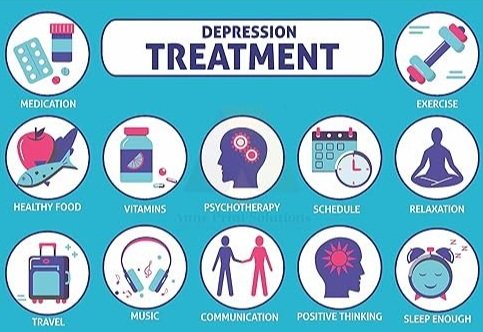
Alternative Treatments For Depression
Thankfully I was now receiving expert help. I was finally receiving expert advice in relation to my mental health and starting to talk about alternative treatments for depression. My psychologist was able to recognise my problems and help me move towards recovery. She also worked me through the transition off medication and initiated other forms of therapy. I started trying alternative treatments for depression, that worked better for me and had less side effects, and thankfully were not causing emotional blunting and making me emotionless like the antidepressants had been. Medication became a backup to be used if my mental state falls significantly.
Please don’t get me wrong, I am by no means saying that antidepressants should not be used. They should. If an expert is suggesting that they could be a solution for you, please listen because they do work. I will go back on them if necessary. But as a long term fix I am not a fan. They should never be the only intervention strategy. They should be used in conjunction with other bio-psycho-social treatments that together will all transform a person’s life. This is where alternative treatments for depression come into play.
Combination and Alternative Treatments for Depression:
While antidepressants can be helpful for many people, they are not the only option for managing depression. In fact, the most effective approach often involves a combination of treatments that address mental, emotional, and physical wellbeing. It was with this attitude that I’ve been trying combination and alternative treatments for depression.
From therapy and lifestyle changes to holistic practices and emerging treatments, there are many ways to support mental health beyond medication. So let’s explore some combination and alternative treatments for depression that can be used alone or alongside antidepressants to create a more personalized and well rounded approach to healing.
Combination treatments involve using antidepressants alongside other methods, such as therapy, exercise, meditation, dietary changes, acupuncture and supplements. The idea is to take a holistic approach, addressing multiple aspects of mental health rather than relying solely on medication. Studies suggest that combining antidepressants with therapy, for example, leads to better long-term outcomes than using medication alone. This method will also increase the chances you can use a lower dose of antidepressants, as well as hopefully decreasing the side effects. If you are finding that antidepressants are making you emotionless, you may want to try this method.
In therapy, you may explore any trauma you have been through and work on healing. Speaking about emotional health and the complex relationship some of us have with our emotions, which has a part in depression, it is good to start to understand trauma and emotional health. Childhood trauma, particularly emotional neglect, can profoundly shape an individual's emotional wellbeing into adulthood. Unlike overt forms of abuse, emotional neglect is the absence of necessary emotional support during formative years, leading to feelings of emptiness, unworthiness, and difficulty in identifying or expressing emotions. These internalized experiences often manifest as challenges in self-care, relationships, and mental health, including depression and anxiety.
Dr. Jonice Webb's book, Running on Empty, which delves into the subtle yet significant impacts of childhood emotional neglect, really helped me on this journey. Drawing from over two decades of clinical experience, Webb provides insights into how unmet emotional needs in childhood can lead to a pervasive sense of "something missing" in adulthood. The book offers practical strategies for recognizing and addressing these deep-seated issues, guiding readers toward healing and emotional reconnection.
For those exploring the complexities of emotional health and the roots of adult psychological challenges, Running on Empty serves as a valuable resource. It aligns with discussions on the nuanced effects of antidepressants and the importance of addressing underlying emotional wounds.
Some people choose to wean off antidepressants altogether, and use the alternative treatments, and of course you can and should use a combination of these approaches! The more you do for yourself, the better your mental health will get in the long term. I know in the short term it can feel like you’re fighting a multi headed hydra, as you try one treatment at a time and are not sure of the results. I know the feeling! However, don’t give up, and keep trying and adding treatments that you know will help, and over time you will see many benefits.
Here are some examples you can try as combination and alternative treatments for depression:
Sport and Exercise - exercise releases positive hormones, gets the blood pumping and makes you feel good. In addition, the social aspect of a sport cannot be understated, the friends and comradery gained can last a lifetime.
Writing - this has been the best form of therapy for me and I couldn’t recommend it more. Poetry, free writing, fiction or a simple diary, the choice is yours. Through writing, you can privately express everything, honing the words until they perfectly reflect how you feel.
Reading - is one of the best forms of mindful distraction. Reading forces you to focus on the present moment which, for the duration of the read, is in a fictional universe. Focused attention to the present moment has tremendous benefits for mental health and the escapism aspects of fiction cannot be understated.
Good Diet - you are what you eat, literally. Your brain is just another organ of the body and as such it is vital that it is being properly maintained. A good diet that has a balance of protein, carbohydrates and fats combined with lots of water will ensure that your hardware is well maintained and working properly.
Meditation - more and more people are turning to a daily meditation practice to help calm a troubled mind. There are endless methods, books and apps available, but the key here is to develop and maintain a habit. Personally I have found that mindfulness meditation focusing on the breath, mala beads or a mantra to be particularly beneficial.
Socialization - humans are social animals, we thrive on friendships and connection. Where at all possible, make the choice to hang out with your friends, even if for only a small amount of time. If there is somebody in whom you can confide, talk with them, you will be surprised what opening up to people can do.
Goal Setting – Setting and chasing goals can be amazing, choose something that you want to accomplish and begin to work towards it. This is what life is all about, striving to achieve something. If you define your goals and display them prominently they can provide a source of drive and motivation. Just make sure they follow the SMART principle.
Psychology - professional help cannot be understated. A psychologist is somebody who has trained and has experience helping people with similar issues to what you are feeling. Feel free to try a few different ones before settling, you need to ensure a good fit.
When explaining my position on antidepressants I sometimes find that an analogy can help. It is like trying to heat a house. Using antidepressants is akin to turning the ducted heating on. The house will warm up for sure, but there are some costs involved. For a start, the whole house is warm, not just the areas that you are in. Secondly the heat generated tends to dry out your skin leading to discomfort, and finally the noise produced can be annoying.
Yes, the house is warming up, but there are some other solutions that could also help. Solutions that if implemented would be far more sustainable over the long term. Put a jumper on, close the doors, do some exercise and drink some warm tea. Perhaps over time invest in insulated windows and walls. With a strong enough heater, you could get away without these measures, but you would be forever using it – racking up a massive bill in the process.
Just like the heater, antidepressants are always there, just as a back up to be used on exceptionally cold nights.
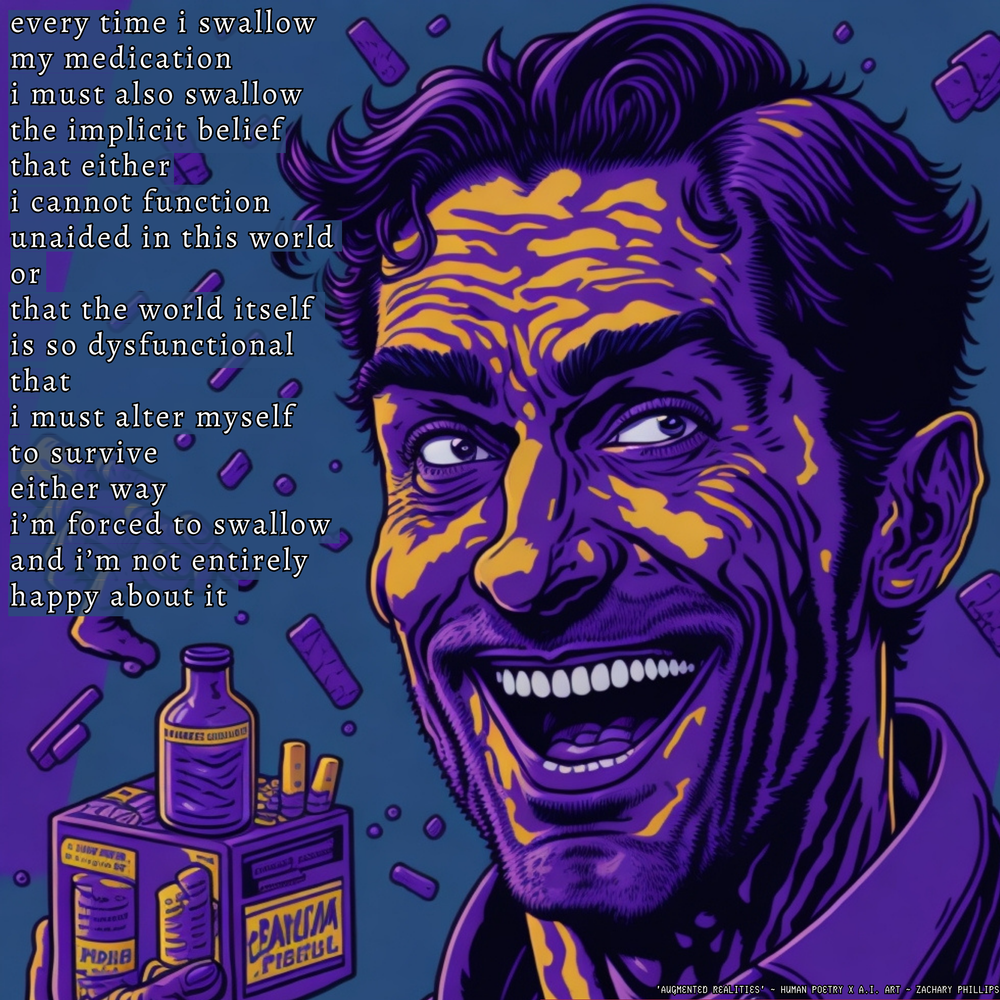
This image is taken from Augmented Realities: Human Poetry x A.I. Art
Update!
Eight years have passed since writing this post and I have indeed been through some exceptionally cold nights. So cold in fact that I felt forced to try antidepressants again. Like before, they saved my life, but also like before they also almost killed me with the side effects. Do antidepressants make you emotionless? For me, again, yes I had this side effect and wrote two poems about the process: I Float and Sertraline. And again, I stopped taking these medications.
Not wanting to die, but not being sure how to live, I decided to try a variety of alternative treatments for depression. The major turning point came first with TMS (Transcranial Magnetic Stimulation), which is a non-invasive, drug-free treatment that uses magnetic fields to stimulate specific areas of the brain. Most commonly used for depression, especially when other treatments like medication or therapy haven't been effective, TMS works by targeting the prefrontal cortex, an area linked to mood regulation. During a session, an electromagnetic coil is placed on the scalp, delivering repetitive pulses that help "wake up" underactive neural circuits. TMS is generally well-tolerated, with minimal side effects, and is used for depression and OCD, with emerging research exploring its use for anxiety, PTSD, and chronic pain. It’s a promising option for those seeking alternative treatments for depression. This treatment both significantly reduced my anxiety and peeled layers off my depression. But of course, below the anxiety and depression was more layers of trauma and memories to explore and integrate.
From there I tried EMDR (Eye Movement Desensitization and Reprocessing) with my psychologist, which is a structured, evidence-based psychotherapy primarily used to treat trauma and PTSD. Developed by Dr. Francine Shapiro, EMDR helps people process distressing memories by using bilateral stimulation, typically guided eye movements, taps, or sounds, while focusing on traumatic events. This dual attention is thought to help the brain reprocess stuck or unintegrated memories, reducing their emotional charge. Over time, painful experiences become less triggering and more manageable. EMDR is widely used and recommended by organizations like the WHO and APA for trauma recovery, and it’s increasingly being applied to anxiety, phobias, grief, and more.
I wanted to try this for years but my psychologist (rightfully so) didn’t think I was ready. The basic premise is that you recall significant events from your past and go over it again and again until your mind reprograms it into something that is less emotionally impactful. Sounds fine until you realise that this is the equivalent of cleaning out a wound and applying antiseptic. It stings!
With both TMS and EMDR under my belt, I was significantly better, but still nonetheless struggling with deep depression and trauma. I got so desperate that I got myself a medical cannabis prescription, and even began applying for experimental psychedelic studies (high doses of psilocybin).
The application process required me to return to my doctor for a referral. To qualify for the studies I had to be considered ‘treatment resistant’. I thought I was. I had the genetic tests to prove it - during one of my failed attempts at antidepressants I got a blood test that revealed that I would have adverse effects on all forms of antidepressants.
But my doctor pushed back saying that I hadn’t tried enough to technically qualify and had one more recommendation for me Agomelatine. He said that this one was different. It operates on the melatonin receptors (not serotonin as do typical SSRI’s), and as such would greatly improve my sleep. He also said that unlike SSRI’s, this one was significantly less likely to produce negative side effects and can be stopped instantly without the need to wean off them, and doing so wouldn’t cause withdrawals - this significantly reduced my fear.
The final piece of the puzzle came from my master of counseling studies. I read that medicine is far more likely to work if the taking of the medication is a choice made by the client, rather than them feeling forced, or it being an undesired last option.
This knowledge, combined with a CBT like reframe: I realised that simply put, the world is fucked. And whilst I would love to be able to live and survive and thrive without chemical supports, the world itself is not natural. I have spoken elsewhere but the simple summary is that we did not evolve to live in fast paced mega societies with constant access to calories, communication and a never ending push to attain capital.
Thus I accepted that in this world, I will need support, support in the form of Agomelatine.
It has been three months since I have started taking the medication and I have none of the negative effects described in the first part of this post. None.
It turns out that my analogy was only true for medication that wasn’t suited to me. This new medication, combined with daily meditation, good diet, exercise and other self care activities is exactly what I needed to survive and function in this world.
It was like I have been walking along a small mountain pathway that was covered in ice and subjected to gale force winds. It was slippery and the fall could be fatal. But now? Now the road is wide, the sun is shining, the wind is gone, and the fall is only a few centimetres.
Is this the ideal situation? No. But it is certainly better than struggling day in, day out just to get to the next day.
So, do antidepressants make you emotionless? Yes, if you are on the wrong one, or the wrong dose they certainly can. But if you find the right combination, along with the appropriate use of alternative treatments for depression, no. You will have access to emotions and those emotions won’t derail your life.
If you are would like some support on your mental health journey, I offer 1:1 counseling and coaching.
Disclaimer:
This article shares my personal journey and reflections on antidepressants. It is not intended to replace professional medical advice. If you're considering starting, stopping, or changing any medication, please consult a qualified healthcare provider to discuss your specific needs and circumstances.