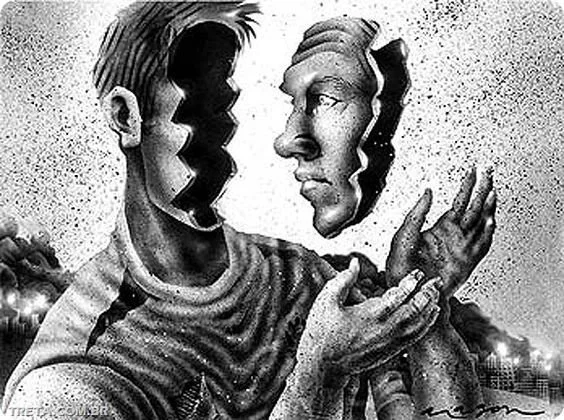
I Am Constant Change
Who am I other than constant change?
Thoughts come and go,
Same with emotion, memory and desire,
I am not who I was a moment ago,
And who I am won’t last.I am constant change,
I am the thread of time.Birth to death,
Ever changing,
Ever growing,
Never the same.I am constant change,
I accept this change,
Embrace it,
Lean into it.Therefore I won’t delete my past,
It was me,
Just as much me as my desire to delete it,
Who knows what I will think in one minute.
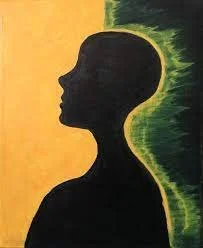
The sense of self is an illusion.
When we introspect, we see that there is nothing stable to hold onto. Our moods, thoughts, desires, behaviours, and opinions constantly change.
“Who am I other than constant change?”
Turn the camera inwards and observe for yourself. Watch the thoughts come and go. Notice how you did not choose the thoughts that came, nor the thoughts that replaced them. They just appeared and disappeared of their own volition. Watch, and see how emotions, memories, moods, and other mental phenomena arise.
Where are they arising from?
Who choose the specific phenomena to occur?
Where do they go?
Mindfully observe your mind and you will see the transient nature of the contents of consciousness. The mind seems to be filled by a constant, undirected flow of mental chatter.
True, you can ‘choose’ to think something. But who made that choice? Where did the impulse to choose come from? Could you stay with that choice, or does it flow on to something else?
“Thoughts come and go,
Same with emotion, memory and desire.”
Consider anger, jealousy, resentment, or any other negative emotion. These states can be overwhelming. They penetrate our memories and reasoning ability, causing us to revaluate our pasts, and act differently in the present. In the same way that looking through coloured glass seems to tint the world, our emotions impact our perceptions. The world is unchanged, but not from our perspective.
In the process of getting to know a new person, there are many potential opportunities for miscommunication. Perhaps you are not familiar with their brand of humour and thus struggle to interpret the meaning behind their words. How do you know if the comment was spoken in jest or malice? Likely you would rely on your internal state. If you are feeling confident or happy, your interpretation would be different than if you were shy or depressed.
Same comment, different interpretations.
“I am not who I was a moment ago,
And who I am won’t last.”
We are in a state of constant change, yet most people identify with a stable sense of self. I am Zachary; always have been and always will be. The problem is, that person never existed. My feelings of ‘Zacharyness’ are based on my current memories of myself. Cherry picked moments from my past that I may both be misremembering and misinterpreting.
Memory is terribly unreliable. My mood will impact my ability to interpret my past. False memories can be planted. The words I choose to prompt recall can change the memory, as can the very act of ‘viewing’ the memory. Thus the ‘Zachary’ that I remember is a fiction, one that changes depending upon my current state.
I evoke ‘Survivor Zachary’ when faced with hardship. When depressed who I am becomes ‘Failure Zachary’. When I am winning, I am and always have been ‘Successful Zachary’. In reality, I am all those people and far more. It is impossible to encapsulate the totality of one’s existence in working memory.
“Birth to death,
Ever changing,
Ever growing.”
Consider the parts that you let go of; the childish ignorance, the teenaged immaturity, or the young adult shame, and the instances of selfishness and insecurity that you worked though. Are you still those things? Or are you who you have become? Either way, you are in a constant state of flux as you learn, adapt, and grow.
When you interact with someone, you communicate and share information; you influence them, and they influence you. You are both changed. The same is true for books, poetry, music, and movies, we consume them so that we can be changed. We want to be moved, to learn, or to grow. We want to lose ourselves in the narrative, or become the hero in a fantastic journey.
“Never the same.”
Mindfulness meditation helps us to step back and detach. It enables us to see our true nature. By nonjudgmentally observing the present moment we see how our minds cling to the thoughts that arise. We become hypnotised by the contents of consciousness to such an extent that we believe we are those contents; even though they are ever changing and often contradictory. We identify with one thing and then the next.
“I am constant change,
I accept this change,”
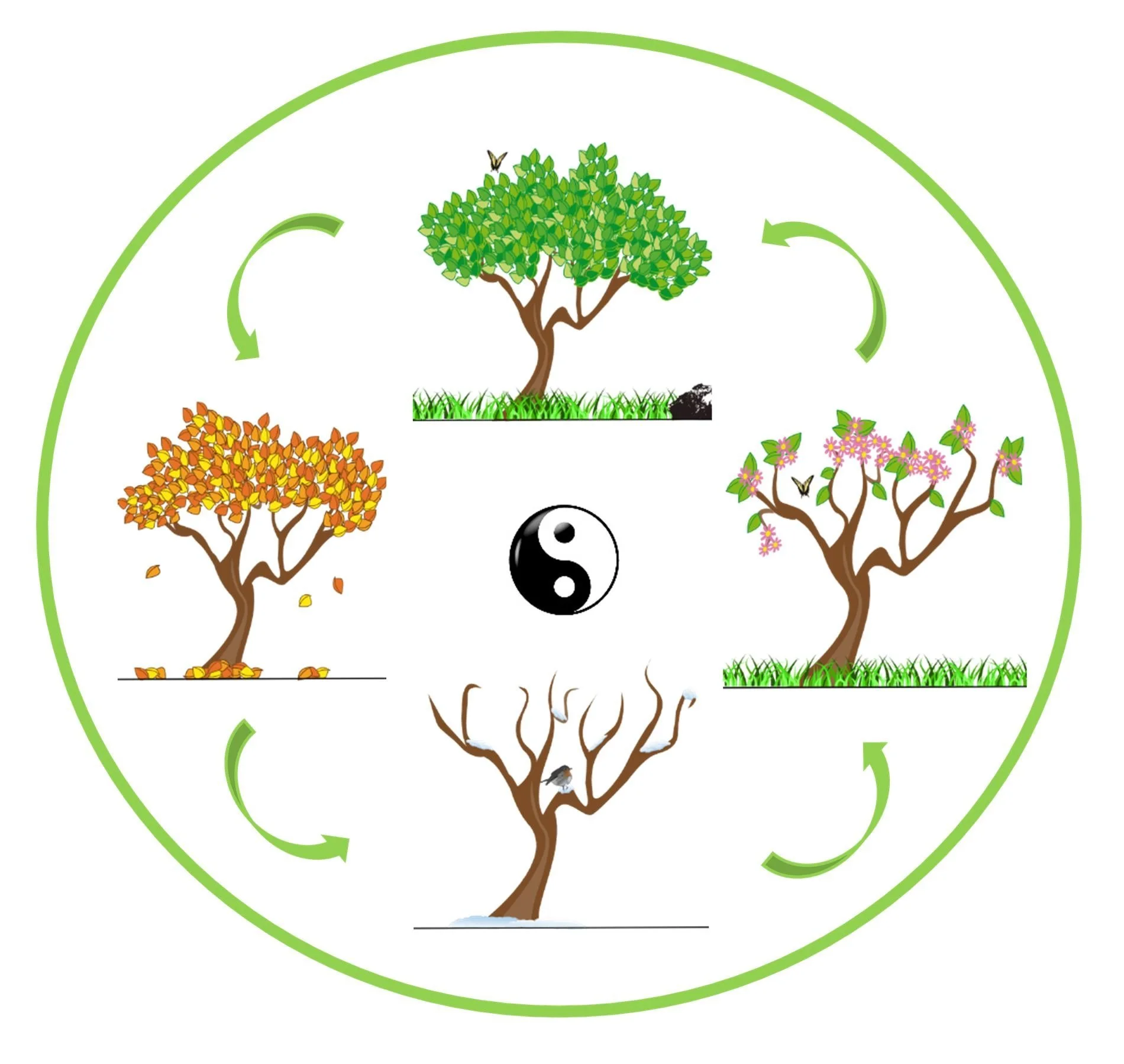
There is a real beauty that comes from identifying and accepting yourself as constant change. You are no longer stationary. No longer defined or limited by your past. You are a process. This moment is just one of the many connected, yet separate moments that will make up your journey from birth to death.
You are free to change course at any time.
When you accept that you are change, you become free. You are able let go of the safety rail and jump, to take risks, and thrive. By accepting that you are change, your ego diminishes. You can push through failure because it now has nothing to hold onto; there is no self to identify with it. That failure is just another aspect of your changing nature; another part of the process.
“Embrace it,
Lean into it.”
When our current mental states do not reflect our previous mental states, we are faced with incongruity. We look at our past actions and their consequences with extreme displeasure. We want to run from our past or retell it in a new light.
It is tempting to put yourself in the shoes of the past. To use your present knowledge, wisdom, and hindsight to justify your actions and reword your reasons for making certain choices. But it is impossible to truly remember who you were. Who you are now is not the same as who you were back then. Yet, as you think back, you will inject your current mental state into those memories. You cannot help it, the drive to be consistent is too strong.
“Therefore I won’t delete my past,
It was me,
Just as much me as my desire to delete it,
Who knows what I will think in one minute.”
By trying to reconcile your past with your present, you are destroying it. You are creating a fictionalised narrative that is divorced from reality. When you accept that you are change, you can look back at your past with the knowledge that you are no longer that person. Instead, you are the process, the journey from then until now. This enables you to let go of embarrassments, resentments, and grief. By leaving the past alone, you can witness the truth of your growth, and see how far you have come.
From there it is easy to extrapolate just how much further it is possible to go.
“I am constant change.”
This chapter is from the book Reflections Of The Self: The Poetry, Insights, and Wisdom of Silence