Invisible illness is one of those experiences that can reshape your entire inner world while leaving your outer life looking deceptively ordinary. It’s something that I understand deeply, not just as a mental health advocate, writer, and creator who has spent years speaking openly about trauma, recovery, and self-harm, but also as someone who has lived through the weight of invisible illness myself. In this post, I explore what invisible illness means, why it’s so often misunderstood, and how recognising it can build a more compassionate world for everyone carrying battles no one else can see.
What Is An Invisible Illness?
An invisible illness is any condition that affects a person’s physical, emotional, or mental wellbeing but isn’t obvious from the outside. It can’t be “seen” right away. Someone might appear healthy, energetic, or “fine,” while quietly managing symptoms like mental illness, chronic pain, fatigue, anxiety, or autoimmune conditions. These conditions are often long-term, unpredictable, and deeply personal, which means many people carry them without any visible signs.
Invisible illnesses matter because they challenge the assumption that we can see who is struggling just by looking at them. They remind us that suffering is sometimes silent, and carried with incredible courage.
Invisible illness comes in many forms, affecting the body, mind, and nervous system in ways that aren’t obvious to the outside world. They include chronic pain conditions like fibromyalgia and migraines; autoimmune diseases such as lupus, Crohn’s disease, and rheumatoid arthritis; and mental health conditions including depression, anxiety, PTSD, and OCD.
Many neurodivergent conditions, like ADHD or autism, are also invisible, especially when someone has learned to mask their symptoms. Others live with chronic fatigue syndromes, long COVID, endometriosis, digestive disorders, or neurological conditions such as dysautonomia and epilepsy. What these invisible illnesses all share is that they profoundly impact daily life while remaining hidden, leaving many people to struggle quietly with symptoms that are very real, just not clearly visible.
The Five Reasons People Won’t Believe You Are Ill When You Have An Invisible Illness:
One of the hardest parts of living with an invisible illness is that people don’t always believe you. When your symptoms can’t be seen, they’re often minimised, questioned, or dismissed altogether. You might be told you “look fine,” or that you’re overreacting, or that you should just push through it. Over time, this can erode your confidence and make you doubt your own experience. It also means you have to become exceptionally good at communicating your needs, explaining your limits, setting boundaries, and asking for support even when it feels uncomfortable. Invisible illness requires a kind of advocacy that many people never have to develop: the courage to speak up for yourself, again and again, so that your reality is understood and your needs are respected.
With that in mind, here are five reasons and ways that people won’t believe you:
1) They Can’t See The Invisible Illness

It is very easy to empathise with someone with a physical illness or injury. Mainly because it is visible. For physical conditions, it is often hard not to notice the signs or symptoms that come with the condition. You can see the arm cast, the wheelchair or glasses. The person’s gait may be restricted, or a part of their body may be damaged in some capacity.
But noticing it is only the first part of empathising. To truly empathise you have to be able to imagine what it is like to be that person. With physical conditions, it is a lot easier to put ourselves into their shoes, we have all suffered pain or damaged ourselves in the past and as such, it is easy to extrapolate the feelings of a sprained ankle to a broken bone, or even to an amputation.
Thus, when we see people with a physical condition, we are sympathetic to their cause, we can see how they are suffering and can make an estimated guess as to what they can and cannot do easily.

Invisible illness is different, we can’t see into the person’s mind and thus struggle to notice that there even is a problem in the first place. There are no visible signs of anxiety or depression. Unless they have been triggered by something, someone with PTSD will seem fine to an outside observer, for example.
So although you may be feeling anxious, depressed in pain, or any other invisible symptom, people may not notice the signs. Thus, other people may never realise that you are struggling in any particular moment. Because just by looking at you, you seem fine. Humans use their sight as the primary method of information gathering, so at a glance, it is often impossible to see the signs of invisible illness and mental affliction, particularly because…
2) We Hide The Symptoms of Invisible Illness
Let’s be honest. Due to stigma, lack of understanding, and general embarrassment, often we will do our upmost to hide our symptoms of invisible illness. In general, most people just want to get by with their day to day activities and not focus on their conditions (mental or physical), so we will do what we can to not draw attention to our conditions.
We will take the necessary steps to ensure that we seem (and are) fine.
If for example, you are anxious or triggered by elevators, you may prefer to take the stairs, or make sure to live and work on the bottom floor. You might allocate extra time prior to a social event if you know that your condition demands it. You may even turn down offers for particular events or activities if you know it will be an issue to attend.
Personally, I sometimes get overwhelmed in social situations due to the sheer volume of people present. In the past, I have ignored this build up and subsequently suffered an anxiety attack or panic attack. Now I make allowances for this and make sure to excuse myself for a time, until I feel okay again. I am intentionally hiding the symptoms of my anxiety.
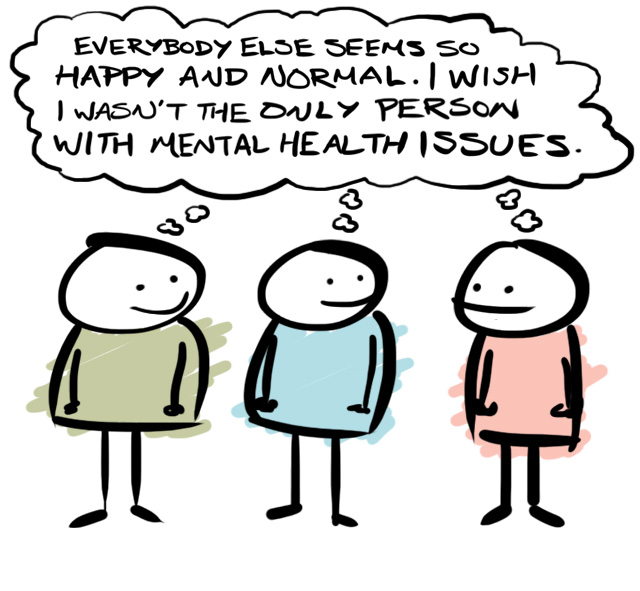
We now have a situation where people with mental illnesses and invisible illness are doing their best to hide their symptoms and to appear fine. So, when we do share our inner state, or need allowances because of it, people around us are confused. Because in their mind, someone with an invisible illness should be acting one way, but we don’t. We seem just as functional as most people.
Our attempts to hide and manage our illnesses has caused people to believe that we don’t have one. Thus, they may down play our claims, especially because…
3) Everyone Claims To Be Anxious, Depressed or in Pain
Conditions like anxiety, depression, OCD, dissociation and PTSD are all quite serious and have specific diagnostic criteria that need to be fulfilled to qualify. However, these conditions also have the problem of being generalised to everyday personality quirks or mood variations. People will claim that they are mentally afflicted, using those terms, when in fact they are merely having a bad day.
How often do you hear of people claiming to have OCD, when someone notices that they keep their desk or car neat and tidy? Or that they are anxious prior to going out to a party, or that they feel depressed in the morning? Some of these people will be legitimately suffering from those conditions, but many won’t be.
Those words have lost their clinical meaning, and are now being used as everyday vernacular. The result is a watering down of the meaning of those terms for invisible illness, to a point where everyone can claim to be mentally afflicted. Thus, when someone who is legitimately suffering from an anxiety disorder claims as such, people may not realise the severity of their claims. Instead they presume that they are using the word in the same fashion that everyone is using it. Thus, they may subsequently disregard or downplay these claims of anxiety, because they could (in their mind rightly) argue that everyone is anxious.
There is also the issue of using mental illness and other forms of invisible illness as perceived or actual attention seeking…
4) People Like To Seek Attention
Everyone likes to feel special and to be noticed. This attention can come from recognition and congratulations for accomplishments as well as in the form of sympathy for issues or ailments.
We get used to this dichotomy from the moment we enter school. Our teachers give us attention when we produce good work, but also when we scrape our knee. We observe that when a fellow classmate is crying or disruptive, the teacher spends time with them. We see how our parents treat us when we are sick. We learn that when we do great things, or when bad things happen to us, we are showered with attention.
Thus, later on, when we are feeling depressed, slighted or anxious there is a real temptation to overplay those symptoms for sympathy. What’s the point of crying in sadness, if there is no one there to see it? This process can lead to the perception in the general public that people with mental illnesses, particularly those who self-harm or are suicidal, are just doing it for attention. This perception is not completely wrong as there is a significant proportion of people that do overstate these issues and even invent them to get attention.
The problem is that these false positives have the impact of tarnishing the legitimate claims and cries for help of people who are truly suffering. Those with actual concerns may get lost in the noise of the crowd.
In addition, it is a smaller mental step to presume someone is ‘faking it’ for attention than being legitimately in need. Because if the person is faking it, the only action required is to ignore those problems or give some generic, non-committal advice. However, a lot more is required if somebody takes the steps to believe those claims.

5) People Don’t Know How They Can Help You With Invisible Illness
Mental illnesses and other invisible illnesses are often confusing both for the sufferers as well as those who are close to them. Symptoms often present on a spectrum, and the person’s ability to function can vary significantly from day to day.
Sometimes, there are strong emotions involved and often a lot of embarrassment. The causes of the invisible illness may be unknown or can be too traumatic to share. Conditions often come co-morbid with other conditions, each presenting with a unique symptomology. Finally, the suffering is internal and often invisible to the outside observer.
Thus, when someone says that they are suffering from an invisible illness, the person listening may have no idea how they can help them. Should they offer advice? Resources? Help? Or should they just listen? If they haven’t experienced the condition themselves, they may struggle to grasp its severity. They may be worried that whatever suggestion they offer could be taken as a form of offence.
This may cause them to either give the generic cliché advice that is so infuriating, or they will presume that the suffering caused by the invisible illness is just a more extreme version of what they themselves have felt. “Just relax! When I am anxious a warm bath always helps”.
Sometimes it is easier for people to ignore a difficult problem than to go through the arduous process of addressing it. This is particularly true when there is an emotional or relational gap in the between people. For example, a work collage does not have as much of a vested interest in understanding someone’s point of view, compared to their spouse. Subsequently they may not take as much time in attempting to understand the condition.
If you share your invisible illness with someone, you are asking them to imagine a condition they can only read about and can’t experience. Really you are asking them to change the lens that they view the world by. To overlay upon their reality, one of your condition. They have to put that lens over every situation that they have ever lived through, every action both minor and major, every interpersonal interaction, as well as over their hopes and plans for the future.
This is no minor undertaking that you are asking of them. You are asking them to change perspectives and to see the world through someone else’s eyes, not an easy task to say the least. This is why, no matter how hard you try, it feels like people just don’t understand. They probably don’t. I would suggest that it is impossible to truly understand someone else, particularly the more divergent their experience is from your own.
So What Can Be Done? Let People Know About Invisible Illness!
With all that in mind, I feel like I should offer a solution to this problem that can help to ensure that people will start to take your condition seriously and begin to give you the support and understanding that you need.
In my opinion, education about invisible illness is the best hope. So, share personal accounts, blog posts, books and videos that talk about your condition in a way that you feel best exemplifies what you are experiencing. Maybe share this blog with people if you want to, or check out this podcast and this poem. Take this process slow and be ready to answer any questions. Although those questions may seem offensive at first, at least they are being asked and thus you are getting through.
The spoon theory by Christine Miserandino is an excellent starting point for any conversation about mental illness and should be read by everyone. It provides a simple to understand analogy of invisible illness, that can be used to explain why you can and can’t do certain things.
For my part, I write this blog and podcast, talking about my experiences with mental illness, primarily anxiety, depression, dissociation and childhood trauma. This cumulated with releasing my first book ‘Under the Influence – Reclaiming my Childhood’ where I share my experiences growing up as the son of an addict, dealer, chronic hoarder and paranoid schizophrenic. I have found that by sharing my experiences, I am starting to help reduce the stigma about invisible illness and give people a realistic insight in to a variety of areas that are seldom discussed.
If you have the desire, potentially consider sharing your story as it may help to give a better understanding of your conditions to the world.
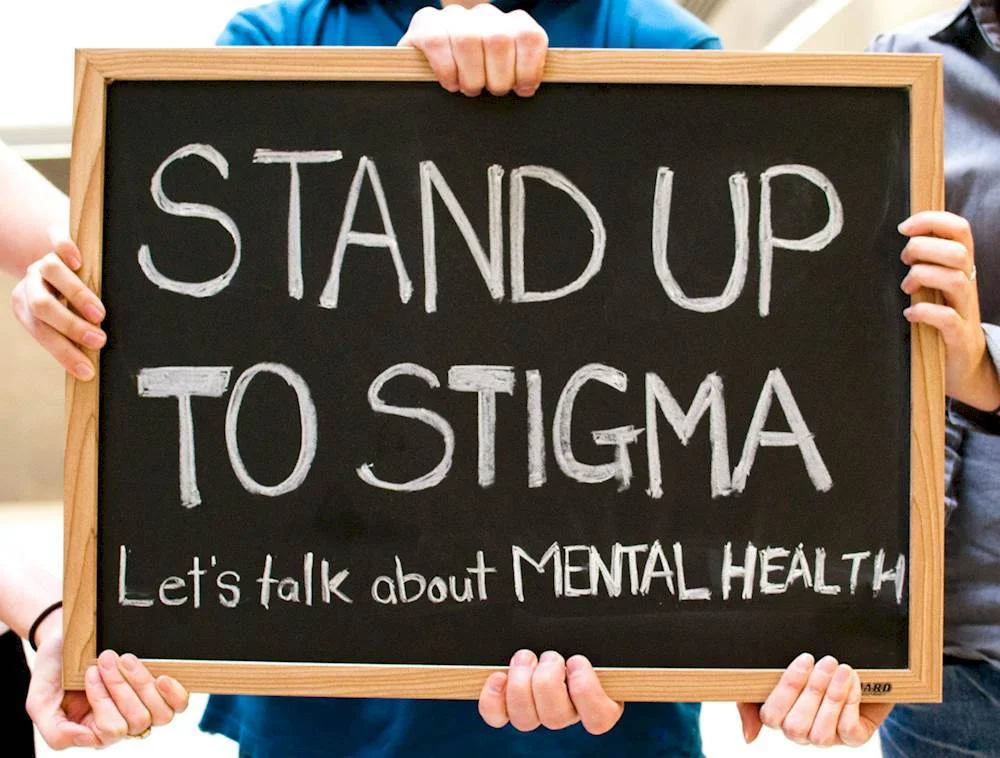
More broadly, don’t be afraid to open up and talk about your condition and experience of invisible illness with people. Not just when you are suffering, but when you are in a good place too. That way you will be able to break some of the stereotypes and start a dialogue. This will potentially help you to ensure that you are supported the next time your condition flairs up again.
The stigma around invisible illness and mental illness will not disappear overnight, and there will always be people who will downplay your condition. However, the more we honestly talk about and share the truths of invisible illness, the more society will begin to understand.