Presentation Matters: How a Poem Looks Changes How It Feels
- A chapter from How To Write Evocative Poetry -
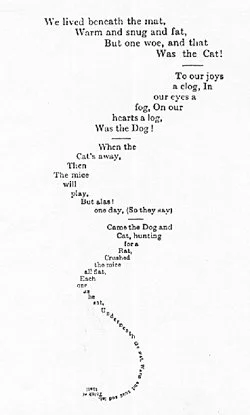
Consider how you want the poem to ‘look’ on the page. Make an active choice about its alignment, paragraph structure, title, and the use of capitalisations and grammar (or lack thereof). You are the artist and therefore you will want the words on the page to transmit to the reader in a certain way. These choices help to make that happen – of course, the reader is free to take your work however they like! Just be internally consistent within the poem.
Compare the poems presented within this book and you will see that each one is purposefully presented to convey a particular meaning, emotion, or point. Had I formatted them all the same way, some of the impact and meaning would have been lost, thus weakening those pieces. Unless you are creating poetry that follows an established, predetermined structure, you are ‘free’ to present it however you like. Do not take this to mean that you can just mindlessly slap some amazing imagery on a page and expect it to be appreciated. Presentation matters. Take a page to listen, below I will present it as intended, and then I will present a few more times with different formatting – you will quickly see how doing so changes the piece entirely.
a page to listen
my poems
are tragic
so that my life
isn’ti write
to release the demons
i invented
to protect myselfwhen I had
nothing else
i had a pen to speak
and a page to listenReformatted #1
My poems are tragic so that my life isn’t. I write to release the demons I invented to protect myself. When I had nothing else, I had a pen to speak and a page to listen.
Reformatted #2
my poems are tragic
so that my life isn’ti write to release the demons
i invented to protect myselfwhen I had nothing else
i had a pen to speak and a page to listen
I could go on with the different reformatting attempts, but it’s clear that looks matter. The line breaks imply a slight pause in thought and emphasis. The use of grammar informs how the poem should sound when spoken and read, and the purposeful choice to not use grammar implies other things. Before your poem is complete, make sure that you’ve considered more than just the words you are using, but also how those words are presented on the page, and of course, how that presentation will impact how it would be spoken if read out loud (or as the reader’s inner voice). Thus, if you want them to ‘get’ the cadence of the poem you have written in a certain way, make sure it is presented that way. If you aren’t sure, read it out loud, or better still, get a trusted friend to do so (without prior prompting) and just listen to how your poem sounds, based on how it is written. Tweak the presentation accordingly.
Summary
The presentation of a poem impacts how it is perceived and how it will be received.
This chapter is from the book How To Write Evocative Poetry