When You Look Inside
When you look inside,
Where does your attention go?
An internal energy,
A power,
A flow.When you observe the breath,
What do you now see?
A play of consciousness,
A freedom,
Serenity.When you move the body,
What do you feel?
A sense of integrity,
A space,
An ideal.
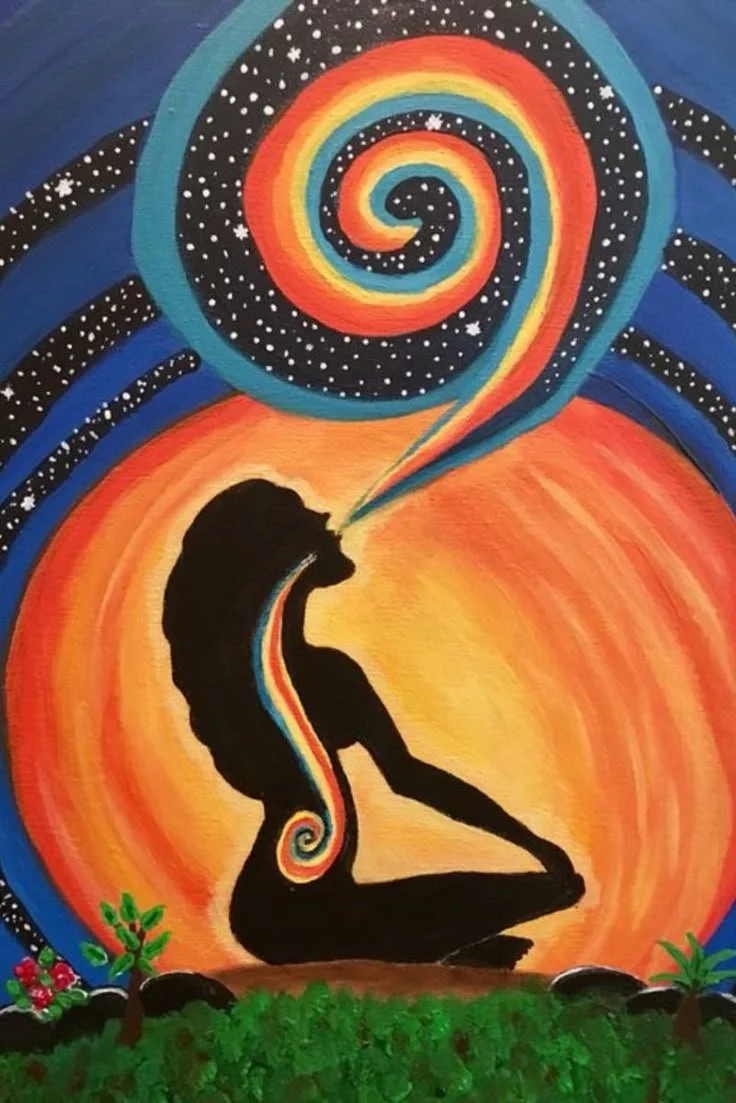
“When you look inside,
Where does your attention go?
An internal energy,
A power,
A flow.”
When we turn the camera inwards and look at ourselves, we start to notice our little foibles, intricacies, and thinking patterns. We learn how we respond to the world and the people in it. We see how we handle stress, uncertainty, loss, and success. With this knowledge we can then predict how we will act in response to future events, and thus make appropriate choices.
Self-awareness is the key to all success.
Wherever possible we should choose the options that best match our personalities, values, and physical dispositions. The closer we align our choices with our innate preferences, the less friction we will encounter. This applies across all areas of life, personal relationships, work, hobbies, future planning, family, and fun.
On one level, this sentiment seems rudimentary and obvious; just do what you like. But such an assumption may fail to address the subtleties necessary to achieve a frictionless life. If we just ‘do what we like’, we risk sacrificing the future for the sake of the present. It is rare that momentary pleasure will lead to positive long-term outcomes. Alcohol and drug use, sugary treats and binge watching the latest series may feel great, but it likely will not result in an amazing experience in later life.
We may also fail to realise the depth of the choices at our disposal. As children we are initially forced to accept the decisions and way of life instilled upon us by our parents or carers. Along with the society, time, culture, and the religion of our origin, we are programmed to believe and act along certain guidelines. We enter adulthood with a general understanding of what constitutes a ‘successful life’. This may involve the attainment of a certain career or financial position, a house and other positions, as well as what constitutes a ‘good’ relationship, both platonic and romantic. We basically have a blueprint for life, upon which we make our choices. Even those who rebel and break societal norms, often do so in response to that blueprint; thus, even counterculture is a product of the culture of the time.
So, when it comes to making choices for ourselves, it is important to recognise that we can not only make choices within the blueprint, but also ones that completely ignore it.
Would you prefer a promotion, or a completely different career? Do you even want a career, or would a collection of unrelated casual jobs be better suited to you?
Do you enjoy your friendship group and the activities that you currently undertake, or would you prefer to do different things with different people, in different contexts?
Should you be ‘the good family member’ and attend all the required social gatherings, or would you prefer to see them all individually, or not at all?
Are you a morning or a night person? Does the structure of your work to sleep schedule suit you, or would a midday siesta work better?
What about your diet, entertainment, education, and leisure?
Take some time to evaluate your choices in every area of your life and consider if you are choosing the options that best align with who you truly are. If you discover that you are not, you may have found the root cause of some of your general displeasure with life. Moving forward, make more appropriate choices, and observe how you feel, both about yourself and about the world.
This is not selfish, self-entitled, or wrong. Rather it is an expression of self-acceptance and the alignment of life to your true calling. When made, these choices will enable you to be the best version of you; a better parent, spouse, sibling, employee, and friend. There may be some teething issues as you make the transition, but ultimately your productivity and happiness will skyrocket, and those around you will surely benefit.
“When you observe the breath,
What do you now see?
A play of consciousness,
A freedom,
Serenity.”
There are of course, aspects to life where we have limited choices. Perhaps we need a certain qualification, level of experience, education, skill, or fitness level to continue down a chosen path. When these situations arise, we may need to change ourselves to best adapt. This may involve undergoing self-education, instilling discipline, or personal growth to be able to put us in the best place to manage. Even here, self-awareness is key. If we know how we learn, if we know our bodies and our minds and how they can change, we can take the best course of action to ensure that they do change in a timely and appropriate way.
Still, there will be times that we cannot choose, nor can we change ourselves to adapt to the situation. It is in these moments that we simply must accept life and persist. This is true for most losses, disabilities, injuries, setbacks, and relationship breakdowns. But even here, self-awareness enables us to better manage that acceptance process. The better we know ourselves, the better we will be able to manage our grieving process. It will still hurt, but we will be in a place to best manage that pain. We will know what kinds of self-care we need, and how to best ensure that we get it. We will know how the healing process will look for us, and we will be in a better place to ensure that it happens.
Put simply, the more self-awareness we have the better choices we will make, the easier we will be able to instil positive changes in our life, and we will be more able to accept what we cannot impact.
Over time we will feel less incongruence between who we are, what we are doing, and how we are living our lives. Negative self-talk will reduce, and we will stop attempting to alter our core selves to ‘fit in’ with the world. Rather, we will find a part of the world to inhabit that better matches who we are and where we are headed.
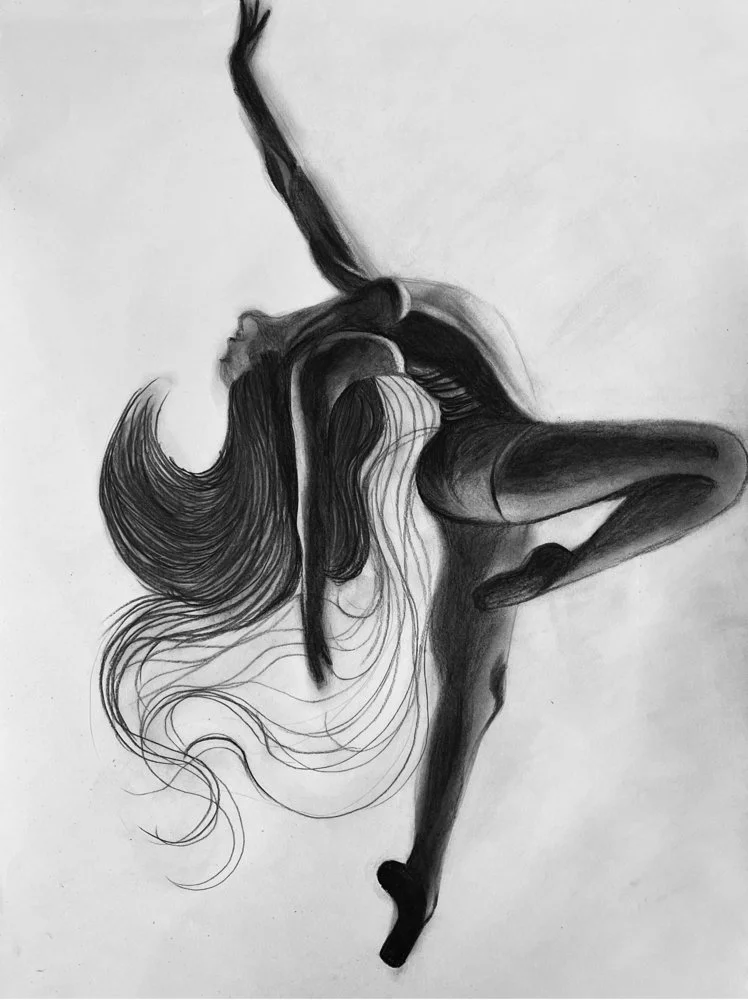
“When you move the body,
What do you feel?
A sense of integrity,
A space,
An ideal.”
Self-awareness is grown through introspection, meditation, and contemplation. Every time we sit in silence, read deeply, and consider our true nature, we are learning about ourselves. There will never be a time that you can say ‘I know myself’, rather it is a gradual process of continually learning who and what you are. Time and experience will change you, and as such you need to regularly look inside and discover the person that you now are.
This process can be both simultaneously beautiful, and downright confronting. Most of us have unresolved darkness inside of us, just waiting to be uncovered. Unresolved trauma, embarrassment, shame, loss, and pain will be there waiting for you. It may feel like a hidden army of demons, ready to attack. There is a real risk of letting these demons overwhelm us and cause us to turn our attention away from ourselves and onto worldly distractions. But there are three truths that when accepted will help us to continue our search.
The first is that those demons are still there, and still impacting us whether we are looking at them or not. It is almost like they are in there, causing structural rot. Subtly directing our choices and indirectly influencing our lives. Making us act irrationally, immorally, out of character, and against our best wishes. Unresolved issues are exactly that, unresolved. Until we take the time to discover what they are and address them, we will forever be at their mercy.
The second truth about these demons is that they are mostly bark and little bite. It is scary to turn the camera inwards and face these demons. They show their proverbial teeth, they threaten, they yell, and they scream. However, their ability to harm you is minimal. In my experience, the thought of looking at them causes more pain than doing so. It is like I have built up a wall and am afraid to remove it for fear of what it contains, not realising that I am no longer the person that erected those walls. That I am now far stronger and safer and far more able to cope with those demons.
One of the most therapeutic things I have done for myself is to turn and face the negativity of my mind. When something pops up, rather than run from it, I will now turn and look at it. Asking myself, ‘What does anger feel like? What does jealously feel like? What does fear and hatred and worry and all that negativity feel like? How big is it? Is it strong or weak? Is it insidious? Does it have a physical component? Are memories overlayed?’
By turning and facing what I am actually feeling, I get to see it for what it is. What that does is take the teeth out of the emotionality. It shows me that no matter how strong, they are just a collection of internal mental and physical phenomena. Yes, these are unpleasant, but when you break them down into their component parts their power is significantly reduced. The more I find myself looking at them, not only do the thoughts dissipate, but it also allows me to develop a little catalogue in my mind, a little idea of, ‘this is what these emotions feel like’ and ‘this is what it feels like to have these thoughts in this moment’.
The third truth about these demons, are that they are not you. No matter how much strength they attack with, no matter how overwhelming they are, they are not what you are. The fact that you are feeling the feelings shows that you are not those feelings. You may feel shame, but you are not that shame. You may feel anger, resentment, grief, or any number of other emotions, but you are not those emotions, you are the thing feeling them. This is an important distinction to keep in mind, as it enables you to maintain a level of detachment as you introspect. Those demons can yell and threaten all they like, but they cannot become you, for the simple reason that you are the thing observing them.
“Observe.
Look.
Feel.”
Over time, and with practice, you will start to develop some mental clarity. Space will open between you and your thoughts. When this occurs, you can start turning the lens of attention upon itself. You can start looking for your true nature.
Observe what it is like to observe your consciousness and its contents. What is it like to pay attention to things? What is it like to witness the flow of your mind? Eventually, you will be able to do this in real time. When you are talking with someone, you will notice emotions arising, memories being triggered and the connections in the flow of your thoughts. You will be able to ask yourself, what does it mean? How am I feeling right now?
Rather than responding to the emotionality, you will instead observe it with curiosity. You will find yourself cataloguing your reactions and developing a deep understating of who you are. You will be able to see how worldly events influence your inner state and see how you subsequently respond; as well as how these responses change over time and context. Eventually you will realise that you are not really a stable thing, but rather a process, a change, a flow.
All that I am is me in this moment right now. Once I finish writing this sentence, I am onto the next thing, and then the next. I am no longer that person. Likewise, after you have read these words, you are no longer that person. You will be the next thing, and the next.
Introspection will reveal a continual sense of self, but that sense sits separately to who you are. You are the attention, the act of looking, not the sensation of the self. In my experience this sense of self is impossible to pin down.
Try it. Where are you located? Can you find yourself? When I look, I see a collection of thoughts, emotions, feelings, life changing events, and stuff happening, but, the ‘me-ness’, the part that is me, the ‘Zac-ness’ is always changing. Depending on my mood, I feel like a different creature. When I am happy I am a different thing to when I am angry. Depending on the activity I am performing, what I am changes. When different people look at me in different contexts, they see someone different. So, what am I?
I am ever changing. I am ever growing. I am that state of flow.
“When you look inside,
Where does your attention go?”
This chapter is from the book Reflections Of The Self: The Poetry, Insights, and Wisdom of Silence