Reflections
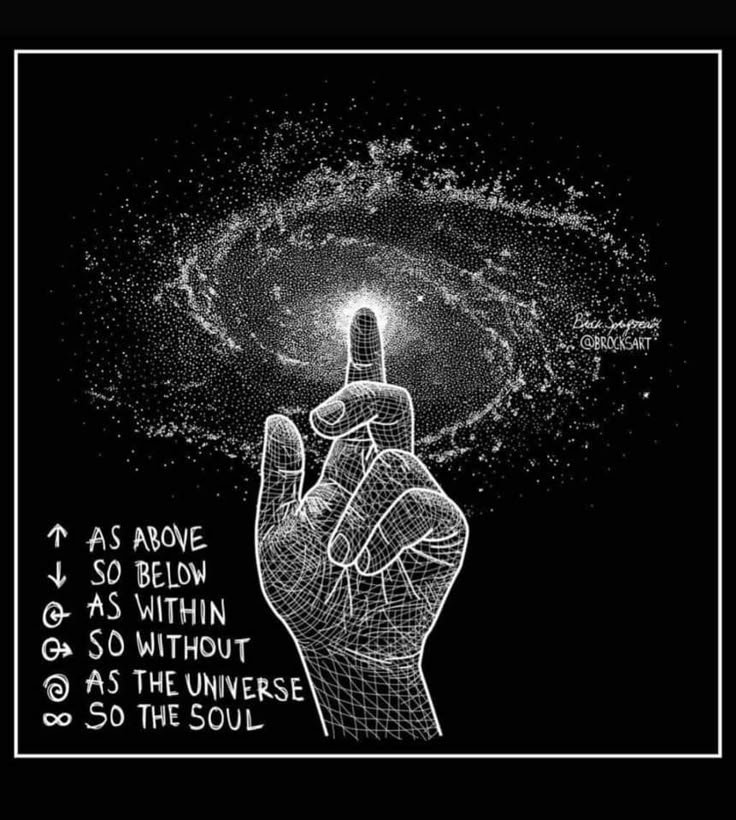
The world is a mirror to your soul,
Your happiness will be shown
On the faces of strangers,
Your fear will flicker in their eyes,
Your hope will express itself
In the poetry you read, as too will your ills.The mirror rejects what you are not,
Thus the world will always be you,
In this way you are trapped,
Rejecting love when you need it most,
And the advice you most need to hear.Yet you are not stagnant,
And neither is the mood of the world,
What happens in one, distorts the other,
Words can scratch, and actions can crack,
So keep a watch on its surface,
And a polishing rag in hand.Realise that the mirror is in fact imperfect,
Subject to change, manipulation and control,
Those reflections are more than phantasms,
They have a force that can break.So watch the mirror,
Be on guard against its influence,
But also influence your guard,
For your actions may inadvertently
Shatter someone’s soul.
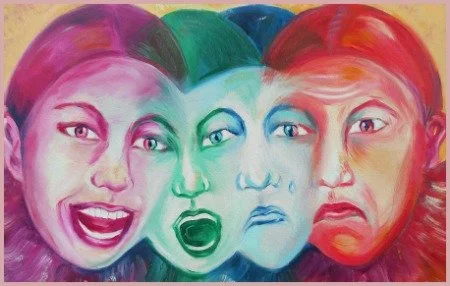
When you smile, the world smiles back.
When you fight, the world fights back.
“Your mood is reflected on the faces of strangers.”
We take on the moods of those around us. Happiness, anger, and fear spread like a contagion, jumping from person to person, mutating and growing stronger. This transmission forms the core of interpersonal relationships and is the basis of our survival as a species. We look at our tribe and make quick assessments. Should we run or fight? Welcome or shun?
It is in our biology; the whites of the eyes enabling us to instantly perceive the direction of a person’s glance. Our sensory and movement cortexes have disproportionately large spaces dedicated to the movement of minute facial muscles and their interpretation. Add to this the communication tools of language, tone, volume, and body positioning, and we are able to act in almost total congruence with our tribe members.
We are primed to interpret the intentions of others and act accordingly.
“The world is a mirror to your soul.”
You can test this for yourself. Try projecting a different mood and observe the consequences. Try being just 10% happier. Make your smile a touch wider, your eyes a little softer, open your body, and observe how the world responds. Then reverse it. Act a little bit closed off, a bit gruffer, curter, be sharper with your tone, and see what you get back. Experiment with projecting fear, confidence, sorrow, and elation.
Embody a mood and watch the reflection.
“Your happiness will be shown
On the faces of strangers.”
You can play this game in reverse. First, take some time to introspect. What moods are you feeling, and how strongly? What emotions are dominant? Are you anxious or depressed? Then as you interact with the world, watch what happens to your internal state. How did the world impact you? Experiment with your friends, partner, children, parents, workmates, and boss.
Do you like how they made you feel?
“What happens in one, distorts the other,
Words can scratch, and actions can crack.”
This is not some spiritual or karma-based mysticism. It is human nature. If we see someone happy, we naturally want to embrace that mood ourselves. There is a reason that they are happy, perhaps we can be happy along with them.
This is why young kids can be so intoxicating to play with, and why having a child can be so much fun. Kids are full of energy. They are bubbly, enthusiastic, and joyful. They want to experience life to its fullest, and make you want to do the same with them.
Their mood becomes yours.
“Yet you are not stagnant,
And neither is the mood of the world.”
If we accept that the world is a mirror, we can use it to our advantage. By observing the external, we discover truths about the internal, and vice versa. If we notice we are surrounded by pessimistic or depressed people, we can infer that we have and will be further influenced by them; and then we can act. If we notice that we have a negative mental state, we can choose to surround ourselves with positive people and change it.
“The mirror rejects what you are not,
Thus the world will always be you.”
I am not saying that our inner world completely and totally influences the moods of those around us. Rather, it is a subtle and cumulative process; whose impact simultaneously goes both ways. Your mood can sway, nudge, and tweak the world. By making an internal shift, you will have small but tangible impact upon the world.
If while shopping you wear a genuine smile and talk to the cashier, their day will brighten in your presence. Perhaps so much so that he in turn passes that same mood onto the next customer. This person, a CEO, then returns to work refreshed and subsequently her employees all benefit. They go home spreading their mood to their partners and then onto their children. The next day these children pass it onto their peers and teachers, and so on.
Now imagine if you had instead chosen to ignore the cashier, or project negativity.
“Those reflections are more than phantasms,
They have a force that can break.”
It would be ludicrous to assume that your mood was totally responsible for such a chain of events. But it is equally ridiculous to assume that it has no impact. Therefore, it is important to remember how we can influence others, and how others can influence us. That in some small way, what we think and do has power; we will get back what we put out. So, if you want joy, acceptance and love, project it. Put out the energy you want to receive, and you will get some of it back.
“The mirror rejects what you are not,
Thus the world will always be you,”
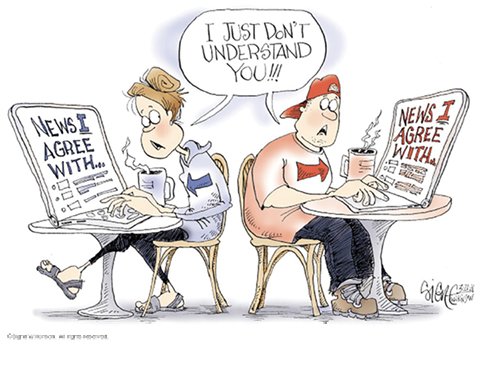
There is a risk of creating an echo chamber. A self-confirming entity that puts blinders over our eyes and locks us into a familiar rut. We tend to agree with information that confirms our beliefs and reject all dissenting voices. We attract and are attracted to people with similar views, pasts, religions, political views, and lifestyles as our own. Anyone different is categorised as the ‘other’. We judge our group’s behaviour as right, and then disparage the behaviours of others; deviate too far and we label them as immoral, unjust, and wrong.
This is an innate process. Evolutionary survival dictated that we accept our tribe’s way of doing things. As children, we followed the lead of our elders and survived, thus ‘proving’ that their way was the right way. All others meant difference and change; concepts that are risky, unproven, and likely dangerous.
“In this way you are trapped,
Rejecting love when you need it most,
And the advice you most need to hear.”
This process may have worked for primitive humans, but it falls apart with modernity. Communication technology and global transport have made the world smaller. Survivability is no longer the challenge that it once was. Thus, our desire to stick to the ways of the past is no longer as necessary. In fact, doing so may be counterproductive.
If you are surrounded by people like you, you may not have access to the skills, wisdom, and insights necessary to assist you when things go wrong. If you are faced with a perilous situation, emotional turmoil, relationship breakdown, work conflict, or any other life issue, you may find that the people around you cannot offer any novel advice. They see the world as you do and will therefore have little helpful advice to offer.
There is a risk of self-confirming biases. One group member suggests something, and the rest will agree. Why? Because they all have the same beliefs at their core. These similarities can run deep, down to fundamental views of reality, morality and meaning. This is natural and desirable, provided that you realise that you may be in an echo chamber, and thus blind to alternative possibilities.
“So keep a watch on its surface,
And a polishing rag in hand.”
Meditation, contemplation, and education will help you to detach and advance your way of thinking. It will reveal the potential trap you are in, allowing you to better navigate out of it. The real benefits come when you impact those around you with positivity. By expanding your mind, those around you will begin to do the same, and thus you will find yourself in a perpetual state of growth and expansion.
“Realise that the mirror is in fact imperfect,
Subject to change, manipulation and control.
Those reflections are more than phantasms,
They have a force that can break.”
There is a continual push and pull of influence and control. In the same way that you can impact the world, those in the world can impact you. It is vital that we are aware of how small events can leave lasting scars. Our actions can heal, but they can also hurt. ‘The axe forgets what the tree remembers.’ This saying suggests that if you go around being self-centred, abusive, or neglectful, you are the axe chopping down the tree. You might forget those casual words and actions; the ones that were ‘nothing’ to you. But to the tree that got chopped down, to the person who is on the receiving end, it might have a real and lasting impact. A felled tree may never recover.
Humans are far more resilient than trees. People can and do bounce back, but then again, sometimes they do not. Thus, it is important to realise that our actions can have lasting ramifications; both positive and negative.
“Be on guard against its influence,
But also influence your guard,
For your actions may inadvertently
Shatter someone’s soul.”
This chapter is from the book Reflections Of The Self: The Poetry, Insights, and Wisdom of Silence