The Gift And The Choice
The Gift And The Choice
When you can see your future,
How do you choose?
Every option has suffering.
Every path leads to death.Exponentially branching,
Your vision fades
The deeper you go.You can’t hold it all.
You don’t have the processing power.It hurts you, this gift.
You feel it all, all at once.So you block it,
Mentally put a stop to it.
You turn away from it,
And curse it.This leaves you dull,
Blind to the beauty of your choice,
The choice you made,
The choice to turn your gift off.For there is still life,
There is still love,
Vivid, like a flower in the dirt.If you only knew
how to look.
“When you can see your future,
How do you choose?
Every option has suffering.
Every path leads to death.”
The inevitability of death is overwhelming.
What is the point? Why strive when our accomplishments do not last? There is some logic to this line of reasoning. The fact is that we are going to die. And given enough time, all memory and evidence of our existence will fade from humanity’s collective memory. Most of us will not even be remembered four generations from now. Do you know anything about your Great Grandparents other than their names? Do you even know their names? Why should our lives be any more permanent?
For the few who do make a lasting mark, time will inevitably distil them into little more than a Wiki entry, just a summary of a lifetime of accomplishments into a couple of broad paragraphs or a book. How much do we really know about the great people of history? What truth remains after countless retellings and translations of their work? Even our Gods, once worshiped by entire nations will be practically forgotten. Consider your knowledge of the Ancient Greek or Roman pantheons, or the countless pagan deities of tribes across the globe. What do you know of these beings who were once considered to be the literal creators of the universe?
Us, our Gods, and everything we know will be forgotten, lost to history, or destroyed by the inevitable heat death of the universe.
“Exponentially branching,
Your vision fades,
The deeper you go.”
So then, why bother?
The present moment gives life meaning. Yes, it will all end, but that end has not yet come. The past is a memory, the future a dream. Now is all that exists. We could easily waste what we have now, worrying about what will come.
We do not know what happened before we were born, and we do not know what, if anything, happens after we die. Thus, our life now is all that we know for certain that we get. Before birth there was nothingness, blackness, a void. After death, there will be nothingness, blackness, a void. But right now, there is light, feeling, connection, and warmth.
There is something.
The present moment burns like a candle in the darkness. It is the sole point of illumination in an otherwise lightless continuum that stretches for an eternity. Our lives, whilst fleeting and impermanent, are the only real point of difference. It is that difference itself that grants our lives total meaning.
“It hurts you, this gift.
You feel it all, all at once.”
Pleasure and pain are not opposites, rather they are both contrasting aspects of existence. They are both parts of the present moment. Their true opposite is nothingness. The state before and after our lives. To feel anything is a point of difference and that difference has meaning. A single moment, even one of pain, is something to be cherished. The alternative is total and utter oblivion. A void. Nothingness.
“You can’t hold it all.
You don’t have the processing power.”
Most of the time, we do not dwell on such thoughts of existential nihilistic dread. We are too busy, too focused on our goals, or so concerned about fulfilling our responsibilities that we rarely stop to contemplate the future. This is no accident. To be human means to be able to think conceptual and abstract thoughts, granting us that ability to philosophise on the point of existence. Yet to evolve into the creatures we are, we first needed to survive. To learn to hunt, communicate and manipulate the land. Until very recently, day to day survival was not guaranteed. Thus, most of our physical and mental energy is primed towards the goal of ensuring that we and our tribe stay alive another day.
We are programmed to put philosophical thoughts aside until we have the luxury of time and safety to contemplate them fully. When the enemy is at the gates, it is time to put down the books and pick up a sword. We need to live to see the next day before we can justify the effort of contemplating the point of that day. We are privileged to live in such a safe and prosperous time. The security of our food, water and shelter combined with the permanence of societal structures, grants us the time and resources to commit to such lines of thought.
One counter to feelings of pointlessness is foster feelings of appreciation for the fact that we are in a place to even be having such thoughts. To generate gratitude towards the collective efforts of all of humanity, whose toil and struggle, created the grounds for your current contemplations. Of course, this practice will not do anything to change the logic connected to the feelings of pointlessness, but it will put them into context. It will highlight the luxuries that allow you to have those thoughts in the first place.
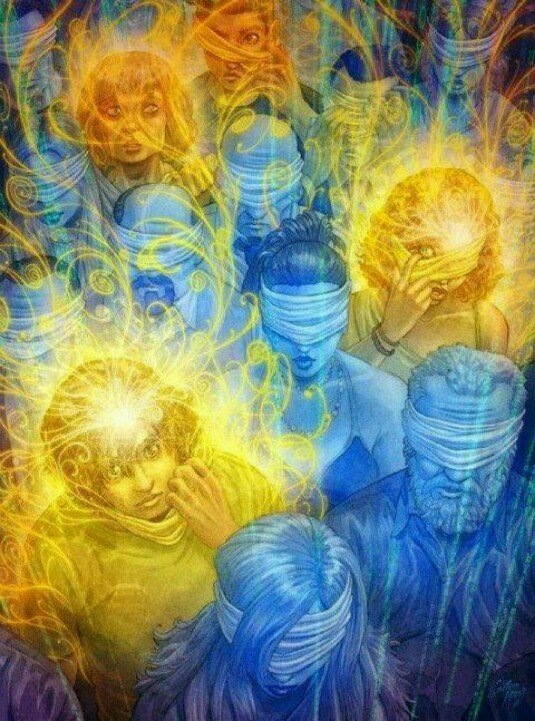
“For there is still life,
There is still love,
Vivid, like a flower in the dirt.”
These thoughts rarely come to mind when I am busy, happy, or focused. And when they do arise, they do not last long. Feelings of pointlessness dissolve when I hear my son laughing or see my wife’s smile. Similarly, when I have experienced instances of extreme danger, fear, stress, embarrassment or anger, these kinds of thoughts are pushed out of my mind completely.
The only time these thoughts are a real problem is when I am already in a bad mental state. If I am struggling with anxiety or depression, or am dealing with the symptoms of PTSD, thoughts of the pointlessness of life have a way of compounding those symptoms. Yet, if I am in a positive mental state, those same thoughts hold no power. Those very same thoughts could arise, presenting the very same ‘logical’ arguments and it simply does not phase me.
Sure, it may all end, but I am enjoying this moment, so who cares? This is not an ignorance is bliss scenario, I ‘know’ full well that this is all pointless, but I simply do not care. Love trumps all.
When depressed, I may concede that it is indeed pointless, and stop trying because what is the point? When happy, I may concede that it is indeed pointless, and try harder to accomplish my goals. If there is no point, if it is all meaningless, I can do whatever I like. I may as well try everything. What have I got to lose?
Mindfulness provides a useful antidote. If we are truly focused on the present moment, all philosophical traps lose their teeth. The thoughts, emotions, and moods that such contemplation triggers, are seen as mere constructs of the mind.
The logical truth of those thoughts holds no ground to the present moment. It is all a distraction from the present moment. Something to be acknowledged as you would any other mental phenomena, and then let go of.
Over time, and with practice, you will learn to detach yourself from such thoughts. They will still arise, but you will not be pulled by them. You will not become attached to or identify with them. You are over here, and your thoughts are over there. You will be able to see, feel and even agree in the pointless nature of existence without being drawn into the depression that often comes with such thoughts.
“If you only knew
how to look.”
As humans, we are cursed with the ability to see our futures. We are aware of the transient nature of existence, and that scares the hell out of us. There comes a time in everyone’s lives when we realise that to live now means to die later, and that we do not know what that process entails. This can be a terrifying realisation, and for some it can be crippling.
“So you block it,
Mentally put a stop to it.
You turn away from it,
And curse it.”
The strength of our fear can lead us to block off from the truth of our existence. We turn to substances, screens, and a relentless pursuit of materialistic gratification in order to put thoughts of death out of mind.
“This leaves you dull,
Blind to the beauty of your choice,
The choice you made,
The choice to turn your gift off.”
The problem is that the act of running from fear gives it power. The more we avoid asking the hard questions, and facing the true nature of reality, the more our fears grow. And the more they grow, the more actions we take to run from them. This cycle is hard to break.
But while it is true that death will come, it is not here now. Remember, the only thing that exists is the present moment; all else is memory or anxiety. All else is distraction.
The truth is that nothing can stop the inevitable. We will all die. Yet to dwell on this outcome, to let it take hold in our minds, is to let it take the one thing it has no right to claim: the present. When our minds become distracted by death, or when we ruminate on the unknown, we are no longer living. We are no longer focused on the now.
In a way, when distracted, we are already dead. And if we are already dead, what is there to be afraid of?
This chapter is from the book Reflections Of The Self: The Poetry, Insights, and Wisdom of Silence