Your Actions Are A Prayer
Your actions are a prayer,
To the Gods of functionality.
Your mind, your body, your spirit.
Honour them.Wake early.
Sit in silence.
Then move,
Attend the iron church, or run, or dance.
The Gods smile upon those who act.You are what you do.
So study your craft.
Work on your craft.
Share your craft.Take criticism and praise in the same breath,
You are neither as good or bad as they say.Embrace the daily grind.
Work when nobody’s looking.
Work when nobody cares.
Work when you are doubting yourself.
Work, because to you, work is play.
Push through all resistance.
The lights are never all green.
There is always a reason to stop.Don’t.
Your actions are a prayer.
You are what you do.
So act like the best version of you.
This is the true power of
Faking it until you make it.
Of embodying your true calling,
Of greatness.This change will take time.
There is a lag between action and reward.
And when it does come,
It won’t be announced with fanfare.Growth will be incremental.
Small gains,
Tiny improvements,
Minute advancements.
This is as it should be.So act.
Act as a prayer to the Gods of functionality.
And have faith.
Faith in the process,
Faith in the future,
Faith in yourself.And remember,
You are what you do.
We judge people on their actions. We look at their history, accomplishments, qualifications, and experiences, and then we want that person in our lives. We rarely consider what the person thinks of themselves. A good builder is good, not because they say and believe themselves to be good, but because they create sturdy, reliable, and safe houses.
Yet, when we judge ourselves, we do so based on momentary feelings. We may be positive, believing ourselves to be a paragon of beauty, virtue, and capability. Or we may be negative, believing ourselves to be total failures, unworthy of love and respect. These judgements are rarely accurate. We are too close to the subject matter, and our egos have a vested interest in keeping itself protected. We have the capability to justify anything. To distort reality such that our actions become the cornerstone of morality, truth, and rightness. When we acknowledge our shortcomings, we are far more forgiving of those shortcomings in ourselves than in others.
We think ourselves disciplined, even as we eat the cake, because we know how hard dealing with that client was.
We think ourselves good workers, even as we slack off on social media, because we know how capable we are compared to other employees.
We think ourselves loyal, even as we ogle someone walking down the street because, we know that looking really doesn’t count as cheating.
We think ourselves good parents, even as we use television as a babysitter, because we know how long our day was.
It is easier to change our ethics and perceptions, than it is to admit that we have acted in an undesirable way. Most people who break laws or hurt others will find a way to justify their actions. It is a rare person that can see their failings, admit to them, and commit to taking actions to fix them.
“You are what you do.”
Self-improvement comes when we observe our actions.
If you want to know why your diet is not working, track what you are eating and how often you are exercising. If you are brutally honest with yourself, if you note everything down, you will see exactly what you are doing. The data does not lie. It is easy to justify breaking your diet here and there. It is easy to say to yourself that this one workout session does not matter. It may not, but if you look at the data you will see what you are really doing, not what you think you are doing. This will help to shatter any illusions as to the reality of your situation, and why your ‘diet is not working’. If you are following it perfectly, and not getting the results, then it is time to get better dietary advice. However, if you are not following the diet, you are to blame.
This approach can be applied to your financial, romantic, employment and educational situations. Your results are a representation of your actions.
“The Gods smile upon those who act.”
Large goals can be overwhelming because we recognise just how much we will need to do to be successful. A better approach is to embrace the process, letting success come in its own time.
If you have a goal to reach the top of a mountain, why not make the journey up the mountain as enjoyable as possible? Rather than trudging through each step as something to survive, why not make the journey a holy pilgrimage. If you enjoy the climb, you are infinitely more likely to make it to the top.
This is why the goal of ‘more money’ is terrible. Not only is it undefined (how much money is enough?), but it also does not account for the way that you would get that money. There are many ways to earn a living, but most of those ways would be a living hell. It would be better to pursue a vocation that you would do for free and work out a way to monotonise it. That way, each step up the ‘more money’ mountain is enjoyable. True, your financial peak may be lower than the potential peak of a purely financial pursuit, but at least you are all but guaranteed to reach the top of your mountain. If you enjoy the process, you will persist through all challenges, setbacks, and obstacles. Your journey will simply happen.
“Your actions are a prayer,
To the Gods of functionality.”
Your actions have consequences; you will be rewarded or punished accordingly. This is not karma or mysticism, just simple cause and effect. If you meditate, exercise and practice self-care daily, your mental health will improve. If you avoid toxins, consume positive words, eat well, and surround yourself with the people you want to become, you will see improvements across the board.
Who will become smarter, the person who reads daily, or the person who does not?
Who will get fitter, the person who exercises daily, or the person who does not?
Who will think clearer, the person who meditates daily, or the person who does not?
Who will have an easier retirement? The person who invests, or the person who does not?
This goes both ways; if someone’s actions are toxic, their life will soon become toxic too.
“Your mind, your body, your spirit.
Honour them.
Wake early.
Sit in silence.
Then move,
Attend the iron church, or run, or dance.”
To predict someone’s future, look at their habits. What do they do each day? How do they spend their free time? What do they do with their money? Who do they associate with, and what do they do with them? What do they eat? What kinds of media do they consume? How much time do they commit to personal development, maintenance, and self-care? Do they consume intoxicants, and if so, what sorts and how often?
They will end up like every other person who acts the way that they do.
If they smoke, chances are it will kill them. If they overeat, chances are they will become obese. If they study and read, chances are they will have increased career success.
It is tempting to believe that you and the people close to you will be the exception to the rule, but this is simply not the case. From a detached, societal perspective it is clear that people reap the consequences of what they sow. It is only our intimate proximity that enables us to see the human story behind the statistics. While this is good for interpersonal relationships, it blinds us to the truth.
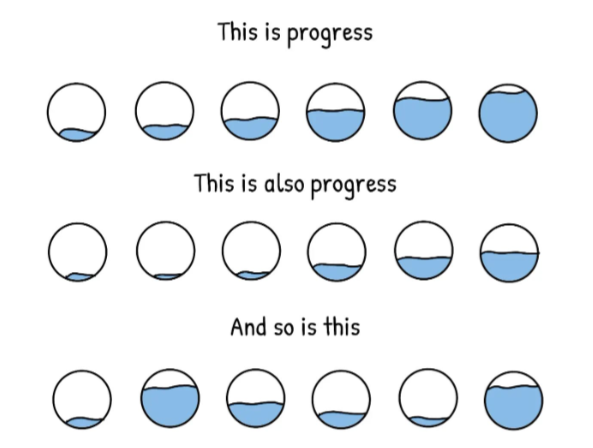
“This change will take time.
There is a lag between action and reward.
And when it does come,
It won’t be announced with fanfare.
Growth will be incremental.
Small gains,
Tiny improvements,
Minute advancements.
This is as it should be.”
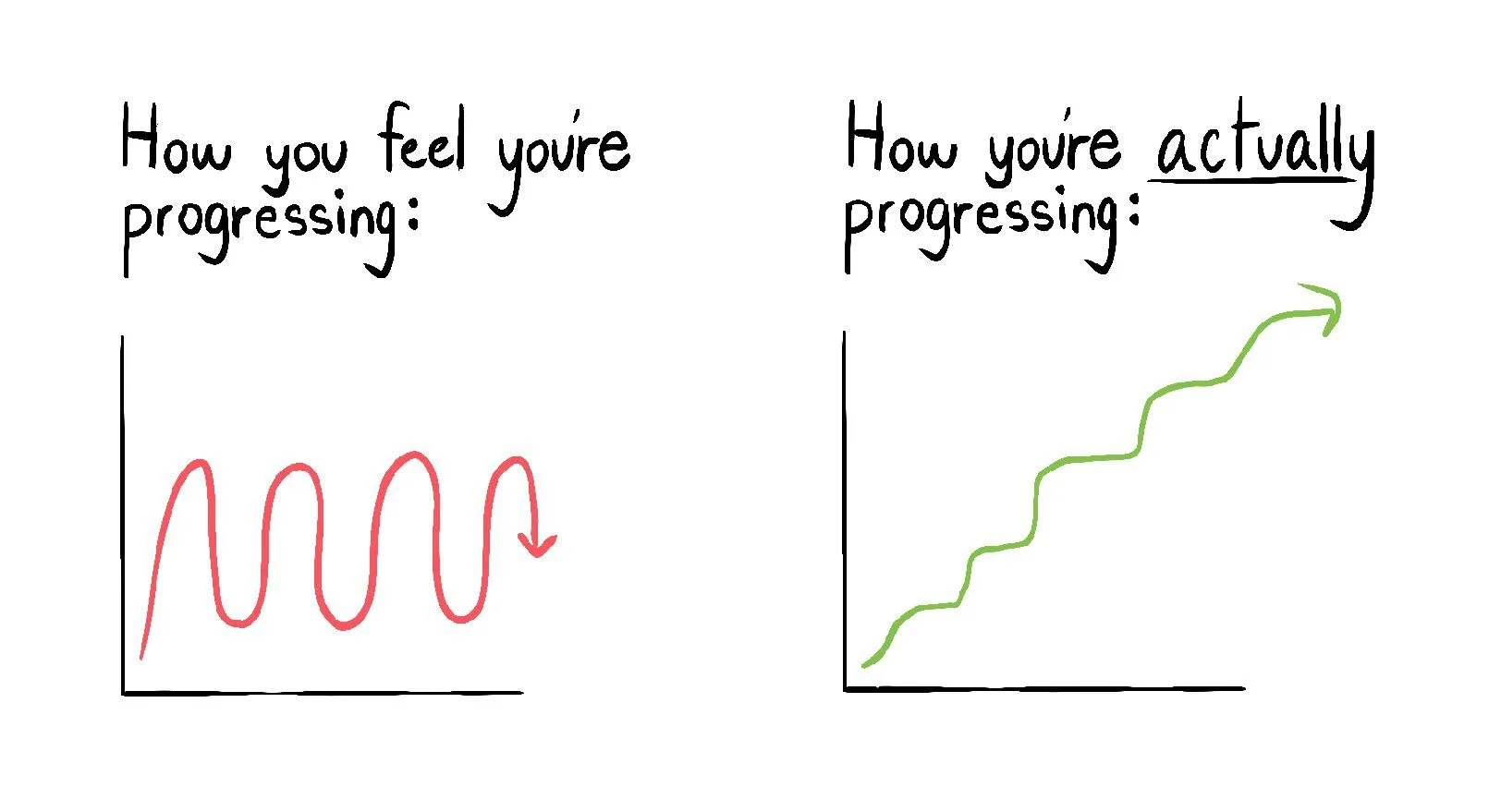
There is a lag between actions and rewards.
You need to exercise daily for months before you will see any changes. The same is true for the benefits of meditation, education, self-improvement, and investment. And once these rewards come, they will be small and incremental. But over time they will grow and compound. Eventually you will get into a groove and start to win. You just need to have faith in the process, to know that your actions now will lead to positivity later. If you keep walking, eventually you will reach the top of the mountain.
This faith is hard to attain at first, but that is what faith ultimately is. A belief without proof. Yet, in a way, we do have proof; just not a personal one. If we look towards the examples of people who have come before us, studying their methods and results, we will see what works. All we need to do is accept that we are the same creatures as them, and thus subject to the same laws of growth and development as they are. We will get similar results to them, if we act as they did.
Be careful of the average person giving outstanding advice. Unless they have lived it, they are not speaking from experience. They are book learners, parroting the advice of those who have done it. Better than nothing, but just barely.
If you want to get rich, ask for advice from the richest person you know, not from the poor person who has read all the books on the topic. If you want to get flexible, ask for advice from those who can do the splits. If you want to be the best parent, artist, or performer, ask those who are the best in their field. If you do not have direct access to such people, read their books, watch their videos, and listen to their podcasts. Have faith that if you follow their advice, or specifically do what they did, you will achieve similar results.
“Work when nobody’s looking.
Work when nobody cares.
Work when you are doubting yourself.
Work, because to you, work is play.”
It is a common misconception that successful, happy, and healthy people are lucky. That by some cosmic miracle the stars all aligned to give them perfect genetics, upbringings, and opportunities in which to thrive. The reality is that most of the time they made their luck. They acted to capitalise on the situations that they found themselves in.
They instilled discipline into their lives. They woke early, exercised, meditated, learnt, studied, and grew. They said no to distractions and yes to opportunities; despite knowing that taking those opportunities would take tremendous amounts of hard work. Luck may have played a role in their starting positions, but they are the ones who acted from there.
I am yet to come across anyone whose situation would not be improved by taking action.
“Push through all resistance.
The lights are never all green.
There is always a reason to stop.
Don’t.”
Every successful person overcame obstacles on their journey. But for the most part we are unaware of the struggle. We see where they ended up and assume that they were destined to get there all along. Because we know they were successful, we diminish the severity of their struggle. In real time, they could not see the future laid out before them. No one told them that it would all work out for them in the end. They just took the actions necessary to overcome the problems as they arose.
We need to approach the obstacles in our path with the same mentality. While it is tempting to believe that the latest setback or failure is permeant and total, it only becomes that way when we stop taking action to overcome it. There will always be a reason to stop; it is our choice to capitulate or act.
“Your actions are a prayer.
You are what you do.
So act like the best version of you.
This is the true power of
Faking it until you make it.
Of embodying your true calling,
Of greatness.”
On the journey to your own brand of greatness, you may feel like a fraud. You may feel that until you have made it, you are not yet qualified to be called the creator that you are. But the simple truth is that if you are doing it, you are it.
What level of success would be necessary for you to accept that you have ‘made it’? Take a moment to consider your answer. What objective measures of success would it take? What number of sales or views? How many hours on the job, or number of completed events?
When will you be able to say that you have arrived?
If you do not specify the goal posts, they will continually shift. You may sell a piece of art and still not call yourself an artist, because ‘it was only one piece’. When the second is sold, you could discount it because ‘I haven’t had an exhibition yet’, and when that exhibition comes you could still deny that you are an artist because it was not attended by the right people, or because you got some negative press.
The truth is that you are an artist because you create art. If the only people who could call themselves artists, were those who were living off their art, the world would be drab indeed. Creation is about expression, not the market. By starting your journey up the mountain, you are saying to yourself and to the world that you are what you do; and while external successes in the form of money, followers or achievements are welcome, they are not the point. The point is to embrace the process, and to live a life that is dedicated to your craft.
The enjoyment of creation is the reward, all else is a bonus. I am a poet. Why? For no other reason than because I write poetry. Readership and sales are nice, but they do not define who or what I am. You are what you are because you do what you do.
“You are what you do.
So study your craft.
Work on your craft.
Share your craft.”
People will always criticise and condemn, attempting to tear you down to their level. They are jealous, believing that you are in some way better than them. This is something their egos cannot stand; so they make comments, plant doubts, and suggest that you should simply quit.
These people are not walking towards the mountain. They are the ones who are stuck in comfortable ruts and freak out when they see you attempting to climb out. They have a close-minded worldview, one that is predicated on the belief that great success cannot come to them or anyone they know. So, when they see your initial actions, they may laugh and put down your efforts. They may suggest that you need to relax and take a break. They may see your struggle and not understand why ‘you are so worked up over something that is not important’. They may see your dedication and take it as an affront, suggesting that the changes you are making are negative. These comments may not even be malicious, but rather suggested out of care.
Family and friends may not understand your goals or the process by which you will achieve them. They may have a traditional view on how the world works and as such may not understand your approach. From their perspective, your actions are concerning, abnormal or pointless; so, they tell you so. Their care for you causes them to suggest that you play it safe. Thus they advise you to take the well-worn path they took, in order to achieve the same kind of lifestyle they achieved. It worked out alright for them, so they figure that it will work out for you.
“So act.
Act as a prayer to the Gods of functionality.
And have faith.
Faith in the process,
Faith in the future,
Faith in yourself.”
Malicious or caring, these comments should be treated the same; acknowledged and then let go of. Do not waste time attempting to convince people why you are doing what you are doing. Those who get it, will get it quickly. Others will need to see the results, and even then many will not accept it. Do not waste time justifying yourself, instead use it to continue walking up the mountain towards your goals.
Excessive praise can be just as derailing as criticism, albeit far more satisfying. Too many compliments taken to heart may cause you to rest on your laurels. You may be amazing, but you will not be getting any better. The reality is that you are neither as good nor as bad as people tell you. So regardless of the reception you receive for your work, keep going. Act and embrace the daily grind.
“Take criticism and praise in the same breath,
You are neither as good or as bad as they say.
Embrace the daily grind.”
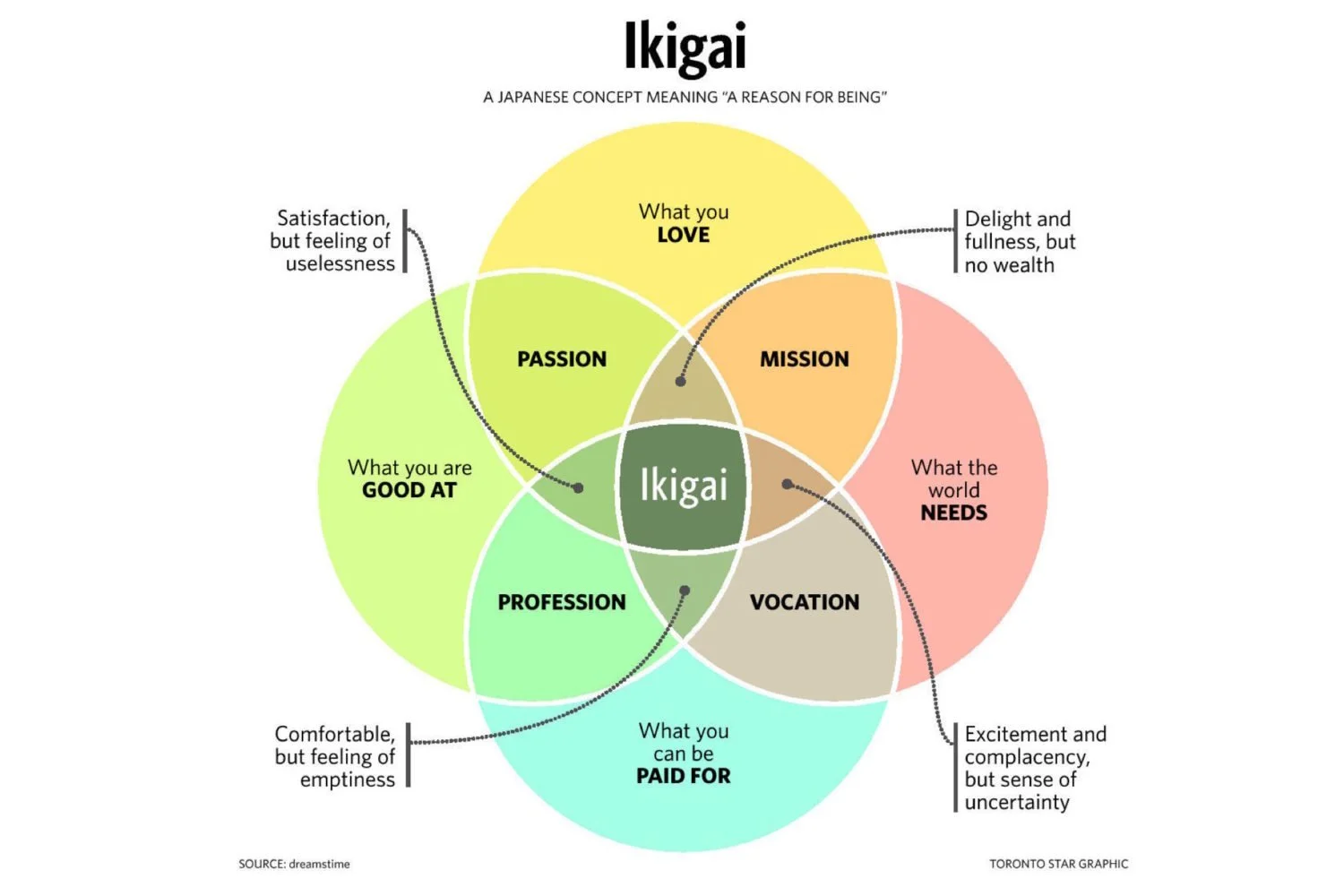
Ikagi is a Japanese term that proposes four criteria that will enable us to live a life of meaning. It suggests that,
1: We should love what we do.
2: We should be good at what we do.
3: The world should need what we do.
4: We can be paid for what we do.
It is possible to find work that hits all those marks, provided of course, that we act to get ourselves there. If our work is play, we are literally living the dream. This concept may sound outlandish to those who are discontent in their work, who are underpaid, or are working in an industry that they feel has little intrinsic value to the world, yet it is possible to act to rectify the situation. This may involve taking some risks, re-educating, relocating, or many hours grinding away at a craft when no one is looking. But what is the alternative? If we wait another 10 years to act, we will be that much older and that much more discontent with our current existence. True, we may never make it to Ikagi, but if we do not try, we are guaranteed to stay where we are.
“Remember,
You are what you do.”
This chapter is from the book Reflections Of The Self: The Poetry, Insights, and Wisdom of Silence