
Stop Rushing
Stop rushing.
Take a break.
You are not lazy.
Trust that you will get it done.
You always do.To perform optimally,
You need to rest.
You need to recover.
You need to heal.
You need to take a breath.So do so.
Give yourself permission.
Pour the cup of tea.
Feel its warmth.
Taste its subtly.The world will still be there.
Your work will be waiting for you.
Return to it with fresh eyes.
Embrace it with new energy.
Attack the day.

“Stop rushing.
Take a break.”
Unless we act, our lives cannot improve.
Extensive knowledge, support or resources mean nothing if we do not employ them to our advantage. Yet there is a risk of falling into the trap of constant action. Always working and never playing. This kind of relentless pursuit of self-improvement is akin to attempting to sprint a marathon; initially you will outpace your opponents, but you will soon burn out. To some, finding this balance comes naturally. These people can moderate their workload and pace themselves over time, ensuring an optimal split between work, rest, and play. Unfortunately, this ability is not universal.
Those of us who had challenging upbringings, filled with less than adequate role models may find themselves scrambling to avoid replicating their examples. It may feel like our lives are built on a foundation of quicksand, with all efforts to build a new existence slowly sinking into the quagmire of the past. Thus, we desperately act, doing anything and everything to avoid repeating the cycle.
Every moment of potential rest is instead seen as an opportunity for growth.
We train our bodies until we are physically spent, then recover by reading a book. We work long hours, then spend still more on our side projects. We sacrifice joy in the moment for long term growth, and we are proud of the fact. These actions have proven themselves to be beneficial; there is a stark difference between who we are and where we have come from. This becomes a self-perpetuating cycle. As we dedicate more time to self-improvement we have less for leisure, but the positive results cause us to double down and train even harder. We become fanatical about our diets, routines, and the media we consume.
Ultimately this level of output becomes unsustainable and we break down; suffering from a loss of functionality that is all too reminiscent of our past. This of course terrifies us and further perpetuates the issue, causing the cycle of action and breakdown to repeat itself.
“To perform optimally,
You need to rest.
You need to recover.
You need to heal.
You need to take a breath.”
Rest and recovery are vital to long-term functionality. If we do not take the time to heal our bodies, switch off our minds and play, we will burn out. Everyone has their limits.
It is important to realise that we are not our parents, role models, or a representation of the dysfunctionality of our past. How could we be, when we have their examples to show us what not to do? We have the benefits of hindsight to guide us on our life journey. We get to see where those choices would lead us, because we saw where those choices have led other people. We do not have to make the same mistakes, because we grew up watching the mistakes made by those around us and lived through the consequences of those choices.
It is easy to get caught up in the moment, stuck inside our heads listening to that disapproving voice that tells us that we are just like the people from our past. That voice is cunning in its ability to weasel out all chinks in our armour, telling us how and when we are being lazy, succumbing to weakness, or acting immorally. The thing to remember is that that voice is not operating in reality. It is comparing our actions with a perception of an ideal; either the ideal performer or an over exaggerated parody of the actions of those from our pasts.
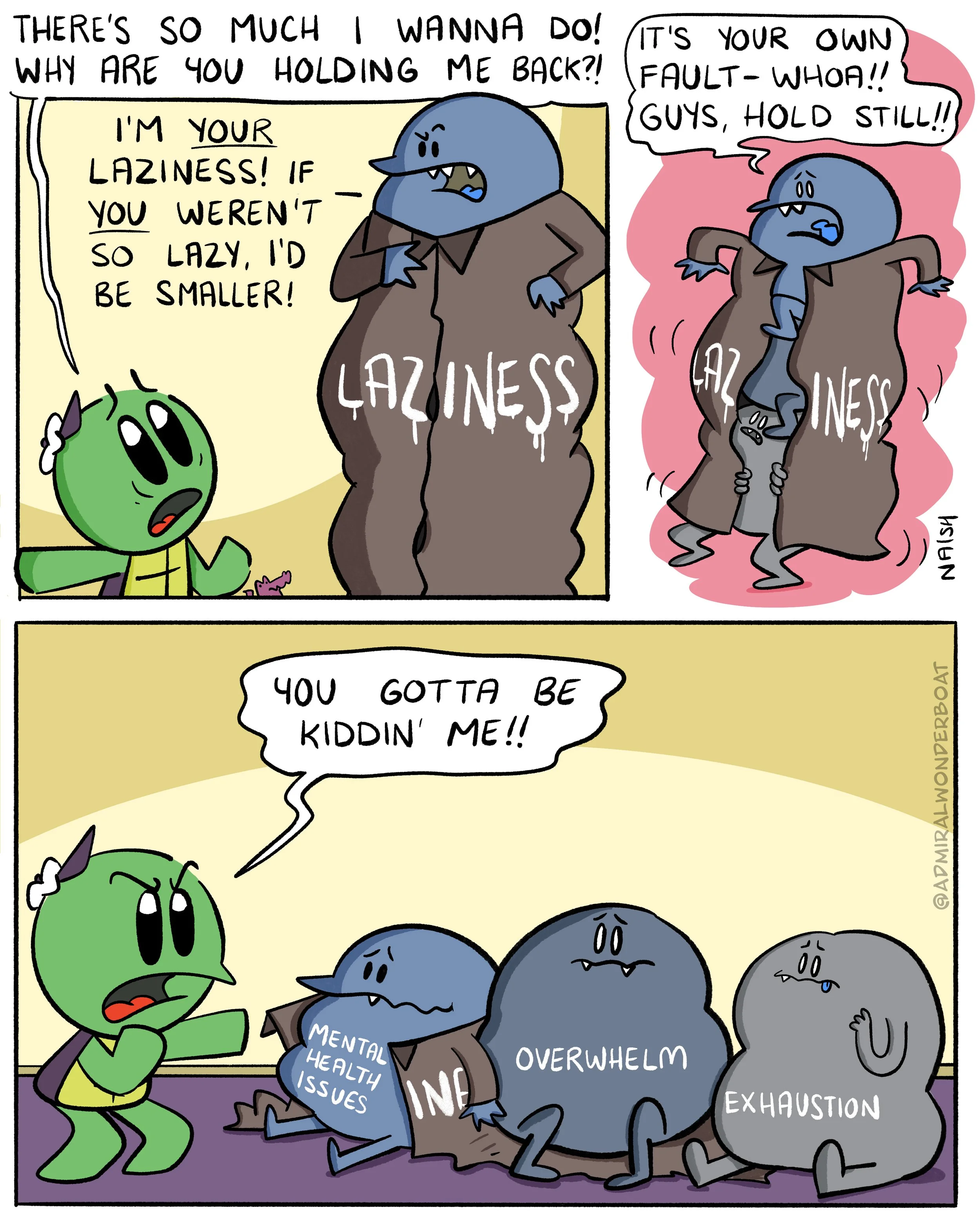
Taking one day off work is not the same as living off unemployment, but not according to that voice. That voice will say you are lazy, weak, and pathetic, and that you have taken the first step downhill, destined to replicate the terrible examples of your past.
Having one drink over dinner is not the same as losing a week to a binge, but not according to that voice. It will tell you just how much of an addict you are, just like the people who raised you.
That voice is a liar, and you can prove it.
Take a moment and look at your life. Notice the stark contrast between your life and those you are trying not to emulate. Recognise the growth you have made over the years, from the little wins to major victories. Look at your functionality in terms of physical health, mental stability, interpersonal relationships, and work-life. Compare your current reality against your past, as well as against the examples given to you.
Although you may not feel like you are successful, the differences you discover will highlight the reality of your situation. You are continuing to improve. Look to your past growth as evidence of your ability to overcome current struggles. This proof may not silence the toxic inner voice, but it will help you to ignore it.
“You are not lazy.
Trust that you will get it done.
You always do.”
You are not lazy; you are just fearful of being lazy. Not only is this fear the root cause of your drive towards self-improvement, but it can also result in an increased need to rest and recover. An overactive drive towards self-improvement will result in breakdown, and thus perpetuate your feelings of laziness.
Setbacks are not permanent.
Your actions have proven that you are able to continue despite challenges and setbacks. You have done so in the past and will be able to do so again. Thus, it is important to realise that the current setback, or need for rest, will not result in a catastrophic failure. Yes, it will hurt, but it will not be a permanent cause for concern. You have faced days of true laziness, temptation, and distraction and were able to recover from them and keep going. This time will be no different.
“Give yourself permission.
Pour the cup of tea.
Feel its warmth.
Taste its subtly.”
Give yourself the permission to take a break, detach, and be in the moment. Spend time relaxing, playing, and simply enjoying life. Do so, if for no other reason than because doing so will help you to perform better moving forward. The worst that can happen when you take time to enjoy life is that you allow your mind and body to heal. At best, you begin to live the life that you deserve, one that balances self-improvement with enjoying your new and improved self. The world will still be waiting for you, ready for you to get back on the path and keep grinding, only this way you will be able to return to it with a new perspective.
“The world will still be there.
Your work will be waiting for you.
Return to it with fresh eyes.
Embrace it with new energy.
Attack the day.”
This chapter is from the book Reflections Of The Self: The Poetry, Insights, and Wisdom of Silence