Writing Therapy
Just words on a page,
Or something more?The page listens and absorbs
Without judgement.
The page can be discarded,
Shared and reread.The act of writing heals:
It pulls the demons out,
Exposes them to the light,
And reveals them for what they are.Fabrications.
Ruminations.
Improbabilities.
Regrets.The act of writing instructs:
It informs our current state.
Shows our inner workings.
And forces us to be precise.After writing comes the review.
By looking back we see the truth:
Of how far we’ve come.
Of our varied and ever-changing moods.
And of the different aspects of ourselves.We see that we are more
Complex than we can possibly comprehend.So write.
Write without judgement.
Without pause for grammar or spelling.
Without thought for what is appropriate.
Without care for its readability.
Without concern for judgement of others.It is the act of writing that counts,
Not the quality of work that you produce.No one has to see it.
So just write.
“Just words on a page,
Or something more?”
When you look closely at most religions, philosophical traditions, styles of psychological therapies, and even healthy friendship groups, you see that they all share the common feature of talking as a form of healing. The confessional, the therapist’s couch, the shared introspections, and the long phone calls all seem to serve the same core function: they act as an outlet, a way to let go of our troubles, a springboard for our ideas, or just an opportunity to process the complexities of life. There are of course differences in the beliefs, practices, and surrounding doctrine, but the practical reality is that healing comes when we talk.
Yet there are some obvious limitations to this approach; namely that talking involves the presence of someone else. No matter how comfortable you are with the person, there will be a limit to what you are comfortable sharing. You know that despite their training, experience, or position, they are just another person; one that is subject to the same issues, fears, and biases that we all feel. What is more, we know they are not a blank slate; they can and will remember what we tell them, indeed we expect them to do so if we hope to continue our relationship. Thus, we may hold back, either unwilling or unable to express ourselves truly and totally. Indeed, the more light we shine onto the darkness hiding in the depth of our souls, the harder it becomes to speak of the demons we discover.
“The page listens and absorbs without judgement.
The page can be discarded, shared and reread.”
A blank page is one of the best therapists you will ever come across.
It listens without interruption. It does not judge what you say, nor does it push you to say anything until you are ready. It has a perfect memory when you want it to; but can just as easily be made to forget everything. It is available whenever you need it and is it practically free. It holds no preconceived notions and will not respond out of character. And it is happy to listen for as little or as long as you need it to.
On the page we can express anything and everything.
“The act of writing heals:
It pulls the demons out,
Exposes them to the light,
And reveals them for what they are.”
Pain does not disappear by ignoring it.
You may numb yourself to its impacts, but this is just a temporary reprieve. By pushing it down and out of mind, you are merely repressing it. It is still there, and it is still working against you. Festering and mutating along with all the other repressed demons from your past.
The only way to truly heal is to shine the light of attention onto those demons. We must turn and face them with all the strength and courage we can muster. This process will hurt, but that pain will serve to cleanse us of those demons forever.
If instead we refuse to act, we risk a corruption of the soul.
“Fabrications.
Ruminations.
Improbabilities.
Regrets.”
We do not like thinking or acting with contradiction. Yet this is exactly what will happen to us when we attempt to marry the impacts of our unexamined demons with our current actions. If those demons spread thoughts of worthlessness or despair, we will approach all future interactions from that same mindset. If we have unprocessed loss or jealousy, we will commit acts of self-sabotage and ensure that our subconscious world view is confirmed. If we have unresolved anxieties from the past, those same exact anxieties will infect our future.
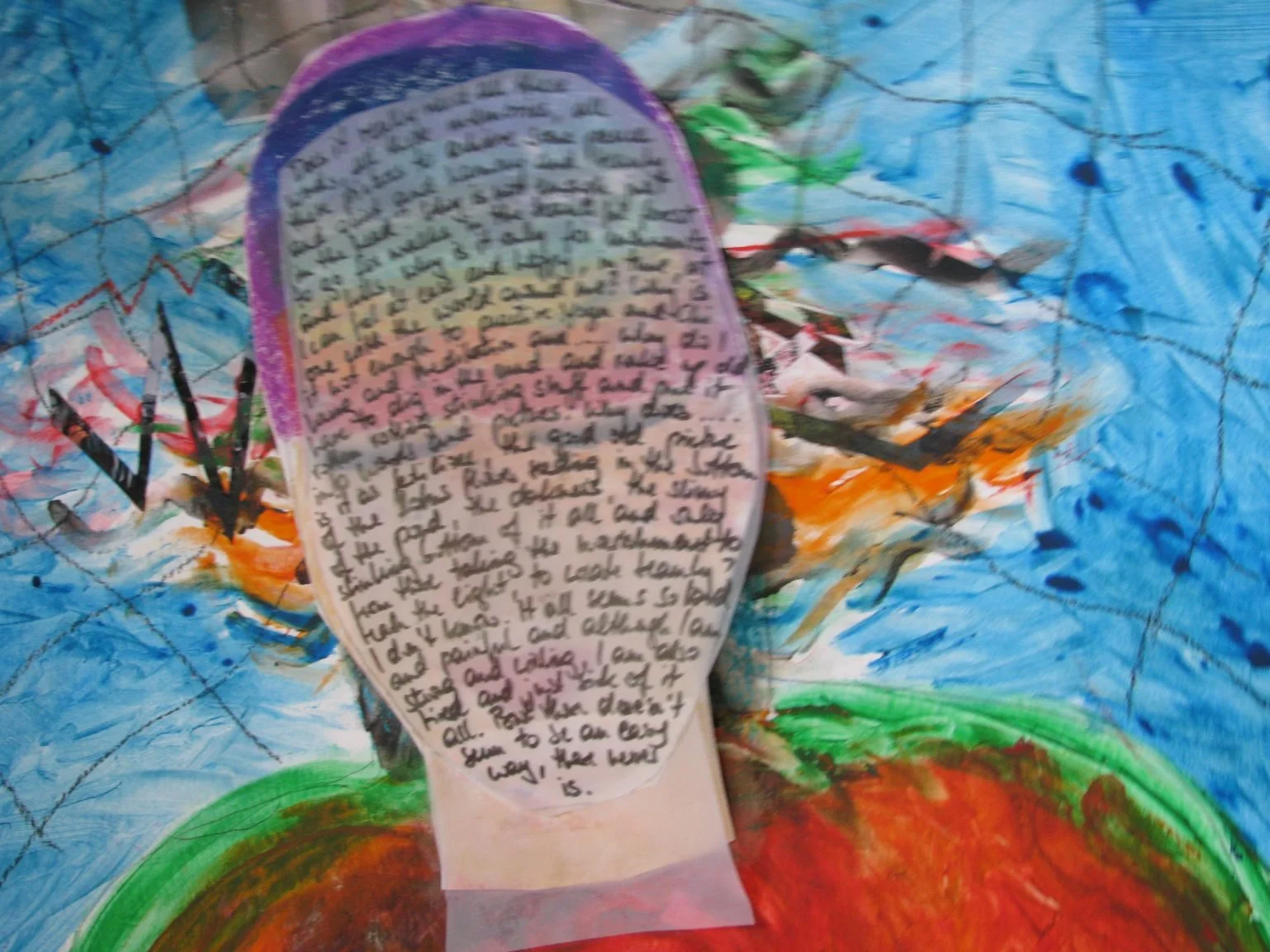
The act of writing instructs:
It informs our current state.
Shows our inner workings.
And forces us to be precise.
Yet, the blank pages offer us a unique opportunity for salvation.
As we write down all our thoughts, emotions, beliefs, moods and thinking patterns, we effectively take them out of our mind and trap them on the page. This allows us a unique level of detachment, and subsequently the ability to observe, understand and ultimately change them.
If we notice a pattern of negativity, anxiety, rumination, or regret, we can compare those thoughts against the true reality of our life. We will begin to see the extent that our demons are running rampant, and then can start the process of putting them back in their respective places, or even being to destroy them completely. We will be able to identify self-deprecating statements and replace them with the truth. Namely one that identifies our weaknesses but does not overstate them. From there we can start to inject a measure of realistic positivity. Writing and repeating words of truth; ‘I accomplished this’, and ‘I am good at that’.
“Write without judgement.
Without pause for grammar or spelling.
Without thought for what is appropriate.
Without care for its readability.
Without concern for judgement of others.”
The practice of performing writing therapy is relatively simple. You just get a pen and a pad or open a blank writing document on your phone or computer and write.
This is an act of free writing. That means that you just let the words come, flowing through you and onto the page. You do this without filter, thought, or judgement. You just let the words come, how and as they are.
Healing comes from the act of writing itself. So, write. Write anything and keep writing until you feel that emotional release, and then write some more.
“It is the act of writing that counts,
Not the quality of work that you produce.
No one has to see it.
So just write.”
At the end of a session you have a couple of options for what you can do with your writing. You could choose to discard it, ritualistically burn it, or flush it down the toilet. Remember, it is yours to do with as you please. And if the contents are of a sensitive nature you may prefer to destroy it completely. This is totally acceptable.
But there is a further aspect of writing therapy that you can also choose to engage with, one that will truly help to shine light on your inner demons.
“After writing comes the review.
By looking back we see the truth:
Of how far we’ve come.
Of our varied and ever-changing moods.
And of the different aspects of ourselves.
We see that we are more
Complex than we can possibly comprehend.”
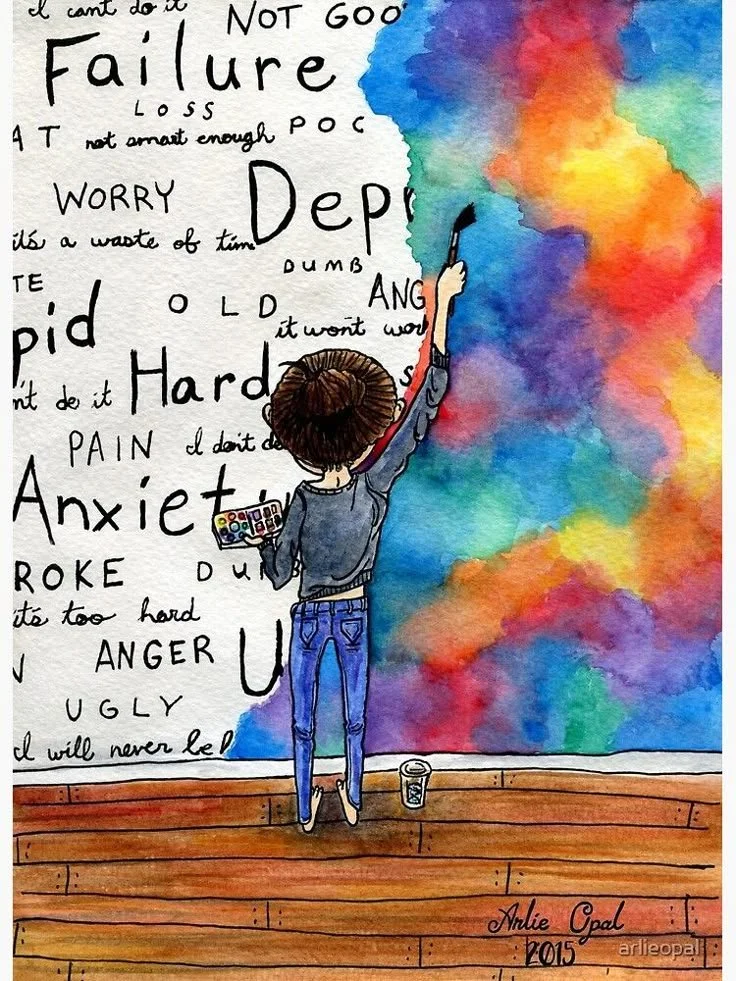
Once a week or more has passed, reread your writing therapy piece, and correct it for errors. Note down where you spoke with irrational generalisations, and where you were unfair on yourself. Make the appropriate tweaks and changes to the narrative to better reflect the truth as you now see it.
What we are doing here is acting as our own detached therapist. The passing of time will have enabled us to see the issues more clearly, without the cloud of emotionality that was present at the time of writing. Thus, we will be able to counsel ourselves, highlighting aspects of our thinking process that could do with some tweaking, and rewording our inner narratives to one of increasing positivity and optimism.
“So write.”
The poetry that is featured in this book comes as a direct result of writing therapy. I use it whenever I feel mentally compromised. This could be in response to a world event, and interpersonal issue, or just due to the workings of my mind. A daily or weekly journal is also an amazing tool for the entire writing therapy process. I encourage you to give it a try.
This chapter is from the book Reflections Of The Self: The Poetry, Insights, and Wisdom of Silence