Upgrade Your Circle, Upgrade Your Life
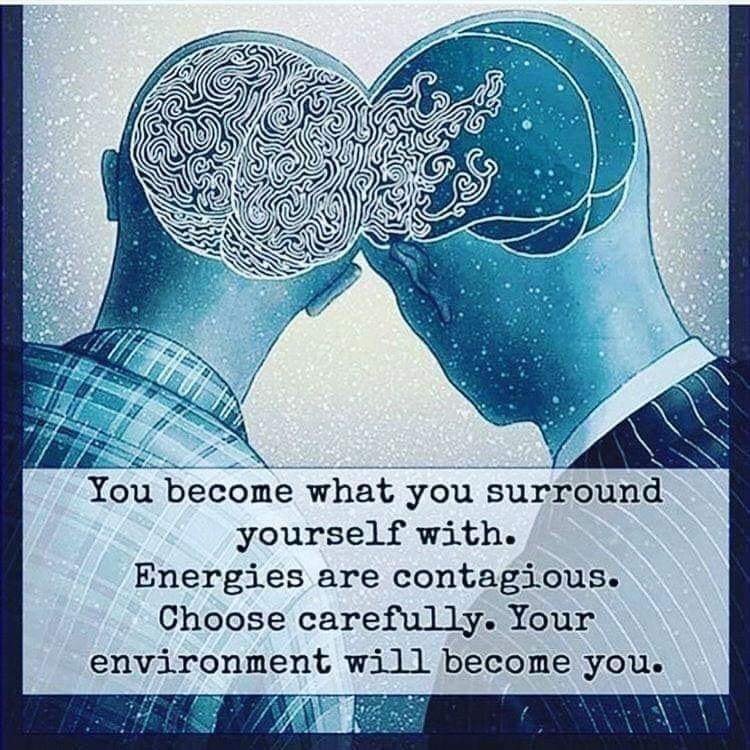
Surround Yourself With People That You Want To Become
- Ch: 5.4 of How To Get Your Sh!t Together -
“You are the average of the five people you spend the most time with” – Jim Rohn, Author
One of the most important aspects of physical health is to recognise that we literally are what we eat. When this concept sinks in, we start to look at our food not only as fuel, but also as the building blocks of our future selves; our food choices really do matter. Similarly, what we put into our mind impacts our mental state, both in the short and the long term.
The words people use, the actions they take, their mood, the topic of conversation and their personality all influence how you think and feel.
Please don’t disregard this off hand. Humans are social creatures, we love to be included, accepted and connected. We have evolved to see and empathise with the emotions, thoughts and feelings of those around us. By putting ourselves in someone else’s shoes, we can almost feel what they are feeling and think what they are thinking. This process is vital if we hope to maintain any semblance of social connection, something which most people desire.
Our mental state is impacted by the mental state of others.
You have felt this effect before, in fact, you likely feel it every day. When somebody is inspired, you get inspired. When somebody is depressed, or starts talking about a depressing topic, your mood will start to drop. Your energy levels will rise and fall in unison with those around you. Through their words, inflections and actions, a good actor elicits the desired emotions from you.
How many people do you keep in your life because their presence somehow brings out the best in you? How many people, no matter the context or topic of conversation, bring you down, irritate you or make you question yourself? After meeting these people, how long does it take for you to ‘return to normal’?
The simple truth is that the people that you associate with on a regular basis can and will impact you. If you still don’t believe me, I will prove it to you.
Below I have one word printed. Read that word and observe the thoughts that involuntarily come up.
Ready?
“Giraffe”
What are you thinking about? Did your mind conjure up a color? Maybe you thought about a particular country, a group of people, or another animal? Perhaps you had some memories flash to mind?
That was just one word. Imagine what an hour-long conversation could invoke! What about a five year friendship?
“If you run around with nine losers, pretty soon you will be the tenth looser.” – Les Brown
The impact of the people close to you goes beyond just your mental state. Their impact will reverberate through every aspect of your life.
It is very hard to stay motivated with a diet, or gym regime if you live in a household with people who are constantly bringing home confectionary. It is hard to feel inspired to be creative or artistic when you are around people who are not creative or simply ‘don’t get it’. It is hard to pursue career advancement, wealth creation or the accumulation of material possessions if you associate with people who don’t value such pursuits.
Quitting bad habits can be almost impossible without significant changes in a person’s social life.
For a moment I want you to put yourself into the shoes of somebody attempting to quit an addictive substance. It could be alcohol, nicotine, sugar, caffeine, or any ‘hard’ drug that you can think of. Not only do you have to deal with the withdrawals coming from substance leaving your system, but you will also face continuous social pressure to start using again.
Take John’s story as an example:
At 33 years old, John has been drinking and smoking since his late teens. Although his binging days are over, he drinks a couple of beers each night after work and smokes half a pack a day. On a typical weekend he will spend time with his friends either watching a football match, cooking a barbeque, playing pool, or socialising at the pub. Smoking and drinking always come hand in hand with the festivities. This has been John’s routine ever since he completed his apprenticeship ten years earlier.
This came to an abrupt end when John’s uncle Peter suffered from a minor heart attack. The doctors suggested that ‘lifestyle factors’ where the most likely cause, and suggested that next time Peter may not be so lucky. Like John, Peter was a daily smoker and drinker, and John couldn’t help but see himself in the same hospital bed in the future. Looking at his once strong uncle meekly laying in the ward, hooked up to machines caused John to make the change his own habits. He vowed to quit smoking and drinking, as well as adopt a healthier diet and exercise regime.
This wasn’t an easy process for John. The addictive nature of the cigarettes and alcohol made quitting quite hard. The withdrawal symptoms were not pleasant, even with the help of aids like the nicotine patches and gum.
What was worse however was the pressure from his social environment. He still attended the pubs, barbeques and sporting gatherings, but he no longer wanted to smoke or drink. While supporting his decision to quit, his friends kept smoking and drinking in front of him. They would often forget about his pledge to quit and would regularly offer to buy him a round or to share a smoke with him. This constant exposure caused John to relapse into his old habits on more than one occasion.
John realised that he may not be strong enough to both fight the addictive nature of the tobacco and alcohol, as well as constantly have the strength to say no to the overt offers to join in from his friends, or to withstand the persistent social pressure to have ‘just one for old times sake’.
John’s story is typical for many people attempting to quit or to make any significant form of lifestyle change. All of John’s friends are themselves addicted to smoking and drinking to some extent. Their social lives are structured around activities and locations that accept and promote their consumption. Within his friendship circle, smoking and drinking are accepted and potentially expected behavioral norms.
So when John attempts to quit, he faces a dilemma. How can he maintain his current friendship group, when a lot of their socialising is based around something he no longer wants to participate in? Unless he can convince them all to change their ways, as well as replace their current socialisation habits with something completely devoid of smoking and drinking, the temptation will always be there for him.
If John has a personal issue and goes to his friends for support, it is likely that their coping mechanisms will involve smoking or drinking and will subsequently suggest that to John. Now weakened emotional state, John may cave into temptation and relapse.
Depending on the particular nature of the group that John is in, he may need to exclude himself from certain events due to temptation, or else give up on his goal to quit smoking and drinking.
If you think that I am being extreme with this example, try quitting sugar for a month. During that month, make sure you socialise how you normally would. If your friends or family order a dessert, you have to simply watch them eat it and continually say no to their offers to share with you. You will likely find that it is hard, if not impossible to maintain you normal kinds of socialisation habits.
The habits of the people around us can easily become our habits.

Of course we can also be impacted positively by those around us. I have trained at many different martial arts gyms over the years. Like any other organisation, each one has a different culture, and that culture perpetuates itself by attracting likeminded people.
In addition to being very welcoming and social, the culture of the place that I train now is driven and competitive. When I first arrived, I was shocked by the intensity that the members put out. This environment is a great motivating factor as everyone encourages everyone to step their game up and perform. This happens though conversations, body language, performance on the mat, and just the general ‘feel’ of the place.
It is hard to not try your best when everyone around you is trying their best.
TAKE ACTION
On a page, list the five people that you spend the most time around.
Take a few minutes to review this list. Imagine that your life, motivation, drive, personality, preferences, activities and future will be the same as each person.
Are you happy with the result?
If not, you may need to make some tough decisions.
—
Choose to associate with the people that you want to become.
For example, if your workplace is full of unmotivated, disenfranchised, lazy, upsetting people, content on just getting a pay check; consider leaving. If you wait too long, you too will start to feel as they do.
I apply this approach to everyone in my life. With family I am more lenient of course, but as I discussed in chapter 2.1 ‘Guard Your Mental State At All Costs’, I make sure that I set boundaries that I am not willing to compromise on.
If I realise that I am being detrimentally impacted by somebody’s influence I will make some changes to change the nature of our contact.
Media Impacts The Mind
The podcasts, books, movies, shows, games and music that you listen to will also impact your mental state. I am all for expanding the mind with experiences, but I can’t stress enough that what you put into your mind will impact you.
If you think about it, that is the very reason that you are consuming it in the first place, you want it to impact you in some way.
Therefore it is worth considering the media you are consuming. Choose to consume what you want to become, and be wary of how it makes you feel. If you find that the news is depressing you, turn it off. If you are feeling inspired after reading a particular author, read more of them. Apply this approach to your music, podcasts, social media feeds, and movies.
—
TAKE ACTION
Read the lyrics to your favorite song out loud. Don’t play or sing along with the song, just read the words.
Take this opportunity to consider that those words are repeatedly entering your brain. If you listen to that song daily, you are choosing to hear those words daily.
What you put into your mind matters. If you are not comfortable with what is currently going in, make some changes.
Frequently Asked Questions
Q) I don’t believe that our minds are as malleable as you have made them out to be. Are you saying that we are so easily manipulated that we simply fall in line with those around us?
A) Look at history. We are social creatures that follow the crowd. Look at your life and notice how many times you have chosen to follow the group instead of trusting yourself. Consider the clothes you wear, the activities you undertake and the music you listen to. How much of that was influenced by other people? Consider how much money goes into advertisements and therefore how much more money those advertisements make for the companies running them.
Of course we can make choices, make changes and are unique. But those choices are implicated by our environments.
Q) Are you saying to abandon those people close to me who are struggling, are in a bad place, or are otherwise not going where I want to go?
A) Ultimately the decision is up to you.
‘Guarding My Mental State At All Costs’ (chapter 2.1) is something that takes priority in my life. So the decision to keep someone in my life is largely based on how their presence impacts my mental state. I won’t ‘abandon’ someone who is in need, but I will choose the way that I assist them.
That being said, I have cut a few people from my life who had a toxic impact, or were heading down an opposite path to the one I wanted to take. I looked at the choices they were making and the results that they were getting and decided that I didn’t want that for my life.
Q) I like my friends. They are great fun and truly genuine people. But they are all content with their station in life. None of them have the same kind of large scale goals as me. They support me of course, but they can’t directly relate. Do I need to get rid of them?
A) No. If you like them and value their friendship then they are worth keeping.
However as you have stated, it will be hard for you to express your desires with them. If you feel like you can live with them not completely understanding that is fine, but I would consider attempting to make additional new friends that have goals and aspirations more in line with yours.
Look for groups and social events relating to your new found interests and goals. Be brave and introduce yourself, share your story and talk with the people that are also attending. Start by talking about the topic of the event and branch out from there. There are many on and offline options available to you for every conceivable interest.
Q) I struggle to connect, so I listen to music. Sometimes it is ‘depressing’, but doing so helps me to express myself. It heals me. Are you saying not to listen to it anymore?
A) I can relate to the feelings of dissociation and disconnection. I also listen to ‘depressing’ music for the same purpose. In my experience, feeling something is far better than not feeling at all.
If it is helping you, keep listening. But I would suggest that you also find music that reflects your other emotions and moods. Listen to happy songs when you are happy, angry when you are angry, motivating when you are in that frame of mind.
Resources
The Four Hour Work Week, Tim Ferris
Summary
Carefully choose the people that you associate with, and the media that you consume. You will take it on board and be changed by it – for better or worse.
This chapter is from the book How To Get Your Sh!t Together