Stop Thinking Start Doing
- Ch: 6.4 of How To Get Your Sh!t Together -
“Just Do It” – Nike Slogan
When it comes down to it, the vast majority of the choices that we make throughout our lives are in reality inconsequential. The real issue arises when we give too much weight to the perceived consequences and therefore fail to take action, or procrastinate, wasting precious time in the process.
Anxiety causes the importance of each decision to be dramatically overstated.
In most cases making a quick decisive decision is far more productive than extensive contemplation. Regardless if you are suffering from the symptoms of anxiety, or are dealing with the mental ramifications of the many choices and actions necessary to follow your dreams, you need to ‘Stop Thinking and Start Doing.
Take action and adjust course along the way.
In this chapter I will use the term ‘anxiety’ to describe both the symptoms of the mental illness, as well as the similar thoughts, feelings, doubts and ruminations that accompany anyone attempting to follow their dreams and are facing yet another decision.
Anxiety has a way of making each decision, no matter how small, seem vitally important. We ruminate on the possible outcomes, debating the pros and cons of each choice, as well as the plethora of possible futures that could arise from our decision. Anxious thought patterns can become so strong that they paralyse us into indecision and subsequent inaction. Not much is accomplished, and what is accomplished just doesn’t feel right.
Due to the large amount of internal debate over all of the possibilities, when a decision is finally made, we have little confidence in that choice. We blame ourselves for any and all future issues that arise, berating ourselves for not being wiser in our decision making process. We blame ourselves and delve deep into negative self-talk. This only perpetuates the anxiety further the next time we need to make a decision.
Most decisions don’t matter, but not making one does.
Does it really matter where a group of friends goes to eat? Not really. But those wasted minutes each time the group meets up to decide could be better spent enjoying the meal. I came to this conclusion in my early twenties when I noticed the social groups that I was a part of were plagued by indecision. Every member wanted to ensure that each other member was happy with the choice of the group, and as such, decisions took a long time to be made.
I decided to try a little experiment. For a month whenever a minor decision for the group was to be made, I did one of two things:
1) If someone else offered a suggestion I would confidently agree with it.
2) If no one offered a suggestion, I would confidently offer a suggestion.
If anyone overtly disagreed with the given suggestion once stated, I would agree with that new person’s choice. The overall goal being to get the group to agree as quickly and uniformly as possible, without offending or ignoring anyone.
The results were quite enlightening. The group was now able to make a decision and start the activity comparatively quicker. There was rarely any issue with the choice, and when there was I simply agreed with the dissenting voter with projected confidence. Interestingly, this new attitude resulted in me taking on a kind of leadership role within the social group. My confidence in decision making resulted in increasing levels of trust and agreement.
I didn’t mind where we ate, and my suspicion is that most people didn’t mind either. Most people were simply caught up in the concern of potentially offending one another, or merely wanting to ensure that everyone was happy, and therefore everyone was assuming that the other people really would care about where they ate. Decision time became an impossible game of protecting non-existent concerns and feelings.
This happens in all aspects of life and it is a massive waste of time and mental effort.
—
TAKE ACTION
The next time you are in a group situation and a decision is to be made on where to eat, or what leisure activity to do, confidently suggest a decision to the group. Say it with the confidence of someone who is going to be agreed with.
“Let’s do …”
Alternatively, if someone else has a suggestion, confidently back them up and agree with their choice.
“That sounds great, let’s do that …”
Observe the shift in group dynamics and see if they appreciate that a decision has been made. Has the group come to a decision faster than usual? Is anyone put out? Are people happy to have the choice decided on?
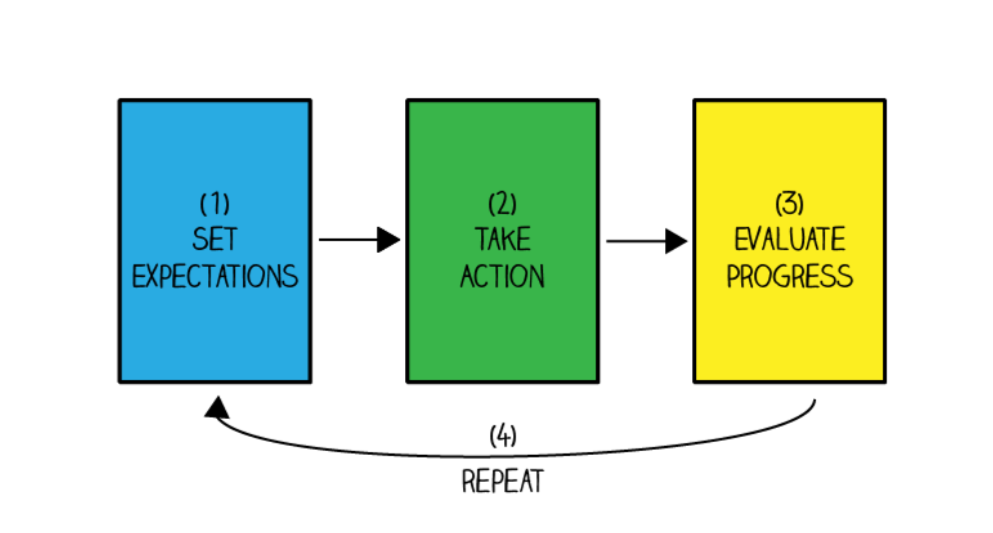
The concept of ‘just choosing’ can also be applied to most every aspect of your life, including personal and work projects. I talk about this in depth in chapter 6.5, ‘Stop Aiming For Perfection’, but it is worth stating here, it is better to have 50% of something than 100% of nothing.
In my role as a teacher, I often see students struggling to begin their essays and assignments, getting stuck on the title or first sentence. My advice is always the same: just start. Start writing wherever you feel that you can, and then adjust as you go. There is no point to wasting all that time and mental energy on the first few sections of your work, when in all likelihood, that work will be edited or altered later on down the track to match the rest of the body of work.
Just start.
Never has a piece of writing, a video or anything else that I have done, come out exactly as I was envisioning it in my head. But there is one thing that has always turned out to be true: It is far more productive to take action and correct along the way.
It is impossible to know exactly how a project will turn out when you begin it, it is only though creating the project does its true nature reveal itself. This isn’t some spiritual or esoteric claim, rather a statement of cold fact. Prior to beginning something, you can’t possibly know all of the restraints, issues, and limitations you will face. Nor can you know if you, or those you are working with, will have the required skills, knowledge and capabilities necessary to accomplish the task.
As you work through the project, you will undoubtedly discover different methods, ideas and possibilities, some of which may end up shaping the task itself. It isn’t until you have begun that you can surely know what you will need to do for any particular project.
Unless you take action, you will end up with nothing.
“You miss 100% of the shots you don’t take.” – Wayne Gretzky
—
TAKE ACTION
Choose a creative project that you have been meaning to start. It could be a short story, music, rhythmic dance, website, craft, construction or anything that requires creativity.
Grab a pen and paper (or other utensils that you use in your craft) and begin.
Start now. Don’t stop for the next 5 minutes, minimum.
When the negative thoughts inevitably arise, acknowledge them. It is okay if this effort produces nothing of value. It is ok if you eventually discard everything that you create in this session. That is not the point. The point is to begin, to take action and then to hopefully use that momentum in the future.
—
People seem to want to have complete assurance that they are doing everything right before they begin. This is completely impossible and will lead to inaction. It is never possible to have complete knowledge prior to action, no matter what preparations you put into place, there will always be unknown factors to deal with. Every successful person began with incomplete knowledge.
There has to come a point where you stop planning, stop thinking about it, put down the books and start doing it.
Anxious thoughts are of course helpful warning signs - they will tell you to be careful forever. They are useful because they keep you safe. However, once you have acknowledged them and taken reasonable preventative action, they can become a hindrance. You have listened to your anxiety for long enough, it has held you back and stopped you for far too long.
This is your permission to take action. You can always correct along the way.
Regardless of your planning, you will make mistakes. That is normal and to be expected. Provided you learn from those mistakes, they won’t often matter, you can always recover and try again. How many times has a decision truly had permanent consequences? Rarely I would guess. It is time to act as such. Make quick decisive decisions wherever appropriate. Take action.
When you make a mistake, learn, adapt and grow. It won’t be a smooth road, but you will at least be moving towards your dreams. Can you really afford to wait any longer? Focus on what you are good at, learn what you need to lean, and delegate everything else!
“It is often easier to ask for forgiveness than to ask for permission.” – Grace Hopper
Frequently Asked Questions
Q) If I act too soon, I will make more mistakes than if I wait and think more. I don’t like making mistakes, it is embarrassing and annoying to rectify.
A) You will make mistakes regardless of how long you contemplate for. True, you may make more if you act sooner, but at least you will have the time to correct them and subsequently achieve your ultimate goals.
In terms of embarrassment, it is a natural feeling and one to be embraced. If we are not making mistakes, we are not living. What drives me past the thought of embarrassment is the concept that although I may be making many mistakes in the short term, I am attempting to avoid a long term mistake. That being one of not doing all I can to follow my dreams. If I am too embarrassed now, I will never get to where I want to go. How could I?
When feeling fear or embarrassment, try acknowledge those feelings and just keep doing the thing anyway. Keep doing what you need to do, and they will eventually pass.
Q) Is there ever a time to bide your time and not act?
A) Of course. The more serious the decision that is required to be made, the more you should think about it. I am not advocating acting without contemplation, rather actually acting when you have contemplated. How many times have you been ready to act on something, only to stop and revaluate the decision again and again and again, ultimately to stick with your initial decision?
The goal of this chapter is to cut out that wasted time. When you look back over your past you will notice that in reality, most of your decisions could be undone, or that the outcome doesn’t really matter to your life now. Although it was important at the time, did asking that person out and getting rejected 15 years ago matter? What about your first casual job? What about the elective you chose in year 9? What about attending that one party over another party?
You see my point.
Q) How do I get the confidence to make those decisions, particularly for the group?
A) Practice. It may not come naturally, but over time it will become second nature to you. Confidence begets confidence, so if you start small, it will grow. Until then, fake it until you make it.
Resources
Summary
It is far more productive to just start and correct along the way, than it is to wait and aim for perfection. Inaction guarantees that you will not produce anything. Stagnation is the ultimate mistake.
This chapter is from the book How To Get Your Sh!t Together