Think Before You Share: The Art of Fact-Checking
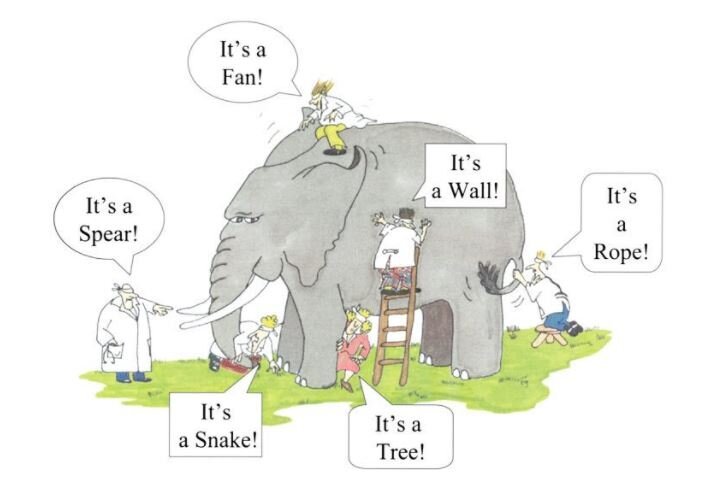
How To Fact Check
- Ch: 4.9 of How To Get Your Sh!t Together -
“The problem with internet quotes is that you can’t always depend on their accuracy.” – Abraham Lincon, 1864
Learning is a continuous endeavor, making up an integral component of every aspect of your life. You will constantly need to learn new knowledge and skills to remain relevant in the workplace, to stay healthy, to take up hobbies and to follow your dreams. It is vital that you have a good method of determining the validity of what you read and what you are told. That is, how ‘true’ is the information that you have been given?
Just because it is written in a book, published online or spoken about with confidence by an ‘authority figure’, doesn’t mean the information is true.
If you delve into any topic, you will likely find that there are many differing opinions all vying for your belief.
From the ridiculous:
1 - Is the earth flat?
2 - Was the moon landing faked?
3 - What country was Obama born in?
To the mundane:
4 – Is there an ideal diet?
5 – What is the best brand of car?
6 – Do carrots improve eyesight?
To the controversial:
7 - Does carrying a gun make you safer?
8 - Why is fluoride added to the water system?
9 - Do vaccines cause autism?
10 - Do medications work as an effective treatment of depression?
Each of these questions has a factual answer that you can determine. However if you just go with your gut instinct, or trust the first person that you hear talking about the topic, you may be lead astray. There are hundreds of internet forums and comment threads on social media debating each of those questions back and forth, with each side providing evidence to support their claims. Unless you are very savvy, the contents of the first forum you stumble upon can be quite convincing. Unfortunately, it could also be wrong.
Before I go into how to determine the truth, I want to highlight just how disparate the advice in a particular area can be. I will use the idea of appropriate diet and nutrition as an example, but this could apply to most areas.
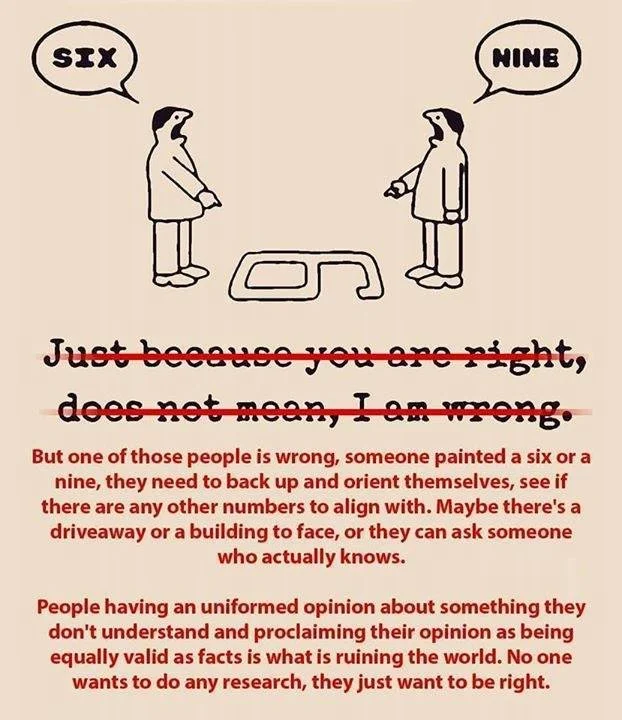
Is There An Ideal Diet?
There are literally hundreds of diets to choose from, so for the purposes of this demonstration I will briefly outline some different dietary options and their primary justifications for the more popular diet options.
‘Ketogenic’ diets suggest cutting carbohydrates completely, favouring proteins and fats almost exclusively. The goal being to put your body into a state of ‘ketogenesis’. This is a natural state that we switch to when food is low, only this diet causes it to arise from cutting carbohydrates.
‘Paleo’ diets suggest a high emphasis on consuming the foods that Palaeolithic humans consumed, as that is what we evolved to consume. Mainly meat and vegetables, with minimal fruits and no grains.
‘Vegan/Vegetarian’ diets consume no meat, or anything produced by the exploitation of an animal (vegan). Proteins and fats are derived from non-meat, plant based sources. Some proponents of these diets suggest that meat consumption is dangerous to long term health.
‘Zone Split’ diets suggest that a particular ratio of macro nutrients should be consumed daily, regardless of the source. The splits differ, but a common ratio is: 40% carbohydrates, 30% protein, 30% fats.
‘Juice Fasts/Lemon Detox’ diets propose cutting most, if not all, solid foods for an initial duration, to be replaced by the sole consumption of a particular juice. Proponents of this diet suggest that it acts as a ‘body cleanse’ to rid and reset the body from toxins.
‘Intermittent Fasting’ proposes that people should fast (not eat) for a particular time each day, or for a day (or more) every couple of months. Proponents of this diet suggest that it will help regulate and reset the body’s metabolism and is necessary for optimal health, suggesting that early humans evolved with (forced) intermittent fasting.
‘The Grandparents diet’ proposes that you only eat foods that your grandparents would have recognised as food when they were growing up. This cuts out a significant amount of processed and high sugar foods, but does not restrict caloric intake or a particular macro nutrient.
So, which diet will work for you? Are any dangerous? How could somebody that is new to the concept of dieting possibly determine which one they should choose to attempt? - By learning how to fact check.
How To Fact Check
I like to go through the following steps, in order, when I am presented with a fact, opinion, evidence or claim. I will go further down the list for the items that are more important, that have significant potential consequences or where the choices I make will impact me, or my family, for a long time.
Please be aware that this approach is not perfect. No approach is. There is constantly new evidence to consider, as well as the vested interests of the people making the claims. My goal is to improve the chance that I will come to the correct conclusion.
1) Does it pass the bullshit test?
I like to trust my intuition. I often have a feeling about someone or something well before I can cognitively understand the reasons behind that feeling. When something new is suggested to me, I like to check into my intuition and briefly consider my initial reaction.
It can be easy to disregard our own feelings in response to the reactions of the other people around you. If other people are in agreement, or feel a certain way, it can be tempting just to follow the crowd and join in. This can be a mistake.
Trust yourself, and when you don’t have time to look into a claim using the proceeding methods, back yourself and go with your gut.
You won’t always be right, but if you don’t have time to proceed further down the list, trust your gut.
2) Google the claim & Google the claim ‘debunked’.
I know it seems contradictory to suggest googling the phrase when I have spent this chapter repeatedly telling you about the potential for erroneous advice online, but doing so can still work as quick checking tool.
A quick search can often provide some evidence behind a claim, or at least point you in the right direction to begin a deeper search. By adding the term ‘debunked’ to your search you are telling Google to show you articles that suggest that the claim has been disproven, or that there is contradictory evidence. This can also help you to see if there is some dispute in relation to the claim.
—
TAKE ACTION
The possibility of a faked moon landing is the cliché example of a conspiracy theory. There are thousands of websites out there that hold evidence ‘proving’ why and how it was faked. Unfortunately, many of the conspiratorially minded people out there only read those websites and rarely look for evidence that would disprove the claims made within.
Take a look for yourself. Open up two google search windows, in one type ‘moon landing hoax proven’ and in the second ‘moon landing hoax debunked’. Check out the evidence for one and then the counter evidence presented in the other. You will soon discover that the majority (if not all) of the claims made by the moon landing hoax pages are simply and easily countered and explained.
Repeat this process for any controversial topic you come across or any of the questions listed at the start of the chapter.
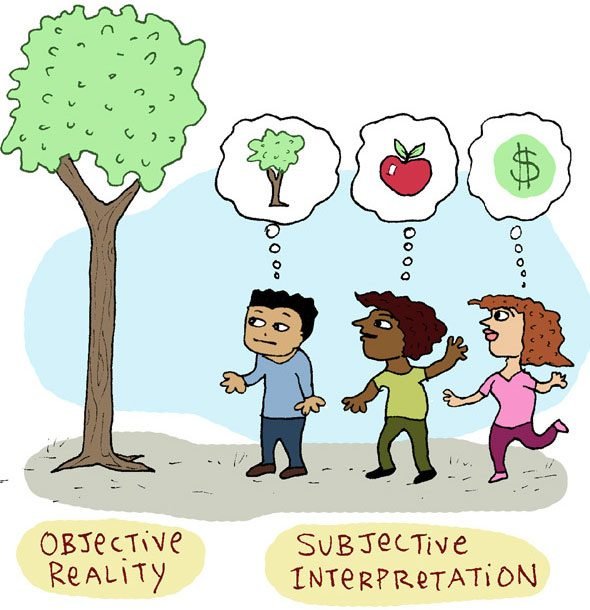
3) Search for a Sub-Reddit and ask a question or propose the claim there.
For the uninitiated, reddit.com is a very popular, highly trafficked collection of message boards, known as subredits. There are active subreddits on almost every conceivable topic and interest imaginable, all of which are user contributed and moderated.
I like to use Reddit as a way to gauge the opinion of the masses and as a method of discovering any blatant issues with my claim (Reddit users can be very helpful in pointing you in the right direction). Because of the amount of people on the website, and the community engagement found within, it is often a great place to go if you want to make sure that you are not overlooking something, or want to be pointed in the right direction for more sources. Of course there is a risk of being told the wrong information, so still be cautious about accepting their advice as truth.
This being said, crowd sourcing your information through a website like Reddit often produces reliable results as you have access to many people with differing opinions. If there is a controversy relating to your topic, Reddit users will often use your questions as a prompt to highlight the flaws in the opposing side’s arguments and share evidence and research supporting their own.
Please remember to be gracious and kind in any online community, and respect the etiquette of the community.
—
TAKE ACTION
Go to reddit.com and sign up for an account (it is free and anonymous). Google “subreddits for ‘your topic’ advice”. Start reading the threads and consider asking a question or two in there!
For example: Googling “Subreddits for nutrition advice” yields the subreddit r/nutrition. In that subredit, you will find people talking and offering advice about all aspects of nutrition. Feel free to ask any questions you may have and provide answers where you see fit.
—
4) Consider the opinion of leading experts in the field.
A leading expert in a field is somebody who either has specific qualifications in a particular area attained at a high caliber learning institution, or are the highest level performers in a particular industry.
These experts are at the forefront of current research and performance. Their opinions are more often more reliable than the opinions of the average person. They will often have books, journal articles, interviews or blog posts in which they share their points of view. What’s more, most of these people will have social media; you can ask them questions and potentially get answers direct from the source.
There is still a question of determining who is a leading expert (see 2 and 3), and what to do if leading experts disagree (see 1 and 5), but over time you will learn who to trust, as their advice will have served you well in the past.
Just be careful not to take all of their advice with the same level of acceptance. If they share an opinion or offer advice about something that they are not an expert at, don’t just accept what they are saying on this new topic. They are not qualified to offer that advice. Despite their knowledge in one area, what they say in the other area should be taken lightly.
5) Look into scientific studies, with a focus on ‘meta-analysis’.
The premium (and most time consuming) way of determining the truth of a particular claim, is to look into the research yourself.
A scientific journal article is basically a summary of an experiment, showing the method and findings of a particular study. A meta-analysis is a collection and summation of the average results of many similar studies.
If I have gone through steps 1 – 4 above and I am still not sure, I will search for a meta-analysis relating to the topic that I am looking for. I prefer meta-analysis, because they take the findings of many different scientific studies in one area and look at the results of them all combined. One study may be an anomaly, but the results of many combined usually reveals the truth.
Just a bit of a warning, scientific literature can be hard to read and interpret when you first start looking into it. The language is quite academic in nature, and often uses jargon unique to the specific field. That being said, this is not an insurmountable hurdle. Start by just reading the ‘abstract’ – a quick summary of the study, and then if you feel that it is necessary, read the entire thing.
Search for your topic on ‘google scholar’ or go to a university library in your local area and ask them for some assistance.
Frequently Asked Questions
Q) Your process of fact checking seems long and difficult.
A) It is, and like I mentioned, I wouldn’t implement it all every time. The more important the issue is to me, the more grave the potential consequence, the deeper I will investigate it.I wanted to give you a frame-work that could be used to investigate any level of potential claims as best possible.
Q) My wife swears by homeopathy and wants to treat our son’s illness with it. I don’t think homeopathy works at all. What should I do?
A) I am with you, I don’t think it works in the slightest (beyond placebo that is). There are a few options available to you, but they may cause a rift between you and your partner, although considering the health of your son, it is an argument that you may need to have.
You could try the following:
1) Show her the results of searching for ‘homeopathy debunked’. You will see countless articles and meta-analysis showing that there is no evidence for its effectiveness at all. The problem with this approach is that it cause your partner to lose her ability to treat herself with it, thus losing the positive impacts of a potential placebo effect, but gaining the use of scientifically proven medications.
2) Show her the findings of the effectiveness of the medication that your son needs, and show her how it will subsequently heal him. As well as the stories of people who have recovered from the same condition with medication.
3) Perhaps try to compromise with her and implement both treatment options simultaneously. Use the medicine and homeopathy together to treat your son’s condition. Homeopathy pills or fluid usually contains no active ingredients (why they don’t work) so they shouldn’t impact the effectiveness of the medicine (please confirm this with your doctor first). If they have no real impact then it should both appease her and give your son the treatment he needs.
Resources
Reddit
Google Scholar
Google Tricks That Will Change The Way You Search, Time
How To Read And Understand A Scientific Paper, Huffington Post
Summary
1) Does it pass the ‘bullshit’ test?
2) Google the claim, and Google the claim ‘debunked’
3) Search for a Sub-Reddit and ask a question there.
4) Consider the opinion of leading experts in the field.
5) Look at the results of a meta-analysis.
This chapter is from the book How To Get Your Sh!t Together