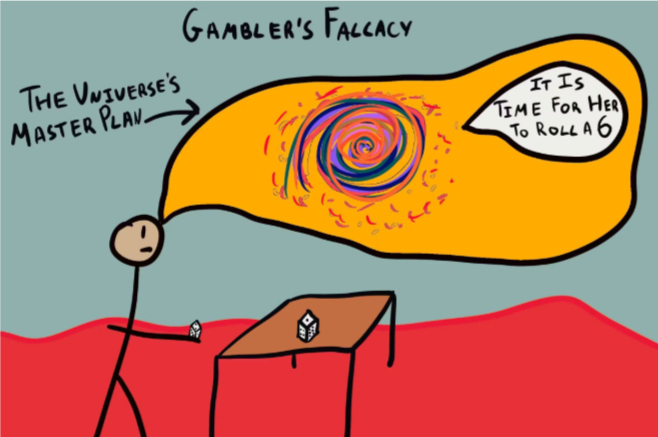
Some Hard Truths
- Ch: 6.9 of How To Get Your Sh!t Together -
“It is the mark of a truly intelligent person to be moved by statistics.” – George Bernard Shaw
This chapter contains some hard truths. Information and realisations that for some will be difficult, if not impossible to swallow. Yet realising and accepting the lessons contained within is vital if you want to have even the slightest chance of achieving an above average life, one where you are able to pursue your dreams, remain healthy well into old age, and one where you can maintain an enjoyable work, family and personal life.
People have a tendency to believe that they are special or separate from the rest. That they are innately lucky, skilled and intelligent, that they are above average, destined for greatness, and immune from the problems that plague others. This is simply not true.
There is nothing inherently special about you, me or anyone. We are all average, and unless we do more than average, we will remain that way. Only hard work, discipline, practice and perseverance will set us apart from the crowd.
The goal of this chapter is to highlight this fact to you, and to subsequently prompt you into taking action. To get you to realise that life will reward you for taking action, and punish you for inaction. To show you that what you do is far more important than how you feel about yourself, and that you most likely think that you are better than what you actually are.
The technical term for all of this is ‘illusory superiority’, the cognitive bias whereby a person overestimates their own qualities and abilities, relative to other people. This is a common phenomenon, particularly among members of western countries.
If you think that you are better than you are, you may do less than you need to do in order to get the result that you want.
No matter what your dreams are, and no matter how big your goals are, it is imperative to realise that this bias may be impacting you. Causing you to fall short in all areas of your life and subsequently battle the inherent malaise and mental affliction that an unfulfilled and dissatisfied life causes. It is quite disappointing to feel destined for greatness, worthy of money, the ideal body, deep relationships, travel and success, only to look around and feel that your life is inadequate.
It is time to cut your ego down to size. To show you the presence and impact of illusory superiority. To highlight the fact that you are average, just like everybody else, and to show you that the only way to be above average is to do more than average.
“I am, as I have said, merely competent. But in an age of incompetence, that makes me extraordinary.” – Billy Joel
If you ask the average person to rank themselves out of 10 in looks, with 10 being the best looking person alive, and 0 being the worst, what would you expect them to say? Statistically speaking, the average person should rank themselves as a ‘5’ – that is, rank themselves as average. Yes there will be some who are above and some who are below the average of course, but on average, the average person is a ‘5’.
Yet when you actually ask people, the average response that they provide back is a ‘7’. This means that people think they are better looking than what they actually are. Countless studies have replicated these findings (see the resource list at the end of this chapter) extending the results far beyond looks, but also for most traits, including intelligence levels, personality, and sporting ability. This means that the average person believes that they are above average, and therefore better than what they are in most aspects of their lives.
This means that you most likely believe that you are better than what you are.
I am sorry to break it to you, but chances are that you are not. Chances are that you are average. This is great news if you have low self-esteem, and a poor view of yourself, because you are probably better than you feel you are. But for most of you, I have some bad news.
Statistics apply to you, just like everyone else.
I think that the bias of illusory superiority comes down to the individual, person centered approach to existence. We are the center of the universe, to ourselves at least. We only get to experience life out of our own head, and only from our own perspective. We only experience our thoughts, feel our own feelings and face our own personal consequences. Because of this perspective, it is easy to believe the best of ourselves, we have clear evidence for all of our own success in every area of our life, and it is hard to apply the reality of statistics to our lives, particularly if we haven’t yet been impacted by the results of our actions. We see statistics applying to other people, but never to us. If something happens in our own lives, we know the full backstory, the who, what, where, when and why of it. If the same event happens in other people’s lives, we only have the simplest understanding of it.
Take smoking as an example. Most smokers know that smoking is dangerous for their health, but the vast majority think that they will not be personally impacted by the worst of it. They read the warnings about cancer, illness and all of the other detrimental impacts of smoking, yet they fail to apply those warnings to themselves. They may accept that they will be impacted in some small way, perhaps by having lower cardio fitness or that they will suffer from a ‘smoker’s cough’. But they don’t accept that they themselves will face the extreme consequences that smoking will bring. Yet in reality, two out of every three smokers will die as a direct result of the habit.
That means that if you smoke, you have a 66% chance that you will die as a direct result of smoking. That is worse odds than flipping a coin.
That means that if you smoke, you will probably die from it. There is no way to get around this fact – other than through self-delusion. It is far more psychologically convenient to believe that you will be the lucky one, than it is to face the reality of the situation that you find yourself in.
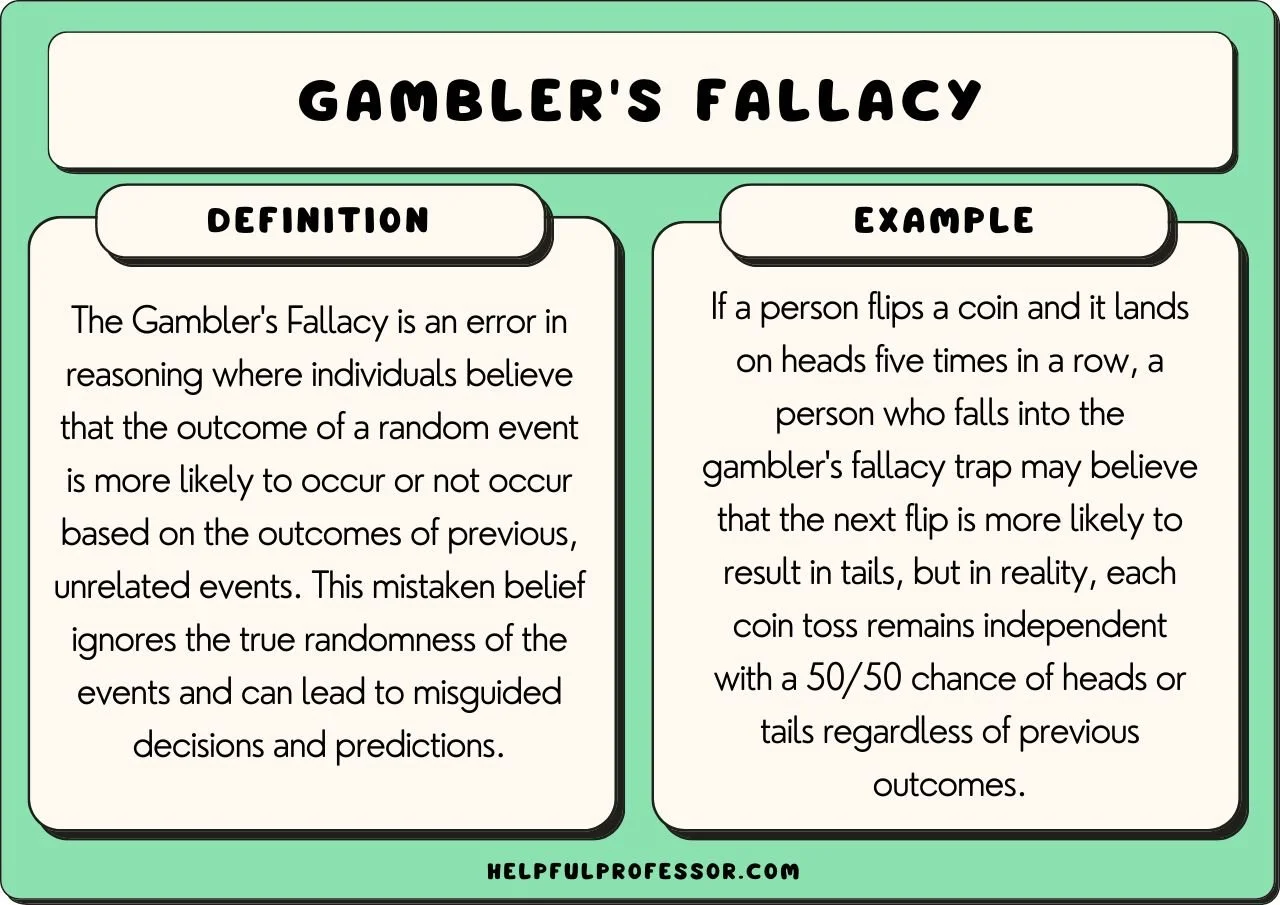
Another example to consider is gambling. The entire gambling industry is built on our inherent inability to understand statistics and to be optimistic about our luck in rigged games of chance. The fact is that gambling couldn’t exist unless it made money for the owners of the casinos, bookmakers, lotteries and slot machines. What that means is that gambling, in all forms, is set up in a way that guarantees that the house always wins. People do regularly win big of course, but that is the trap. We see the few instances of massive winners and (falsely) believe that we are next. So we put down our money and lose it, along with the vast majority of other participants. If anyone plays for long enough they will lose. The only way to win is to not play. There is literally more chance of being hit by lightning than there is of winning the lottery jackpot. Yet people are far more likely to play the lottery than to give even the slightest of concerns about being struck.
Our inability to apply statistics to ourselves covers all aspects of life. Think about the last time that you saw a minor road incident. In all likelihood, you or one of your passengers probably assumed that the participants were bad drivers. The evidence for that assumption is right there in your face – they crashed! But what did those drivers think of their driving ability? Prior to the crash, they probably thought they were good drivers!
We have evolved to be optimistic about our own abilities and outcomes. This optimism allowed us to take the risks necessary for survival. To believe that we will complete a successful hunt, defend the tribe from attack, and to win the mate. Unfortunately, this same optimism can cause problems in the modern world if it is not addressed and accounted for.
People think that they are above average and that their lives will be above average. They believe they will get the lucrative job, attractive partner, they will have abundant success and all of the worldly possessions that they desire. Unfortunately this will not be a reality for most people. Remember, the average person is average. That means that on average, you are average. What makes you think that you will be different?
What makes you special?
I understand that this chapter could evoke some depressing realisations, however I have found that these realisations are in fact some of the most helpful to go through. In essence, what they teach you is that you can change the outcome of your life. All you have to do is work for it. If you want to be better than average, you have to do more than average. You have to put in the work.
There are no shortcuts, hacks or tricks. Only hard work.
If you want to be stronger than average, you need to exercise more than average. If you want to be smarter than average, you need to read more than average. If you want to be more skilled than average, you need to practice more than average. If you want to be more successful than average, you need to do more than average. There is no other way around it, you have to do more.
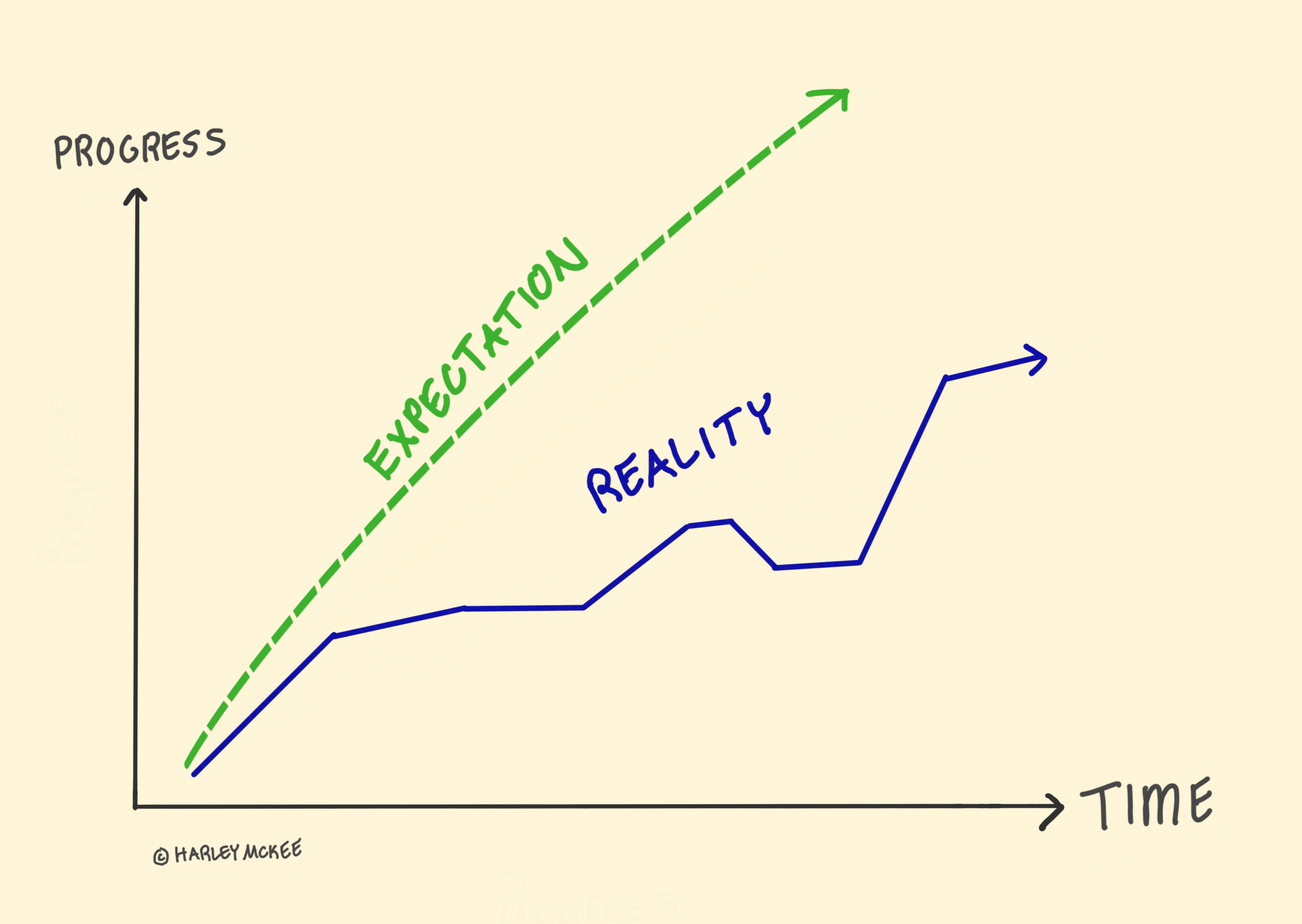
The great news is that there is a simple way to determine if you are doing more than the average person in any particular area of your life. Look at your results, and compare them to other people. How do you actually compare to them? Don’t look at the results you want to have, or to the results that you think you should be getting, but rather to the results you are getting. How do you stack up? Are you there yet? If not, you may need to put in more work.
It is important to realise that we all start in different places, and that our genetics may give us a predisposition to perform better or worse in particular areas. At least initially, the results that you are receiving may not be a clear indication of how much you are doing, nor do they necessarily serve as an accurate predictor of future performance in that area. Therefore it is important to also consider the amount of time you are committing to a particular area as well as the quality of how that time is used.
How much time are you spending in the gym? How many books are you reading? How consistent is your diet? How much time are you dedicating to creative writing? How consistently do you meditate? How much time do you commit to learning better ways of doing what you are currently doing? How much time are you spending on social media or in front of the television? How do your actions compare to other people’s actions?
—
TAKE ACTION
Choose one area in your life that you want to improve upon and ask 10 people in your life how much time they spend working on that particular area. Work out the average time and compare it to how much time you are spending on that task.
For example, ask them how much time they spend reading physical books as well as listening to podcasts and audio books.
While this isn’t technical research, it will give you a general guide as to where you are standing.
You can also focus this ‘research’ to compare yourself against particular friendship circles in your life.
For example ask your gym buddies how often they exercise and compare that to how much your non gym buddies exercise. How do you compare to both groups? Are you above or below average?
Look at what they are actually doing, not what they say they are doing. People think that their diets are far better than what they actually are, and will swear they are healthy eaters, while simultaneously eating a doughnut!
—
“Destiny is what every human being creates for oneself. Fate is when you fail to create your own destiny.” – Jaggi Vasudev
Life is not fair.
Everyone’s starting point is different, and where you find yourself as you read these words will be unique to you. You may have had a traumatic, difficult or otherwise challenging childhood. Perhaps you have faced tragedy, illness or loss. Maybe things have happened in your life that by all rights shouldn’t have. Your mental state, physical health or financial situation may be compromised relative to society. You may be struggling. If this is the case, reading this chapter may have been quite challenging. It may be impossible, given your unique circumstances, to perform above average in a particular area. I understand this predicament well, given my past there are some significant aspects of my personal life and mental state that I really struggle with.
In those areas of my life, I had to accept the fact that I was below average. That due to circumstances (potentially) beyond my control, I now find myself struggling. Beyond just accepting this struggle however, I also had to commit to making some improvements in those areas by working hard at them. Although I may always struggle in those areas, the simple fact is that if I commit more effort to those areas, I will get better. I may not be the greatest, but I will at least improve at them. If I can’t improve, I will at least take effort to get the support and assistance that I need to be functional. I encourage you to do the same.
If on the other hand, you find yourself with massive goals and a real desire to achieve them, I encourage you to work harder than you have before. Look at what the greats are doing in your chosen field and attempt to work as they do. Through self-discipline, effort and focus, force yourself to rise above the norm and push beyond average.
Your goals and dreams are worth fighting for.
Frequently Asked Questions
Q) You sound quite harsh in this chapter. Why don’t you think that we are above average?
A) I think that way because that is how averages work. Most measurable traits sit on a bell curve. That means that the vast majority of people sit in the middle, with only a few outliers outperforming the pack. Chances are that you and I are part of that pack. This is simply the nature of reality.
Unfortunately, you can’t change your genetics, or upbringing. All you can do is make choices in the moment. It is hard to consistently make the right choice. To choose personal growth, to work and to sacrifice pleasure, but that is all you can really do if you want to see any sort of improvement in your life. Make the choices that other people can’t or won’t and you will get the results.
Q) Do you think you are better than average?
A) It really depends on what aspect of life is being measured, the frame of mind I am in, and my mental health at the time. Regardless, I do know that like other people, I have a tendency to believe that I am better than I actually am. But because I know of this tendency, I am able to redouble my efforts and apply myself with far more vigor than I otherwise would have. Knowing that my ego is inflated causes me to work harder and subsequently perform better. That is enough for me.
Resources
You Are Not So Smart, David McRaney
You Are Less Beautiful Than You Think, Scientific American
Illusory Superiority, Knowing Neurons
Why We Are All Above Average, Live Science
Summary
Your actions directly dictate your results. If you want more, you need to do more. You are not special, or immune to statistics, only your actions can make you special.
This chapter is from the book How To Get Your Sh!t Together