Hypersexuality After Abuse
Survivors of trauma can carry patterns that were once protective but become confusing or even harmful over time. Drawing on my lived experience, mental health advocacy, and professional work as a coach and counselor, this post will explore what hypersexuality after abuse really is, what healthy hypersexuality is, hypersexuality and trauma, the role of chronic feelings of emptiness, and what healing in this context can look like.
One of the least discussed of the patterns we carry is hypersexuality after abuse, especially when it arises from the fawn response, a lesser-known trauma reaction. When fight, flight, or freeze aren't options, some individuals learn to appease. This coping strategy, often developed during or after abuse or neglect, can manifest later in life as hypersexual behaviour. While often misunderstood or judged, hypersexuality in this context is not about desire, it's about survival - at least on one level.
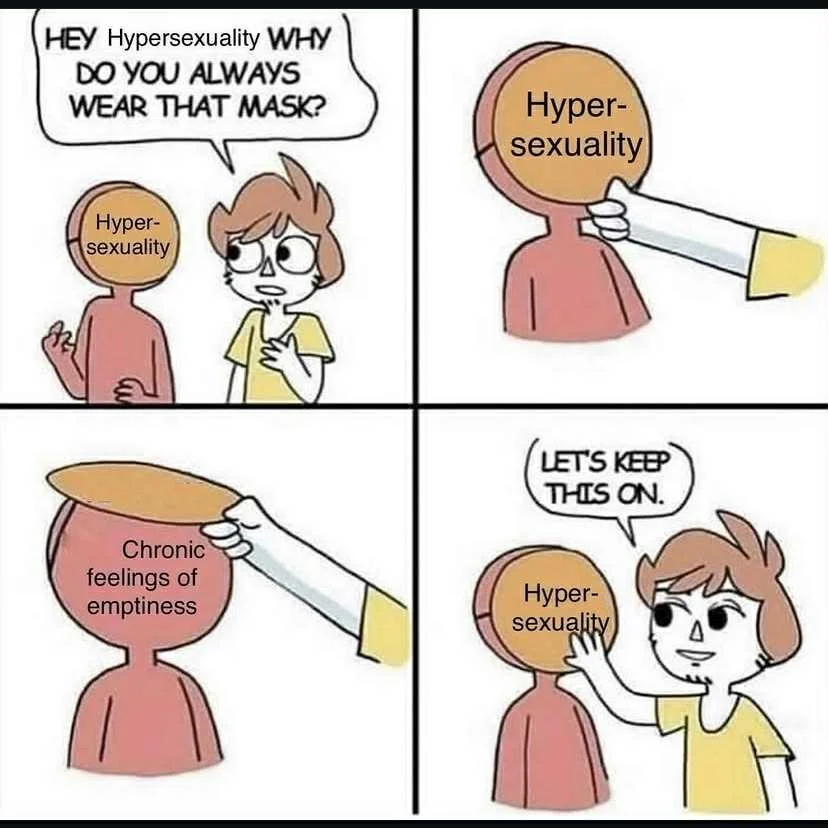
What Is Hypersexuality After Abuse?
Fight, flight, freeze, and fawn. While the first three trauma responses are widely understood and acknowledged, the fawn response remains under-discussed, particularly when it manifests through hypersexuality after abuse. For those who have experienced abuse, especially sexual or relational trauma, fawning becomes a survival mechanism: if you can’t run, hide, or fight, perhaps you can appease.
Perhaps if you give in, it won’t hurt as much. Perhaps if you become what they want, they won’t take more than you’re prepared to give. This is how many survivors learn to protect themselves, and over time, this response becomes ingrained, not just psychologically but at nervous system level.
Hypersexuality, also known as compulsive sexual behavior, in this context, isn’t about desire or pleasure, it’s about survival. It’s the nervous system remembering that compliance once kept you safe. This behaviour might show up as self-sacrifice, people-pleasing, or a compulsive need for validation through sex and hypersexuality after abuse. It might look like constantly putting others first or becoming sexually available in the hope that being chosen means being safe. There’s often an unconscious belief: Surely, I won’t get hurt if I offer myself freely. If I choose to be used, at least it’s not being taken.
A 2020 systematic review examined 21 studies investigating the link between child sexual abuse and compulsive sexual behavior in adults. It found that individuals with histories of childhood sexual abuse are significantly more likely to develop compulsive sexual behavior, often manifesting as repetitive, distressing sexual thoughts or activities used to escape emotional pain. The review also highlighted that those with compulsive sexual behavior reported higher levels of anxiety, depression, stress, and lower self-esteem compared to the general population.
These findings suggest that early trauma can rewire one’s relationship with sexuality, turning it into an unconscious coping mechanism rather than a source of pleasure. Recognizing this connection is crucial: it reframes hypersexuality not as a moral failing, but as a trauma response in need of compassionate, trauma-informed treatment. Hypersexuality after abuse is to be treated with compassion, in others and in ourselves.
It’s important to distinguish between trauma related hypersexuality after abuse and a naturally high, healthy sex drive. A healthy libido varies widely between individuals and is not inherently problematic, many people experience frequent sexual desire as a positive and fulfilling part of their lives. The key difference lies in the intention and emotional context. Trauma-related hypersexuality is often compulsive, driven by a need to escape emotional pain, numb distress, or seek validation.
It may feel urgent, uncontrollable, compulsive, or leave the person feeling ashamed or disconnected afterward, and sometimes includes chronic feelings of emptiness. It is disruptive to their life. In contrast, a healthy sex drive typically arises from genuine desire, is flexible rather than compulsive, and aligns with one's values, consent, and emotional well-being. Understanding this distinction allows us to approach hypersexuality with compassion, rather than judgment, and recognise when support and healing may be needed.
I would like to recommend two books that I found very interesting. The books are not about trauma or hypersexuality after abuse, but talk about alternative lifestyles. People who are hypersexual may find themselves interested in exploring these areas as part of a healthy approach towards navigating their nervous system in relationship.
The first is Sex at Dawn, by Christopher Ryan and Cacilda Jethá. It challenges conventional wisdom about monogamy and human sexuality by examining our evolutionary history. Drawing on anthropology, primatology, and biology, the authors argue that pre‑agricultural human societies practiced sexual openness and sharing more akin to modern-day bonobo monkeys where sex strengthened community bonds rather than signified exclusivity. They suggest that monogamy is a relatively recent cultural construct born from agriculture, private property, and paternal certainty. Though provocative and celebrated by some, the book has also faced criticism by scholars for its speculative interpretations. Overall, it is an interesting read and offers a thought-provoking exploration into how our ancestral sexual behaviors continue to influence modern relationships.
The second book is The Ethical Slut by Dossie Easton and Janet W. Hardy. It is a groundbreaking guide to consensual non-monogamy, sexual freedom, and radical self-acceptance. First published in 1997 and revised several times since, the book challenges traditional ideas about love, sex, and relationships by offering practical tools for navigating open relationships with honesty, integrity, and emotional intelligence. It explores topics like jealousy, communication, boundaries, and the importance of consent, while celebrating the idea that sexuality can be a healthy, joyful, and abundant part of life. Whether you're new to non-monogamy or simply seeking a more liberated approach to intimacy and sexuality, it is an affirming and empowering read.
For some individuals experiencing hypersexuality, alternative relationship structures such as polyamory may offer a more functional and affirming lifestyle. While polyamory is by no means exclusive to hypersexual people, it can provide a space where high sexual desire is not automatically pathologised, but instead openly communicated, responsibly explored, and ethically practiced. In these dynamics, the key is informed, enthusiastic consent from all parties involved.
Transparency, boundaries, and emotional maturity are essential to ensure that the relationship structure supports healing and self-awareness, rather than enabling avoidance or re-enactment of trauma. Whether or not trauma is part of one’s history, polyamory can offer a valid outlet for those seeking freedom, connection, and honest expression of their sexual and emotional needs.
Hypersexuality and Trauma
Let’s go back to hypersexuality and trauma. When trauma is compounded by neglect (emotional abandonment, lack of affection, or invalidation), the impact deepens. Neglect leaves a void where love and connection should be. For some, sex or the performance of sexuality becomes a temporary patch for that emptiness, which can help people to understand hypersexuality after abuse as well.
Physical touch, attraction, or even the illusion of intimacy can feel like moments of being seen, accepted, or wanted. So, the nervous system learns: hypersexuality brings closeness, even if it’s fleeting or performative.
A large-scale study of over 1,000 adults (average age ≈30, 71% female) investigated the links between hypersexual behavior and trauma-related symptoms. The researchers examined how PTSD, depression, and trauma impact compulsive sexual behaviors.
The findings revealed that trauma and depression are significantly correlated with higher hypersexual behavior, indicating that individuals with trauma-related symptoms often exhibit more intense and frequent sexual thoughts, urges, and actions. These behaviors frequently serve as maladaptive coping mechanisms, being an unconscious effort to regulate emotional distress stemming from trauma. The study highlights the importance of addressing trauma and depression simultaneously when supporting those experiencing hypersexuality.
With hypersexuality after abuse, or neglect or any trauma, difficulty can arise when you’ve survived, escaped, and are now safe, but your body and mind still operate from that same survival pattern. Years can pass and you may still fawn, still seek safety through sexual openness or submission, still mistake attention for affection. Healing from this doesn’t mean “fixing” yourself by erasing the hypersexuality.
It means understanding where it came from, understanding both hypersexuality and trauma. It means recognising that this part of you evolved to protect you. And it means learning to hold that part with compassion rather than shame.
This healing journey is often complicated by social stigma, self-blame, and shame. Survivors may feel broken, labelled, or judged, not just by others but by themselves. Especially when hypersexuality is accompanied by chronic masturbation, porn addiction, or behaviours tied to drug use. It’s common for some to only feel hypersexual when under the influence of substances, which are used as a way to numb trauma or intensify a feeling of disinhibition. This only strengthens the link between hypersexuality and trauma.
The Mayo Clinic describes compulsive sexual behavior, also called hypersexuality, as a pattern of intense, uncontrollable sexual thoughts and activities that persist despite adverse consequences, often linked to imbalances in brain reward pathways. Complusive sexual behavior is not listed in the DSM-5 as a diagnosis, but it sometimes is seen as being part of another mental health condition.
This condition usually co-occurs with other mental health challenges such as depression, anxiety, or substance use, and is addressed through a combination of psychotherapy (especially cognitive-behavioral therapy), medication, and supportive self-help groups. What’s particularly notable is that, unlike a healthy sex drive, which is flexible, consensual, and aligned with one’s values, hypersexuality is characterized by uncontrollable urges and behaviors that cause distress and functional impairment. Recognizing this distinction is critical in moving away from moralizing sexual behavior and toward compassionate, trauma-informed care.
Sexuality itself exists on a spectrum. Some people are naturally more sexual, some less so. Some find themselves drawn to kink, which can be another layer to this conversation. There is a known correlation between trauma and kink, not always, but often. For some, kink provides a structured, consensual way to reclaim agency over the body. For others, it may be a means of re-enacting trauma in a way that feels safe or controlled. As with everything, context and intention matter. For some people, adding to the confusion can be gender and identity issues.
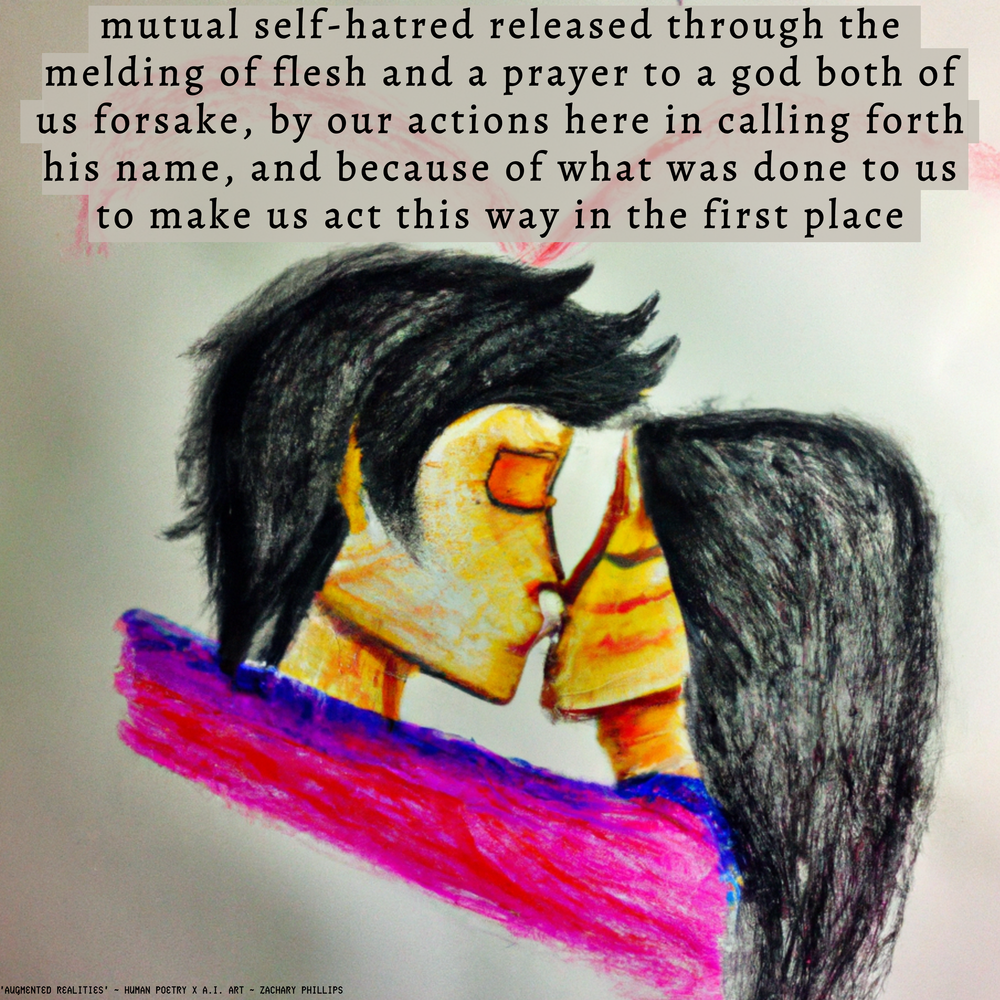
From my book, Augmented Realities - Human Poetry x A.I. Art
While much research and discussion around hypersexuality focuses on childhood trauma, it's crucial to acknowledge that trauma experienced in adulthood, such as sexual assault, abusive relationships, domestic violence, or other boundary-violating experiences, can also significantly disrupt a person’s relationship with sex and intimacy.
When hypersexuality and trauma happen later in life, the nervous system still adapts for survival. Hypersexuality after abuse may emerge as a way to regain a sense of control, to reclaim agency over the body, or to soothe overwhelming emotions. In some cases, it may be an unconscious effort to rewrite the trauma narrative, choosing to be sexual, rather than having sexuality taken from you.
The same patterns of fawning, self-blame, and seeking validation can appear, even without early-life trauma. The important thing is not when the trauma occurred, but how deeply it impacted your sense of safety, identity, and worth, and how that manifests in your current life.
Chronic Feelings of Emptiness
Neglect, especially in early life, often creates chronic feelings of emptiness. This is not just a feeling of sadness, but a deep, often preverbal sense of lack, a missing foundation of connection, love, and security. For those who experienced this, hypersexuality can become a way to cope with or temporarily fill that void. Sex, or the idea of being desired, can feel like proof of worth, even if just for a moment.
But what follows is often guilt, confusion, a deeper feeling of loneliness, and chronic feelings of emptiness. When your need for connection is met with fleeting, often unfulfilling encounters, it reinforces the sense of emptiness. It’s a painful loop: seeking intimacy to fill a void, only to feel more isolated after. This is especially true when sex is used as a way to avoid or numb other emotional pain, rather than as a form of true connection.
This pattern can also be linked to mental health conditions like Borderline Personality Disorder and Complex PTSD, diagnoses that often carry gendered biases and misunderstanding. These conditions don’t cause hypersexuality, but the dysregulation and pain they reflect can drive impulsive or extreme behaviours, particularly around intimacy and attachment.
It is important to understand that chronic feelings of emptiness can be healed, with a good dose of self compassion and self understanding, learning how to fill our own life with purpose, find meaning, learning mindfulness and meditation, find a good therapist, and perhaps the use of medication. With time, you can develop a great relationship to your sexuality, and hypersexuality.
Chronic feelings of emptiness are a common after effect of trauma and neglect, often rooted in unmet emotional needs and a lack of safe, nurturing connection. For many survivors, hypersexuality after abuse becomes a way to momentarily fill that internal void, seeking closeness, validation, or a sense of being wanted through sexual encounters.
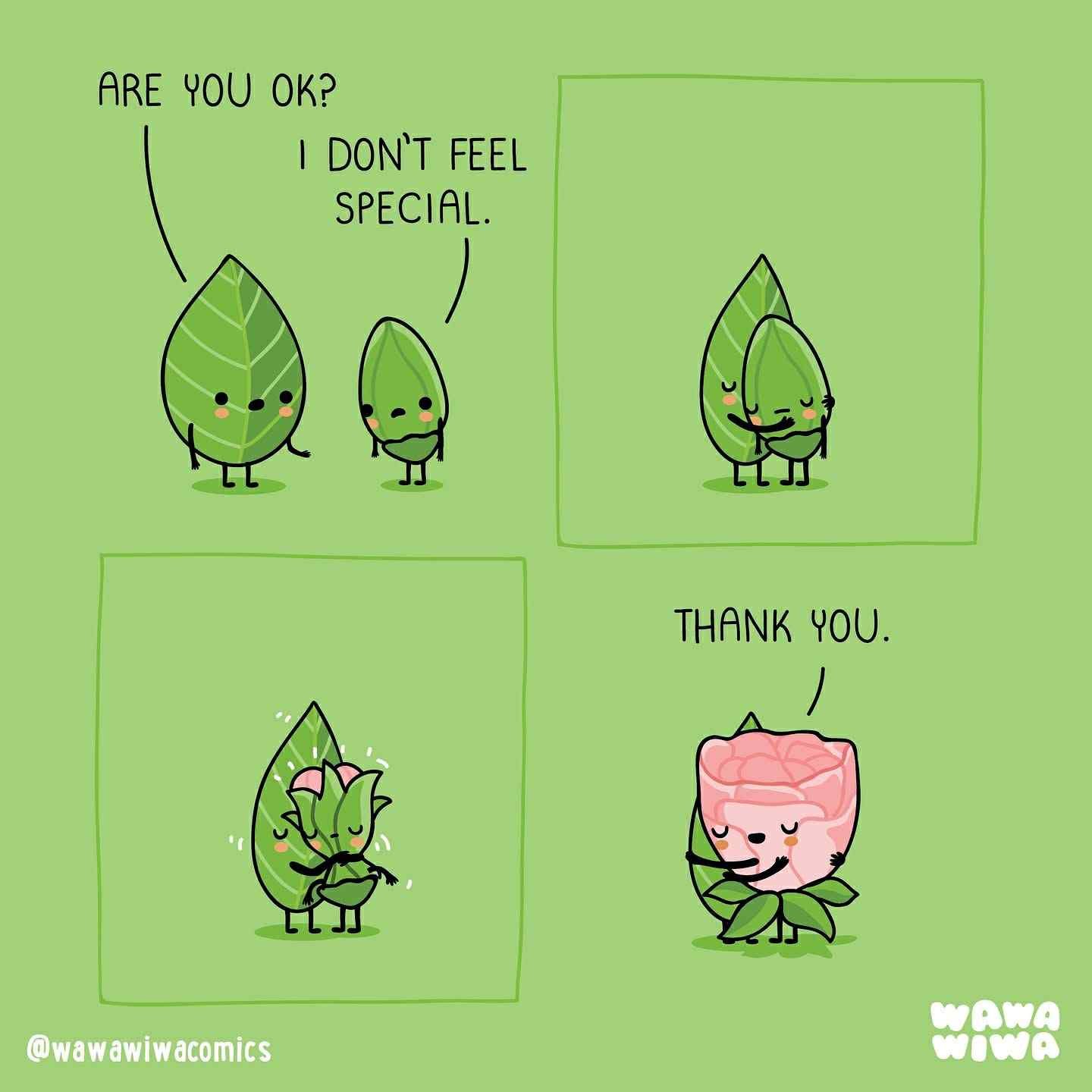
After abuse, especially when love and safety were confused with submission or control, the body may learn to equate sex with worth or connection. Yet, healing moments can come in the simplest of ways, like a heartfelt conversation or a hug from a trusted friend. Being held by someone who genuinely sees and values you can help soothe the nervous system and remind you that you are lovable beyond what you offer or perform. In that moment of safe connection, the craving to be wanted can soften, replaced by the feeling of simply being enough.
Healing
The truth is trauma corrupts the natural expression of sexuality. It can leave you permanently altered from the person you might have been without it. Hypersexuality after abuse is a journey. But healing isn’t about going back. In many cases, particularly with childhood or preverbal trauma, there is no pre-traumatised self to return to. Healing is about integrating. It’s about acceptance.
It's about building a new normal where your behaviours are functional and your self-love is rooted in compassion, not shame. Hypersexuality doesn’t have to continue to be a bad thing, even if it’s hypersexuality after abuse.
So what does healing look like? For many, it begins with recognising the pattern. From there, trauma-sensitive and somatic practices like yoga, breathwork, or embodied movement can be incredibly helpful. These approaches focus less on talking about trauma and more on feeling safe in your body again.
Therapy, especially approaches like EMDR or somatic experiencing, can help rewire the nervous system’s trauma responses. Traditional talking therapy is very helpful too, of course. Journaling, creative expression, and connection with safe, validating people can also play a crucial role. There will be a process of ‘sobering up’, and learning good and positive habits and coping mechanisms. Sex therapy can be helpful, as can medication from your doctor, and finding a good help group.
Importantly, healing does not mean removing your sexuality. It means reframing it. If you have hypersexuality after abuse, that doesn’t mean you’re damaged. But it will mean learning to no longer numb out, or using hypersexuality to numb your feelings. It will mean finding a way to be in your body. It may also mean exploring, experimenting, and expressing with kinkier forms of sexuality (content warning on this one).
The way forward isn’t to reject this part of yourself but to understand it, to hold it gently, and to decide, with intention, how you want to relate to it moving forward.
Always remember, you are not broken. You adapted. And now you’re allowed to heal, on your own terms, in your own time.
If this post resonates, and you want to talk about it, I invite you to book a session.